
Cushion spurge
Euphorbia epithymoides L.
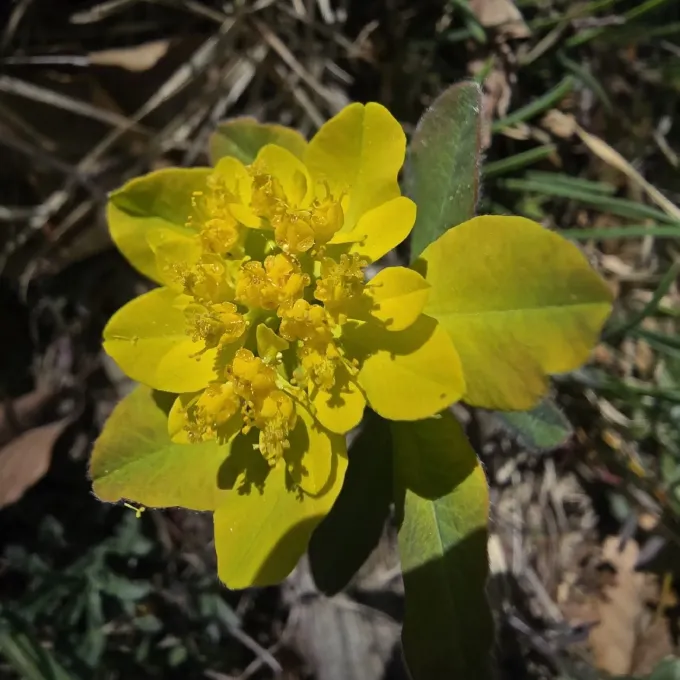
Description
Growing requirements
Cushion spurge (Euphorbia epithymoides L.), also known as Euphorbia polychroma, is a perennial flowering plant belonging to the Euphorbiaceae family. Native to Central and Southeastern Europe, it is well-regarded for its early spring color and structural beauty in landscapes.
The plant thrives in full sun, which is essential for developing its signature bright yellow bracts. While it can tolerate partial shade, insufficient light often results in a leggy, sprawling habit that lacks the dense, mounded form characteristic of the species.
It prefers well-drained, average garden soil. It is highly adaptable to various soil types, including rocky or sandy soils, provided that drainage is excellent. Poor drainage is the primary cause of failure in cultivating this species, as it is prone to root rot.
Regarding climate, cushion spurge is notably hardy, capable of withstanding cold winters typical of temperate regions. It does not require winter protection and remains a reliable choice for long-term landscaping projects in various climatic zones.
Botanically, it forms a compact, rounded mound reaching up to 15-20 inches in height. Like other members of the genus, it contains a milky sap (latex) that serves as a deterrent to most garden herbivores, effectively reducing the need for chemical pest control.
Main diseases and pests
Root rot is the most significant threat to cushion spurge, typically caused by waterlogged soil conditions. Gardeners should ensure planting sites are situated on well-drained ground to prevent the stagnation of moisture around the root collar.
Powdery mildew can occur during periods of high humidity or when plants are spaced too closely. This fungal condition manifests as a white, dusty layer on foliage, which can weaken the plant's overall health and aesthetic appeal if left untreated.
Aphids are the most frequent insect pest encountered. These small insects tend to cluster on tender new shoots and buds, extracting sap and potentially causing stunted growth or leaf curling, especially in the early spring months.
Spider mites can occasionally infest the foliage, particularly in hot and dry climates. They cause stippling and discolouration of the leaves. Maintaining proper plant hydration and using appropriate miticides can effectively manage these populations.
Good cultural practices, such as ensuring adequate spacing to promote airflow and removing any infected or damaged plant material promptly, are essential for maintaining a healthy stand of cushion spurge throughout the growing season.