
Griffith's spurge
Euphorbia griffithii Hook. f.
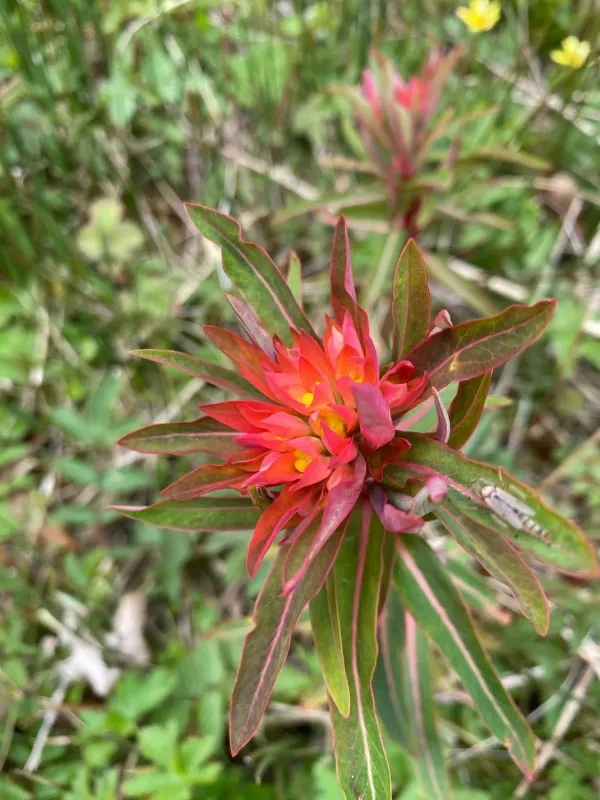
Description
Growing requirements
Griffith's spurge (Euphorbia griffithii) is a hardy perennial belonging to the Euphorbiaceae family, originating from the mountainous regions of the Himalayas and China. It is highly valued for its striking orange-red bracts and robust growth habit.
Botanically, this species is characterized by creeping rhizomes that allow it to spread over time, forming dense clumps of upright stems. The leaves are lance-shaped, often exhibiting a dark green hue, which creates a perfect backdrop for the vivid floral display.
Regarding climate requirements, the plant prefers temperate conditions with moderate rainfall. It thrives best when planted in full sun, though it can tolerate partial shade, especially in hotter regions where afternoon shelter helps preserve foliage quality.
The soil should be fertile, moist, and well-drained. While the plant can handle various soil types, it performs significantly better in organic-rich, loamy substrates. Avoid heavy, waterlogged soils that inhibit root respiration and lead to developmental issues.
In landscape architecture, Griffith's spurge is widely used in perennial borders and as a structural plant in naturalistic garden designs. Its ability to colonize areas makes it an excellent choice for ground cover in larger spaces.
Main diseases and pests
Griffith's spurge is relatively resilient, but it remains susceptible to environmental stress and specific biological threats if cultivated in improper conditions.
The primary concern is root rot, which typically develops in poorly drained soils or during periods of excessive rainfall. This condition often remains hidden until the plant shows signs of sudden wilting.
Fungal leaf spots can occur when the plant is kept in areas with poor air circulation, particularly during humid seasons. Pruning and spacing are effective preventative measures.
Pests such as aphids and spider mites can occasionally colonize the plant during dry spells. These pests damage the succulent stems and leaves, extracting nutrients and causing overall plant decline.
Effective management includes regular monitoring, maintenance of soil health, and the application of appropriate pesticides if infestations exceed economic thresholds.