
Sun spurge
Euphorbia helioscopia L.
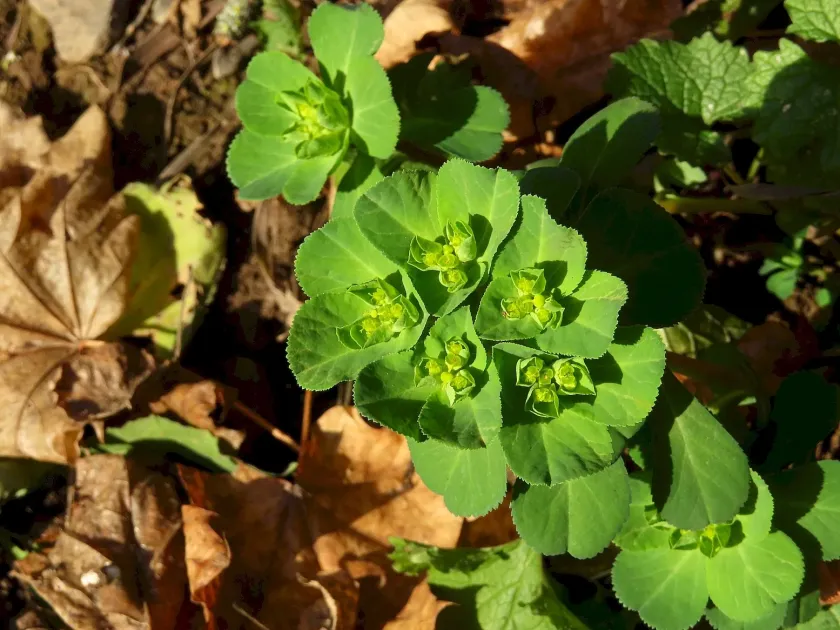
Description
Sowing dates
Sun spurge is an annual spring weed that typically emerges early in the season. Its seeds start germinating at soil temperatures as low as 4-6 degrees Celsius, making it a prolific early competitor in winter and spring cereal fields.
Massive germination usually occurs during early spring months. However, under favorable moisture conditions, the weed can produce multiple flushes throughout the entire growing season, which poses a constant challenge for crop management.
The biological cycle of the plant is fast, allowing it to reach the flowering stage quickly. Each plant produces a vast amount of seeds, which remain viable in the soil for several years, creating a persistent seed bank in cultivated areas.
Proper agricultural timing is essential for management. Pre-sowing tillage helps to eliminate the initial waves of germination, significantly reducing the weed density before the crop canopy closes.
Strategic timing of herbicide application is also crucial. Since the plant develops quickly, early-stage intervention is required to prevent the weed from dominating the field and depriving crops of essential nutrients.
Growing requirements
Belonging to the Euphorbiaceae family, the sun spurge is a cosmopolitan weed that thrives in a wide range of temperate environments. It is particularly well-adapted to fertile, nitrogen-rich agricultural soils.
As the name implies, it is highly light-demanding. It flourishes in open areas and is significantly less competitive in crops that provide dense shade early in their development stage.
The plant demonstrates a high level of plasticity regarding soil types. It can be found in various textures, from sandy loams to heavy clay soils, provided that there is sufficient moisture for early establishment.
Climatic requirements are moderate, as the species is adapted to thrive in temperate zones. While it prefers moist conditions, its well-developed root system allows it to withstand temporary dry spells during the summer.
Effective management requires a balanced approach to soil fertility and crop rotation. By optimizing nutrient application and using competitive crop varieties, farmers can naturally suppress the growth of sun spurge in their fields.
Main diseases and pests
Sun spurge poses a significant threat as a weed by competing for space, moisture, and minerals. It can reduce crop yields significantly if left uncontrolled in field edges or thin stands of grain.
The plant contains a white, milky latex that is toxic to many animals and can cause skin irritation in humans. This latex makes the plant undesirable in forage crops, as it may contaminate the harvest.
Beyond direct competition, it serves as a host for various plant pathogens and insect pests. Viruses carried by aphids on the spurge can easily jump to nearby vegetable or cereal crops.
Fungal diseases like rust and powdery mildew can colonize the plant and spread to susceptible crops, increasing the overall disease pressure within a farming system.
- Competition for vital resources.
- Toxicity of the milky latex.
- Acting as a reservoir for viruses.
- Attracting harmful aphids and pests.
- Impact on forage quality if harvested with hay.