
Euphorbia erythraeae
Euphorbia erythraeae (A. Berger) N. E. Br.
Description
Growing requirements
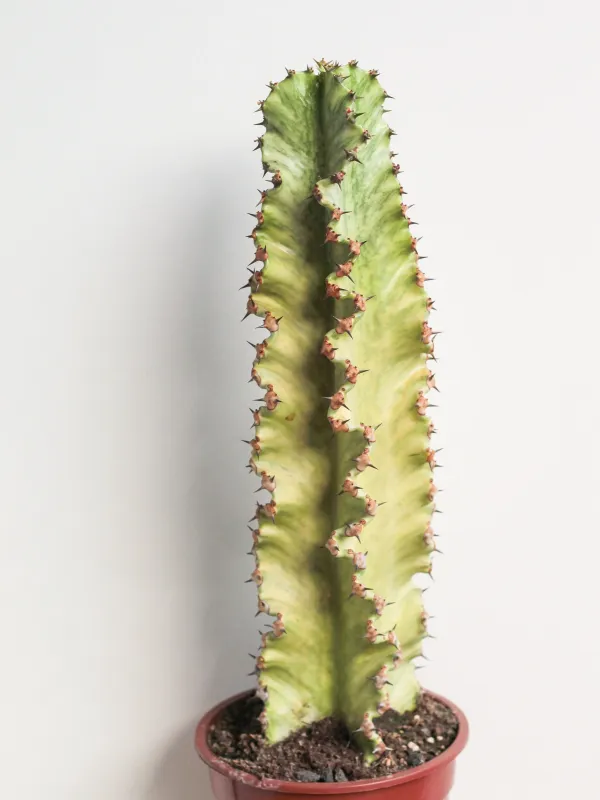
Euphorbia erythraeae is a striking succulent plant belonging to the Euphorbiaceae family. It is widely recognized for its robust, candelabra-like structure and vertical growth habit, which makes it a popular choice for architectural landscaping in warm climates.
Originating from the arid landscapes of Eritrea and Ethiopia, this species is exceptionally well-adapted to high heat and low water availability. It serves as an important ornamental plant in desert-themed landscapes and indoor interior design projects.
The cultivation of this plant requires specific soil conditions, prioritizing high drainage and low organic matter content. Using a specialized succulent or cactus mix enriched with volcanic rock or grit is essential to ensure long-term health and prevent stem rot.
Light intensity is the most critical environmental factor for successful cultivation. To maintain the structural integrity and natural wax coating of the plant, it must be provided with full sun exposure or high-intensity grow lights for the majority of the day.
In terms of agricultural and horticultural use, it is primarily produced for the ornamental trade. Nurseries propagate this species through stem cuttings, requiring careful handling due to the presence of the characteristic white latex sap found within the stems.
Main diseases and pests
Fungal pathogens represent the primary threat to the stability of the plant, especially when ambient humidity remains consistently high. Overwatering during cooler months significantly increases the risk of root rot and stem decay, which are often irreversible.
Pest infestations such as mealybugs often cluster in the deep ribs of the plant, where they are protected from physical contact. Regular inspection and targeted treatment are necessary to manage these pests without damaging the delicate, waxy epidermis of the stems.