
Euphorbia schillingii
Euphorbia schillingii Radcl.-Sm.
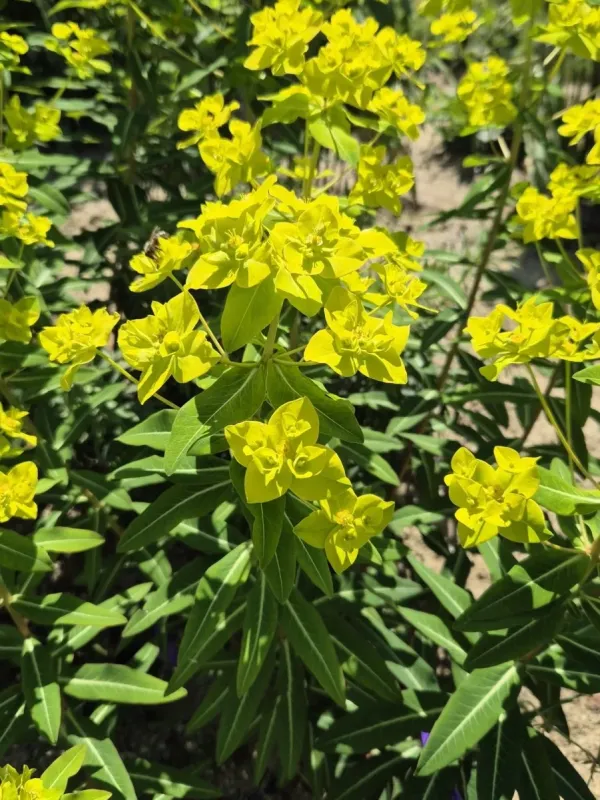
Description
Sowing dates
The propagation of Euphorbia schillingii is most effectively achieved through the division of mature clumps during the early spring season, just as new growth appears.
Seed propagation is also a viable option, although it typically requires a period of cold stratification to break dormancy and ensure consistent germination rates.
Sowing seeds in containers should be done in late winter or early spring in a greenhouse or cold frame to allow the seedlings to establish a strong root system.
When transplanting, ensure that the plants are spaced adequately to provide sufficient airflow and room for the herbaceous perennials to spread naturally over time.
It is strictly advised to wear gloves during all propagation and handling activities, as the plant sap is toxic and can cause significant skin irritation.
Growing requirements
Euphorbia schillingii thrives best in full sun to partial shade, where it can develop its distinct foliage color and strong, sturdy stems for seasonal display.
The ideal soil for this species is well-drained and relatively fertile; however, it is remarkably adaptable to various soil types, provided that drainage is excellent.
This hardy perennial is quite resilient to various climate conditions, demonstrating good cold tolerance once it is well-established in the garden environment.
While the plant is somewhat drought-tolerant, it performs best when provided with moderate moisture throughout the growing season to support continuous foliage production.
Applying a layer of mulch around the base of the plant can help retain moisture and suppress weed growth without disturbing the sensitive root system.
Main diseases and pests
The primary concern for Euphorbia schillingii is poor drainage, as waterlogged conditions frequently lead to fungal root rot, which can be fatal to the plant.
Powdery mildew can occur during periods of high humidity and poor air circulation, necessitating the use of targeted fungicides or improved spacing between plants.
Aphids are the most common pests, often congregating on the fresh, succulent tips of the stems, where they extract sap and potentially weaken the plant's growth.
Occasional infestations of mites or leaf-eating caterpillars may require manual removal or the application of organic insecticidal soaps to maintain plant health.
Proactive garden hygiene, including the removal of dead or decaying foliage at the end of the season, remains the best defense against persistent pests and diseases.