
Leafy spurge
Euphorbia esula L.
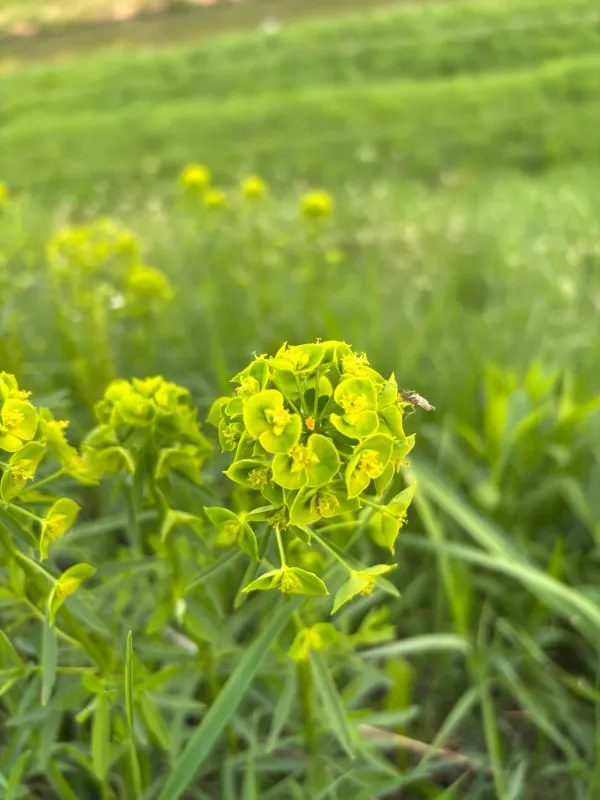
Description
Growing requirements
Leafy spurge (Euphorbia esula L.) is a perennial herbaceous plant belonging to the Euphorbiaceae family. In agricultural settings, it is recognized as a highly invasive and persistent weed that poses a significant threat to crop yields and grazing lands.
The plant originates from temperate regions of Eurasia and has successfully colonized various environments globally. It is characterized by its remarkable ability to thrive in diverse soil types, ranging from moist riparian zones to dry, degraded pastures.
Botanically, leafy spurge features a deep, complex root system capable of storing significant energy reserves. The stems are erect, reaching up to 80 cm, and contain a milky latex that acts as a chemical defense mechanism, making it toxic to most livestock.
It has no stringent soil fertility requirements, though it prefers well-drained conditions. Its drought resistance is facilitated by deep roots that allow it to outcompete crops for subterranean resources even under water-stressed conditions.
Management of leafy spurge requires intensive agricultural practices. Since it propagates via both seeds and creeping root systems, a single control method is rarely sufficient. Integrated programs involving tillage, crop competition, and systemic herbicides are essential.
Main diseases and pests
Leafy spurge is resistant to many common pests due to its toxic latex content. This natural defense allows it to establish dominance in agricultural fields, excluding native or beneficial plant species that are more susceptible to insect damage.
While some specialized insects, such as flea beetles, are used as biological control agents in certain regions, they rarely eliminate established infestations. These biocontrol agents are primarily used to reduce the density of the weed in large-scale infestations.
Diseases such as rust fungi can infect the foliage of leafy spurge, causing chlorosis and reduced vigor. However, these pathogens are typically insufficient to control the spread of the weed in a productive farming environment.
The primary economic impact of leafy spurge is its allelopathic potential. The plant releases chemicals into the soil that inhibit the germination and development of competing vegetation, leading to substantial crop yield losses.
Effective long-term control necessitates the use of systemic herbicides applied at specific growth stages to ensure the translocation of the active ingredient into the deep root system, which is critical for preventing plant regrowth.