
Starry Spurge
Euphorbia stellata
Description
Growing requirements
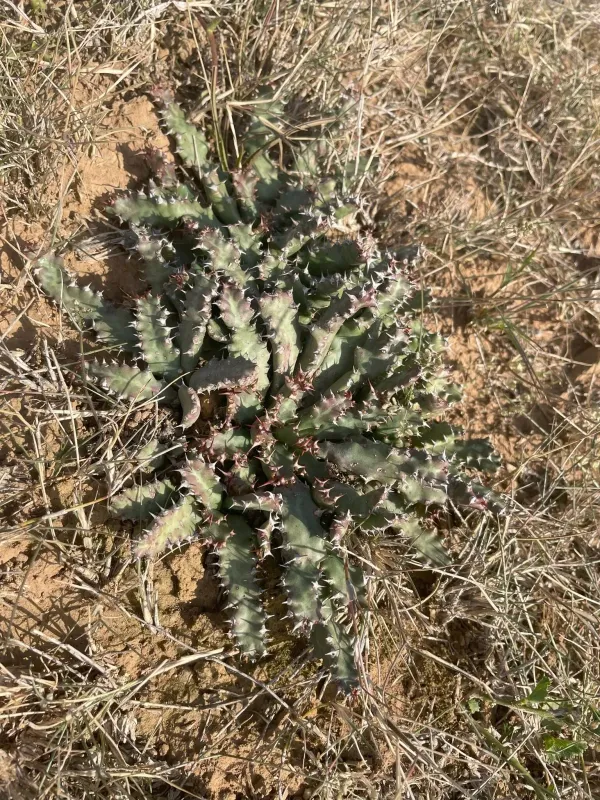
The Starry Spurge (Euphorbia stellata) is a fascinating caudex-forming succulent belonging to the Euphorbiaceae family. It is native to the Eastern Cape region of South Africa, where it thrives in rocky, well-drained soils.
The plant is distinguished by its flattened, tuberous caudex and prostrate, star-patterned stems. Due to its slow growth rate and unique architectural form, it is highly sought after by collectors of exotic flora.
Optimal growth requires a very porous and gritty substrate. A mix of pumice, coarse sand, and a small portion of loam is ideal to ensure that water drains quickly, preventing the roots from sitting in moisture.
The plant demands high levels of bright, indirect sunlight. During the growing season, it needs consistent warmth, ideally between 20°C and 30°C, to maintain its biological processes and physical shape.
Watering should be approached with caution. During the summer, water only when the substrate has dried out completely. In winter, the plant enters dormancy, requiring a dry environment to avoid rot.
Main diseases and pests
The most significant threat to Euphorbia stellata is root and stem rot caused by poor drainage or overwatering. Once rot penetrates the caudex, the plant is often difficult to save.
Common succulent pests such as mealybugs and spider mites frequently target the plant. These pests often congregate in the crevices of the star-like stems, making them difficult to detect early.
Effective pest management involves regular inspections and the use of systemic insecticides if an infestation is detected. Maintaining good air circulation is also critical to prevent fungal infections.
Physical damage to the plant causes the release of toxic white latex. This sap acts as a chemical deterrent against most herbivores, although caution should be exercised when handling the plant.
Preventative care is the best strategy. By strictly observing the dormancy period and ensuring the potting medium is mineral-based rather than organic-rich, the risk of disease is significantly minimized.