
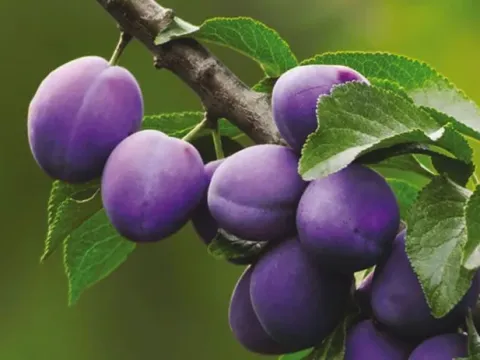
European plum
European
The European plum (lat. Prunus domestica) is a deciduous fruit tree belonging to the Rosaceae family. It is a highly valued agricultural crop, resulting from the ancient cross-breeding of the sloe and cherry plum, which provided it with excellent adaptability to various climates.
What the section contains


European plum
This crop thrives in fertile, well-draining soils with a neutral pH level. It is sensitive to excessive moisture; therefore, planting on elevated ground is recommended to prevent root rot and ensure healthy tree development throughout the growing season.
Climatic requirements favor regions with moderate temperatures. While the European plum is hardy, it requires adequate sun exposure for sugar accumulation in the fruits. Protection from strong winds is necessary to avoid branch damage and fruit drop during the developmental phase.
Effective orchard management requires systematic pruning to maintain an open canopy structure, allowing light to reach the interior branches. Regular irrigation during dry spells and balanced fertilization are critical for sustaining high productivity and fruit quality.
Beyond fresh consumption, the European plum is a staple in the food processing industry. It is widely used to produce prunes, jams, preserves, and traditional distilled beverages, making it an economically significant crop for fruit growers worldwide.
The European plum is susceptible to various diseases, most notably brown rot (monilinia) and shot-hole disease. These fungal infections can spread rapidly in humid conditions, causing severe damage to blossoms, shoots, and ripening fruit.
Pests such as the plum fruit moth pose a significant threat to production. Larvae burrow into the fruit, rendering it unsellable and susceptible to rot. Integrated Pest Management (IPM) strategies, including pheromone traps and biological controls, are essential for mitigation.
Sanitation practices, such as removing mummified fruit and pruning infected branches, are vital to preventing disease recurrence. Additionally, cultivation of the soil beneath the canopy helps disrupt the life cycle of overwintering pupae.
Selecting disease-resistant cultivars is the most sustainable approach to managing threats in a commercial or home orchard. Monitoring the foliage and bark regularly allows growers to intervene early with appropriate agricultural treatments.
Balancing chemical and biological controls is crucial for maintaining a healthy orchard ecosystem. Consistent attention to plant health documentation and seasonal updates helps ensure long-term sustainability and profitability of the plum orchard.
Harvesting timing is essential for quality control. For wholesale and long-distance transport, plums are typically picked when they reach technical maturity, ensuring they are firm enough to withstand handling while still having developed their full color.
For fresh market consumption or local processing, plums are harvested at full ripeness when sugar levels are at their peak. It is vital to perform the harvest during dry weather to minimize the risk of fungal contamination on the fruit skin.
Using ladders and padded containers helps prevent mechanical injury to the trees and bruising of the fruit. Growers should avoid shaking the trees, as this practice causes permanent damage to the wood and shortens the tree's lifespan.
Post-harvest handling focuses on rapid cooling to remove field heat, which significantly extends shelf life. Storing plums in temperature-controlled environments, ideally between 0 and 2 degrees Celsius, preserves texture and nutritional integrity.
- Precise timing based on sugar content
- Use of ventilated crates for storage
- Careful grading of fruit by size
- Immediate cold chain implementation
- Continuous monitoring for rot during storage