
Long-leaved spurge
Euphorbia longifolia Lam.
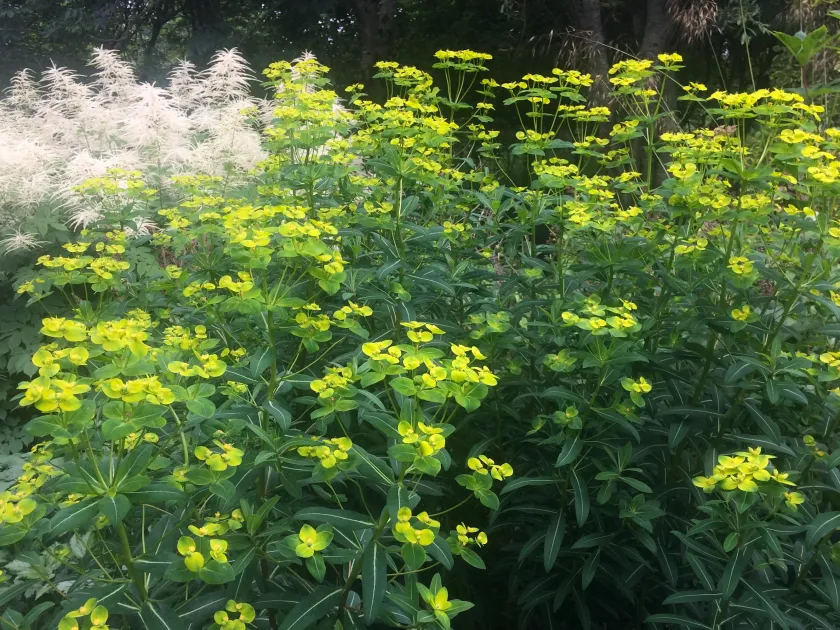
Description
Growing requirements
The long-leaved spurge (Euphorbia longifolia) is a perennial herbaceous plant belonging to the Euphorbiaceae family. This species originates from Central Asian regions, where it has evolved to survive in diverse environmental conditions.
Successful cultivation requires well-drained, fertile soils that provide sufficient nutrient levels for consistent annual growth. The plant thrives in locations with full solar exposure, which is crucial for maintaining its characteristic leaf shape and overall vigor.
Regarding climatic requirements, the plant demonstrates significant resilience to drought, making it an excellent candidate for regions with irregular rainfall. However, supplemental irrigation is recommended during the early establishment phase to ensure deep root development.
Agronomic management involves periodic cultivation to control weed competition and the application of fertilizers to boost vegetative biomass. Careful soil management is essential, as the species is highly susceptible to root decay if the substrate remains waterlogged for extended periods.
In practice, the long-leaved spurge is primarily utilized for its aesthetic value in landscape design. Its robust nature and unique foliage structure make it a reliable choice for sustainable gardening and public space landscaping projects.
Main diseases and pests
Key pests that typically affect this crop include various aphids and spider mites, which can proliferate during periods of extreme heat and humidity stress.
Fungal diseases, including powdery mildew, represent a significant threat to plant health, particularly in scenarios where air circulation is restricted by overcrowding or improper planting density.