
Poinsettia
Euphorbia pulcherrima Willd. ex Klotzsch
Description
Growing requirements
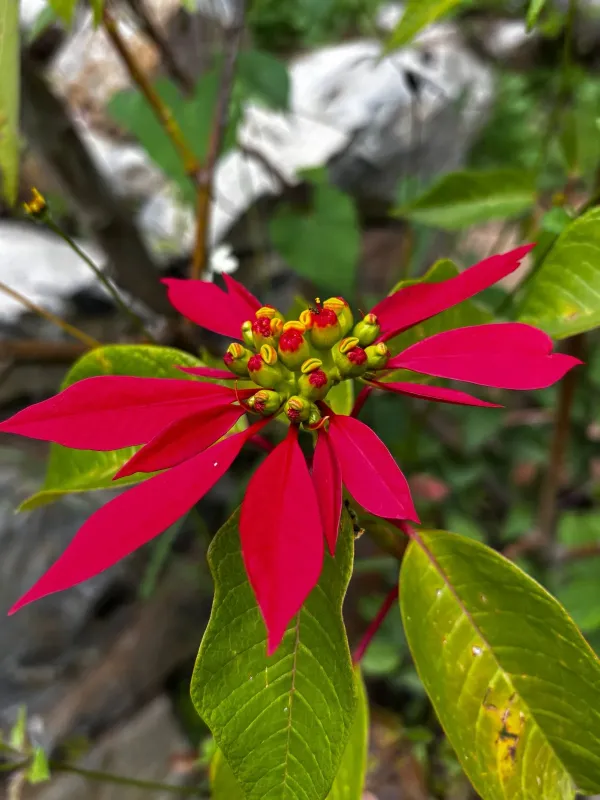
Poinsettia, scientifically known as Euphorbia pulcherrima, is a member of the Euphorbiaceae family. Native to Mexico and Central America, this plant has become one of the most important ornamental crops in the global floriculture industry.
The plant requires precise environmental control for commercial success. It thrives in temperatures between 18°C and 22°C, and night temperatures must be strictly maintained above 15°C to avoid metabolic disruption.
Photoperiodism is the most critical aspect of its agrotechnology. Poinsettias are short-day plants; they require at least 8 to 10 weeks of dark periods (less than 12 hours of light) to trigger the formation of colored bracts.
The growing medium must be well-drained and slightly acidic (pH 5.5 to 6.5). Careful irrigation management is necessary, as root zone aeration is essential to prevent physiological stress and promote healthy root development.
Industrially, poinsettias are cultivated as potted plants. Their primary use is in the seasonal decorative market, where they are favored for their vibrant bracts during winter months.
Main diseases and pests
Root rot diseases are the most significant threats to poinsettia crops. Pathogens such as Pythium and Rhizoctonia thrive in waterlogged, poorly aerated soil conditions, leading to rapid plant decline.
Botrytis blight (gray mold) represents a major concern for greenhouse production. It targets the leaves and bracts when humidity levels are high and air movement is insufficient.
Poinsettias are highly susceptible to whitefly infestations, which can cause significant direct damage and serve as vectors for various plant viruses.
Other pests, including fungus gnats, spider mites, and mealybugs, frequently appear in greenhouse environments, requiring integrated pest management (IPM) strategies.
Sanitation practices, such as sterilizing tools and maintaining clean greenhouse floors, are fundamental to preventing the outbreak of diseases and managing pest populations effectively.