
Draco-plant spurge
Euphorbia dracunculoides Lam.
Description
Sowing dates
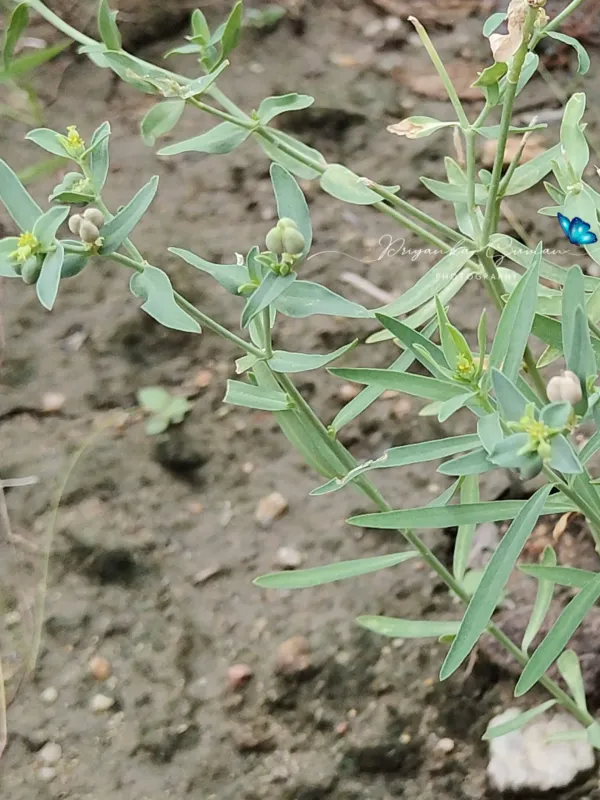
Euphorbia dracunculoides Lam., known as the Draco-plant spurge, belongs to the Euphorbiaceae family. It is an annual herbaceous plant often studied for its resilience and potential as an alternative technical oilseed crop.
The sowing process typically occurs in late spring when soil temperatures reach stable levels sufficient for germination. Seed contact with moist soil is essential to ensure a uniform emergence of seedlings across the field.
Sowing depth is generally maintained at 2-3 centimeters. Achieving proper seed-to-soil contact through light rolling or compacting is recommended to optimize germination rates in arid conditions.
The crop exhibits significant branching during its development phase. Proper planting density is required to prevent excessive competition for nutrients and solar radiation between individual plants.
The vegetative period is quite extended, allowing the plant to adapt to various temperature fluctuations throughout the summer season, which is critical for its survival in diverse field conditions.
Growing requirements
This species is highly adapted to arid environments, making it a classic xerophyte. It thrives best in open, sunny locations with direct sunlight throughout the day to support its physiological processes.
Light-textured soils, such as sandy and loamy-sandy types, are preferred as they allow the plant to develop its taproot system effectively without waterlogging risks.
The plant has low soil fertility requirements, enabling it to grow on marginal or degraded lands where other crops might fail. This makes it an interesting candidate for rehabilitation projects.
Climate preferences involve warm, dry summers with relatively low precipitation. It performs poorly in high-humidity environments and is susceptible to dampness-related diseases.
Proper field drainage is crucial for successful cultivation, as stagnant water in the root zone is the primary factor limiting the growth and longevity of this spurge species.
Yield
The primary agricultural interest in this species lies in its seed oil content. The oil extracted from its seeds has technical applications that could be utilized in the chemical industry.
Yield components, including seed weight and biomass, depend heavily on nitrogen management and stand density. Optimization of input factors can lead to more predictable harvest results.
Seed harvesting is challenging due to the natural tendency of the pods to dehisce (shatter) upon maturity. Timely intervention is necessary to prevent significant yield losses during the harvest window.
Future development of the crop relies on breeding programs focused on non-shattering traits, which would significantly improve the mechanical harvesting efficiency of this species.
The presence of latex (milky sap) in the tissues restricts the use of the remaining biomass as livestock feed, necessitating specific disposal or secondary processing methods for crop residues.
Main diseases and pests
Fungal diseases affecting the foliage are the main threats, particularly under conditions of high relative humidity. Proactive fungicide application can mitigate damage during periods of wet weather.
Pests such as spider mites and aphids may colonize the plants during severe heatwaves. Regular monitoring of crop health is essential to detect early infestations and apply appropriate measures.
The chemical composition of the plant's latex serves as a natural defense mechanism against many herbivores, yet certain specialized insect species are capable of feeding on its tissues.
Root rot pathogens become a significant risk if irrigation is managed poorly or if soil drainage is insufficient, often leading to rapid plant decline and stunted development.
Crop rotation practices should be strictly observed to prevent the build-up of soil-borne pathogens, ensuring that the field remains suitable for subsequent cycles of cultivation.
Harvesting
Harvesting is performed at the stage of physiological maturity, identified by the change in seed pod color. Constant monitoring is required to avoid field losses due to dehiscence.
Desiccation is a common practice before harvesting to ensure uniform dry-down of the crop, which allows for cleaner and more efficient combining of the seeds.
Immediate post-harvest cleaning and drying are essential to reduce seed moisture levels, which prevents mold growth and ensures the stability of the extracted oil during storage.
Adjusting combine settings is vital to handle the lightweight seeds effectively and minimize mechanical damage during the thrashing process within the machine.
The final seed product should be stored in ventilated facilities to maintain quality and prevent the accumulation of moisture, which is the main enemy of long-term storage.