
Poinsettia
Euphorbia pulcherrima Willd. ex Klotzsch x Euphorbia cornastra (Dressler) Radcl.-Sm.
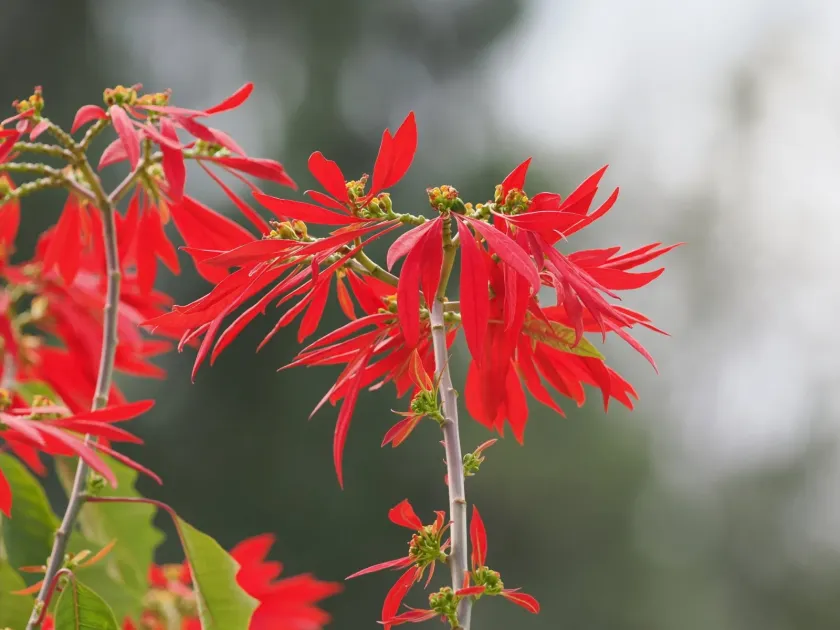
Description
Growing requirements
Poinsettia (Euphorbia pulcherrima) belongs to the Euphorbiaceae family. This crop is globally recognized as a primary ornamental plant, requiring precise environmental control to ensure high-quality commercial production.
Native to Mexico and Central America, the plant evolved in tropical climates. In greenhouse conditions, the photoperiod is the most significant factor: as a short-day plant, it requires absolute darkness for at least 12–14 hours per night to induce flowering.
The substrate must be highly porous and well-drained. Professional growers typically use peat-based media with a pH adjusted between 5.5 and 6.5. Poor drainage often leads to immediate physiological failure.
Temperature management is critical. Growers maintain daytime temperatures around 20–25°C, while nighttime temperatures should be strictly controlled to prevent stunted growth or leaf abscission.
Irrigation practices must be calibrated based on the growth stage. Over-watering is the most common mistake, leading to significant crop losses due to the lack of oxygen in the root zone.
Main diseases and pests
Disease management is a cornerstone of Poinsettia production. Key fungal threats include Anthracnose, Rhizoctonia, Sclerotinia, and Ashy stem blight, which primarily attack the root system and the lower stem.
Pythium root rot is a constant danger in greenhouse environments. Gray mold (Botrytis cinerea) is especially problematic during the final stages of development, as it destroys the colored bracts, rendering the plant unsalable.
Root-knot nematodes (Meloidogyne spp.) pose a severe risk to plant vigor. Once infested, the root system fails to uptake water and nutrients efficiently, leading to rapid decline.
Integrated Pest Management (IPM) is essential for commercial success. This includes strictly sanitary procedures, the use of sterile growing media, and rotating fungicides to prevent resistance in pathogens.
Regular scouting for pests such as whiteflies and fungus gnats must be conducted. Implementing biological control agents combined with targeted chemical interventions ensures a healthy harvest.