
Martini's Spurge
Euphorbia x martini Rouy
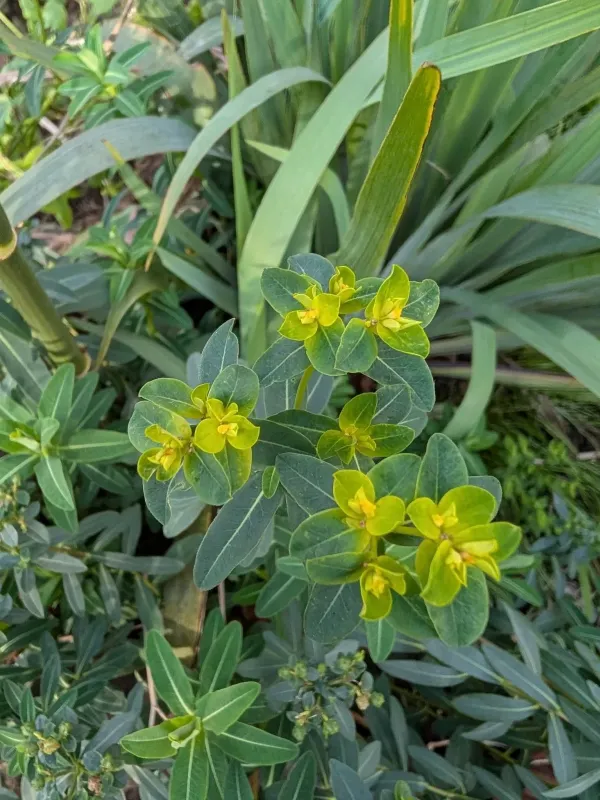
Description
Growing requirements
Martini's Spurge (Euphorbia x martini) is a notable hybrid perennial belonging to the Euphorbiaceae family. This ornamental plant is the result of crossing Euphorbia amygdaloides and Euphorbia characias, which results in a plant that combines structural elegance with robust garden performance.
The plant thrives in well-drained, fertile soil. It performs best in locations that mimic its native Mediterranean-like habitats, characterized by dry, rocky, or gravelly soils. Excellent drainage is non-negotiable, as the roots are highly susceptible to rot if allowed to sit in waterlogged substrate.
Environmental conditions require full sun exposure to maintain the plant's characteristic compact habit and intense foliage coloration. While it exhibits moderate drought tolerance once established, consistent soil moisture during the spring growth phase is essential for optimal flower development.
Maintenance techniques include yearly pruning of spent flowering stems to encourage basal growth. This prevents the plant from becoming excessively woody or sparse at the base, ensuring it remains an attractive, bushy addition to the landscape throughout its growing season.
Fertilization should be applied sparingly, as high nitrogen levels promote weak growth that is prone to lodging. A balanced, slow-release fertilizer applied in early spring is usually sufficient to support the plant for the entire season without compromising its structural integrity.
Main diseases and pests
Root rot is the primary physiological threat to Martini's Spurge, typically induced by poorly drained soil or over-irrigation. In severe cases, the entire root system can collapse, leading to the rapid decline and death of the plant within a few weeks.
Aphids are the most common insect pest, particularly in early spring when succulent new growth is most abundant. They concentrate on the bracts and shoot tips, which can lead to distorted growth and the secondary development of sooty mold on the foliage.
Powdery mildew represents a significant fungal threat, especially in humid regions or areas with stagnant air circulation. The disease appears as a white, dusty layer on the leaves, which can inhibit photosynthesis and prematurely weaken the plant's vigor.
Spider mites can also become a problem during hot, dry summer spells, leading to speckled leaves and yellowing. Regular monitoring of the foliage and overhead misting in the early morning can help mitigate these infestations without heavy chemical intervention.
Safety precautions are essential when handling this plant, as all species within the Euphorbia genus contain a caustic latex sap. This substance acts as a severe skin and eye irritant, so protective clothing, gloves, and eye protection are required during pruning or transplanting.