
Terracina spurge
Euphorbia terracina L.
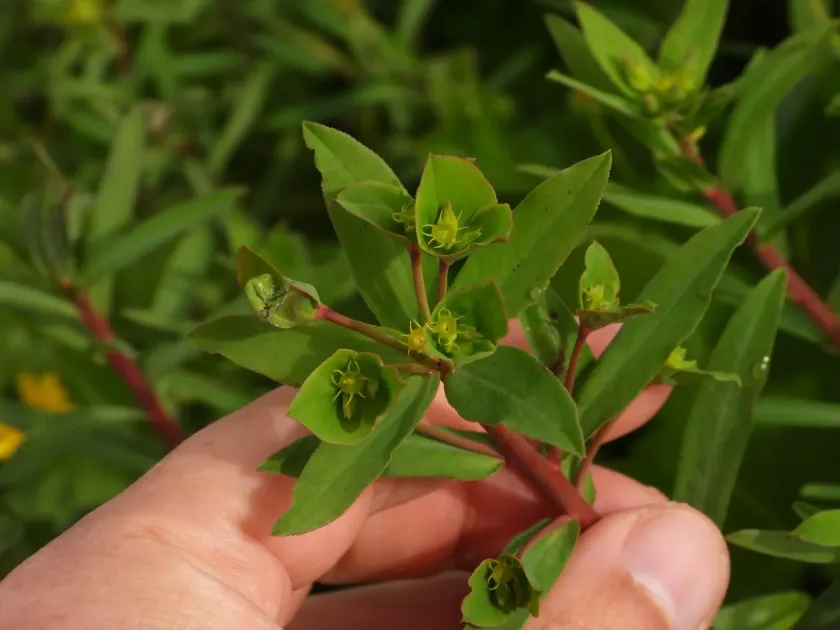
Description
Sowing dates
Terracina spurge is a herbaceous perennial that typically propagates through seeds. In its native range, the germination process is triggered by warming soil temperatures in early spring, usually when moisture levels are sufficient to soften the seed coat.
In agricultural settings, the emergence of this species can be unpredictable due to the persistent nature of its seed bank. Seeds can remain viable in the soil for several years, germinating sporadically when environmental conditions become optimal.
Field management requires early intervention, as seedlings develop rapidly and establish competitive root systems within weeks of emergence. Once the taproot begins to thicken, manual or mechanical removal becomes significantly more difficult.
Seed dispersal is aided by explosive dehiscence of the capsules, which can scatter seeds over a considerable distance. This mechanism facilitates the spread of the plant across field margins and into cultivated land, complicating control efforts.
Late autumn emergence is also common in warmer climates. This requires farmers to be vigilant during the pre-winter period to prevent the establishment of overwintering rosettes, which can quickly mature once spring arrives.
Growing requirements
Euphorbia terracina belongs to the Euphorbiaceae family and thrives in a variety of disturbed environments. It prefers full sun exposure but can tolerate partial shade, provided the soil drainage remains adequate for its root system.
The plant is highly adaptable to different soil types, ranging from sandy dunes to heavier clay loams. Its ability to extract nutrients from poor soils gives it a significant advantage over many crop species in low-input farming systems.
This species exhibits remarkable drought tolerance, a trait that allows it to survive long dry spells. Its taproot can reach deep into the soil profile to access water, making it a persistent competitor for moisture in semi-arid agricultural regions.
Soil salinity does not deter the growth of Terracina spurge, as it is naturally adapted to coastal conditions. This makes it a frequent inhabitant of coastal farmlands where soil mineral levels are elevated.
Temperature range for active growth is quite broad, though the plant shows optimal metabolic activity in warm, temperate conditions. It is resilient enough to survive mild frosts, often maintaining green foliage throughout the winter months in protected spots.
Main diseases and pests
Terracina spurge is susceptible to various fungal pathogens, including rusts that target the foliage. These infections can lead to significant leaf drop and a reduction in the plant's overall photosynthetic capacity during the peak growing season.
Viral infections can cause stunted growth and yellowing of the leaves, which are typical symptoms of stress in this species. These viruses are often transmitted by sap-sucking insects that frequent the host plant throughout its development.
Several insect pests specialize in feeding on Euphorbia species, often developing resistance to the toxic latex contained within the plant tissues. Damage from these insects can weaken the plant but rarely results in the eradication of the population.
Root rots caused by soil-borne pathogens are a potential threat, especially in waterlogged areas. However, because the plant is adapted to well-drained soils, these instances are relatively rare and usually do not impact large populations.
Management of these threats is often secondary to the primary goal of weed suppression. Integrated pest management approaches that include crop competition and regular soil cultivation remain the most effective strategies for controlling this weed.