
Flowering Spurge
Euphorbia corollata L.
Description
Growing requirements
Flowering Spurge (Euphorbia corollata L.) is a herbaceous perennial belonging to the Euphorbiaceae family. Native to North America, it is naturally adapted to dry prairies and open woodlands, making it a robust choice for specific environmental conditions.
The plant thrives in full sun and is exceptionally tolerant of heat and drought. Once established, its deep taproot system allows it to access moisture reserves in the soil, minimizing the need for supplemental irrigation.
Soil requirements for this species include excellent drainage. It performs best in sandy or rocky soils, as heavy clay soils tend to hold too much water, which can be detrimental to the plant's health.
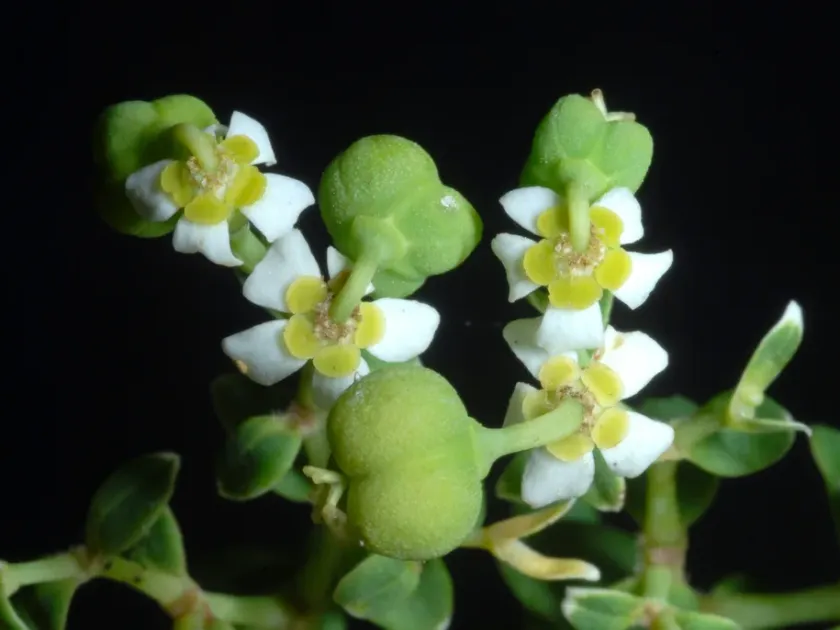
Cultivation of this plant is largely ornamental, utilized in meadow-style gardens or prairie restorations. Its delicate white floral bracts provide a sophisticated aesthetic, appearing in mid-to-late summer.
In terms of soil nutrition, it is relatively undemanding. It can flourish in poor, nutrient-deficient soils, meaning it requires very little fertilization compared to more intensive agricultural or horticultural crops.
Main diseases and pests
Root rot is the primary threat to the species, particularly in settings where soil drainage is inadequate. Constant saturation of the root zone almost inevitably leads to fungal pathogens attacking the root system.
Pests are generally not a major concern because the milky latex sap contains compounds that deter many herbivores. This toxic latex is a natural defensive trait that maintains the plant's structural integrity.
Aphids may occasionally appear on tender new growth. While they are rarely fatal to established plants, large colonies can cause distortion of the leaves and stems if left completely untreated.
Powdery mildew can occur during periods of high humidity and poor air circulation. Providing adequate spacing during planting is the most effective cultural practice to mitigate this risk.
Physical damage to the root system should be avoided during weeding or soil cultivation. Maintaining the integrity of the root crown is essential for the long-term vigor and winter survival of the perennial clumps.