
Dwarf spurge
Euphorbia exigua L.
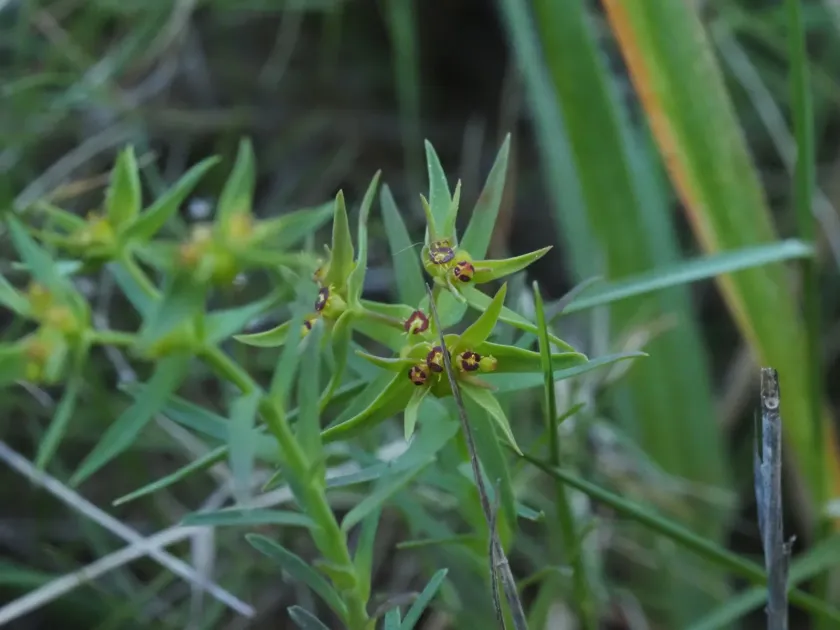
Description
Growing requirements
Dwarf spurge (Euphorbia exigua L.) is a member of the Euphorbiaceae family. It is a small annual herb widely recognized as an arable weed in European and temperate Asian agriculture.
The plant typically grows in open habitats, including arable fields, stony ground, and calcareous soils. It is highly adaptable and can colonize various soil types ranging from loams to lighter, sandy textures.
Botanically, it features a slender, branching stem and linear, sessile leaves. Like other members of its genus, it contains a milky white latex that is released when the plant tissue is damaged.
Regarding climate requirements, it thrives in temperate conditions. It is frost-hardy to some extent, allowing it to emerge during mild winter periods or early spring as a winter or spring annual.
Effective management strategies include cultural practices such as crop rotation, deep ploughing, and the use of competitive cultivars. Chemical control is also applied if the weed density exceeds economic thresholds.
Main diseases and pests
While not a primary host for major agricultural viruses, dwarf spurge can harbor generalist pests such as aphids, which may subsequently move to cash crops.
Fungal diseases like powdery mildew are commonly found on the leaves of this species. In favorable conditions, these spores can spread to nearby susceptible crop varieties.
The plant's natural defense mechanism, the caustic milky sap, discourages many insects, but the plant remains a reservoir for certain soil-borne pathogens that impact root health.
Competition for nitrogen and essential micronutrients is the primary negative impact on crops. This can result in significant yield losses if infestations occur early in the growing season.
Control of this weed prevents the build-up of the soil seed bank, which is crucial as the species produces a large number of seeds capable of remaining viable in the soil for several years.