
Melon Spurge
Euphorbia meloformis Aiton
Description
Growing requirements
The Melon Spurge Euphorbia meloformis is a distinguished member of the Euphorbiaceae family. This species is native to the Cape Province of South Africa, where it thrives in arid, rocky environments.
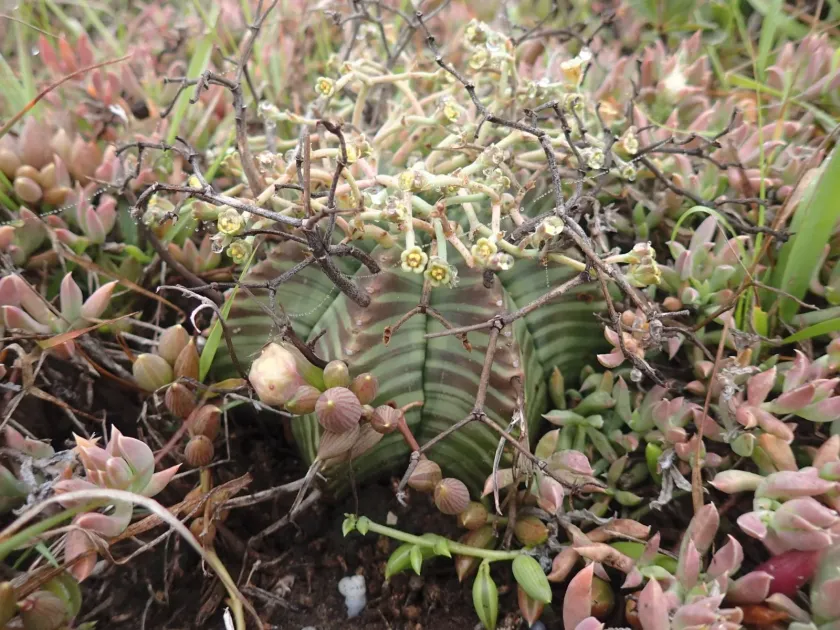
Botanically, it is characterized by a spherical, ribbed stem that often features attractive purple or brownish markings. Unlike many other plants, it is a dioecious species, requiring separate male and female plants for seed production.
Cultivation requires a highly porous, gritty substrate that facilitates rapid drainage. The plant is extremely drought-tolerant and should never be left sitting in water, which can cause rapid tissue rot.
Exposure to bright, filtered sunlight is essential for maintaining the compact growth form of the plant. During the dormant winter season, the plant should be kept cool and dry to mimic its natural environment.
In terms of economic utility, this succulent is a prized ornamental crop. It is widely cultivated by nurseries specializing in rare xerophytic plants and is highly sought after by private collectors worldwide.
Main diseases and pests
Root and stem rot are the most significant threats to the survival of the Melon Spurge. These conditions are almost always the result of overwatering or inadequate soil aeration in the planting medium.
Common agricultural pests include mealybugs and spider mites, which can easily hide within the ribs of the plant. These pests feed on the plant sap, leading to aesthetic damage and growth stagnation.
Effective management involves the periodic application of appropriate pesticides and manual removal of pests if infestations are identified early. Systemic treatments are preferred for long-term protection.
Maintaining proper hygiene in the greenhouse, including the sterilization of pots and tools, prevents the spread of pathogens. Good airflow is critical for inhibiting the development of fungal spores.
Regular monitoring of the plant's health, particularly checking for soft spots at the base, allows for quick intervention. Providing appropriate seasonal conditions remains the best defense against systemic illness.