
Wulfen spurge
Euphorbia characias L. subsp. wulfenii (Hoppe ex W. D. J. Koch) Radcl.-Sm.
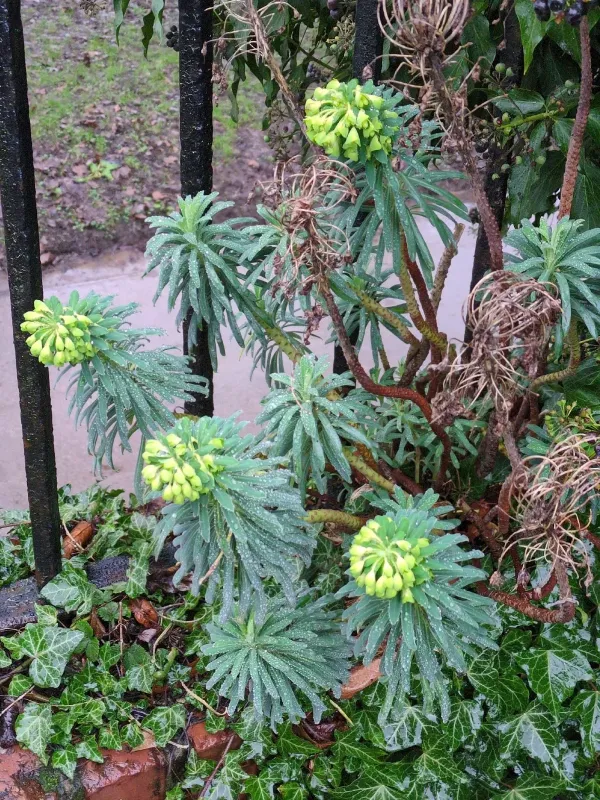
Description
Sowing dates
Propagation of Wulfen spurge is typically performed through seeds or stem cuttings. Seed sowing is best carried out in late autumn, as the seeds require a period of cold stratification to break dormancy.
If spring sowing is planned, seeds must be kept in a cool environment (refrigerator) for at least 6 to 8 weeks. This mimics winter conditions and significantly enhances germination rates.
Seeds should be sown in a well-draining, sandy-loam substrate. Place them at a depth of approximately 0.5 cm, ensuring they are not buried too deeply to maintain access to light.
For vegetative propagation, take cuttings from non-flowering side shoots in late spring. It is vital to wash away the milky sap from the cutting and allow the end to callous before planting.
Ensure that young seedlings have sufficient spacing, as Euphorbia characias grows into a large, architectural shrub that needs space for proper air circulation.
Growing requirements
Wulfen spurge, a member of the Euphorbiaceae family, is a native to the Mediterranean region. It thrives best in full sun and requires exposure to direct light for at least 6–8 hours daily.
Soil conditions are critical: the plant requires excellent drainage. It performs exceptionally well in stony or gravelly soils with low to moderate fertility levels.
Climatic adaptability is moderate; while the plant is hardy in many zones, it prefers protection from harsh, drying winds during winter months to prevent tissue damage.
Irrigation should be minimal once the plant is established. It is highly drought-tolerant, and overwatering is the most common cause of failure in cultivating this species.
Routine maintenance includes pruning spent flower stalks in late summer or early autumn to encourage healthy new growth from the base for the following season.
Main diseases and pests
Root rot is the primary disease affecting Wulfen spurge. It is almost exclusively caused by poorly drained soils or excessive moisture during periods of dormancy.
Pests such as aphids may occasionally cluster on the tender tips of young growth. While generally not fatal, they can cause curling and distortion of the foliage.
The plant is relatively resistant to most garden pests due to its toxic milky sap, which acts as a deterrent for many herbivores and insects.
To prevent disease, ensure that the site has optimal drainage and that the soil does not remain waterlogged for extended periods, especially during rainy seasons.
Always use gloves when pruning, as the latex sap can cause significant skin irritation and allergic reactions in sensitive individuals upon direct contact.