
Candelabra tree
Euphorbia candelabrum Kotschy
Description
Growing requirements
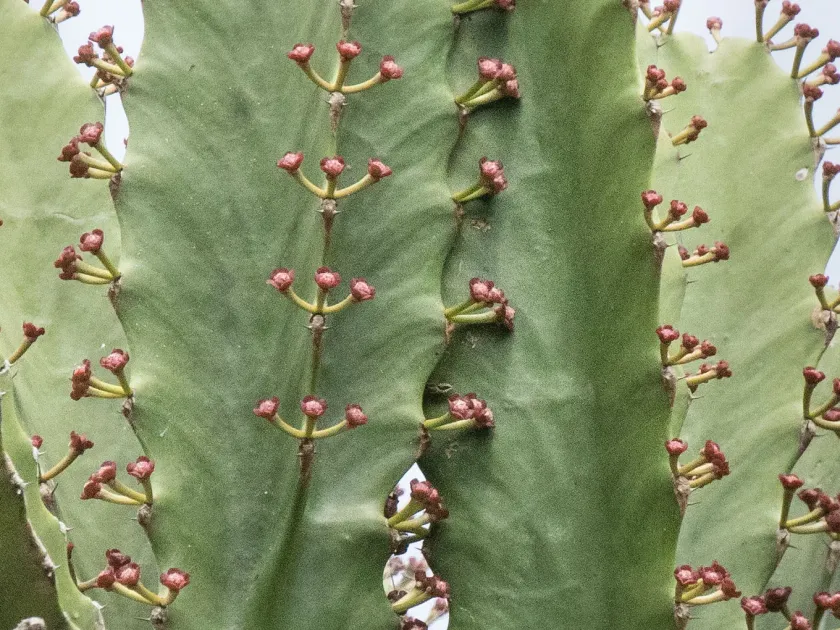
The Candelabra tree (Euphorbia candelabrum) is a striking succulent belonging to the Euphorbiaceae family. Native to East Africa, this species is renowned for its vertical growth habit and branching structure that resembles a large candelabra, often reaching significant heights in the wild.
Cultivation requires a location with full sun exposure to maintain the plant's structural integrity. The soil must be exceptionally well-draining, ideally a gritty mix composed of coarse sand, pumice, and minimal loam, which mimics its natural rocky habitat.
The plant thrives in warm tropical or subtropical climates, requiring temperatures between 20°C and 30°C. It is highly sensitive to frost; even mild cooling can cause severe physiological damage or death to the plant's tissues.
Agrotechnical management emphasizes extreme caution with irrigation. Water should only be provided when the soil has completely dried out, with a significant reduction in watering during the dormant winter months to prevent physiological stress.
This species is primarily utilized as an ornamental plant in xeric landscaping. It is highly prized by designers for its sculptural silhouette, making it an ideal focal point in gardens designed for water conservation and arid aesthetics.
Main diseases and pests
The most critical threat to Euphorbia candelabrum is fungal rot, which originates from overwatering or inadequate soil drainage. Once rot sets in, it spreads rapidly through the succulent tissues, often requiring surgical excision of the affected parts.
Pests such as mealybugs and spider mites are frequent invaders. These pests hide in the deep grooves of the succulent's stems, where they can be difficult to detect and eradicate without thorough and repeated treatment.
Safety is paramount when handling this species, as the milky latex sap is highly toxic and corrosive. Exposure can cause severe dermatitis, and contact with the eyes can lead to temporary or permanent damage, necessitating strict adherence to protective equipment usage.
To mitigate the risk of disease, maintain good ventilation and avoid misting the stems. Regularly disinfecting pruning tools is also essential to prevent the cross-contamination of pathogens between plants.
- Monitor for sap-sucking insects.
- Ensure excellent drainage and airflow.
- Use protective gear when handling.
- Isolate newly acquired plants for health monitoring.
- Avoid high humidity in winter.