
Pedilanthus
Euphorbia tithymaloides L.
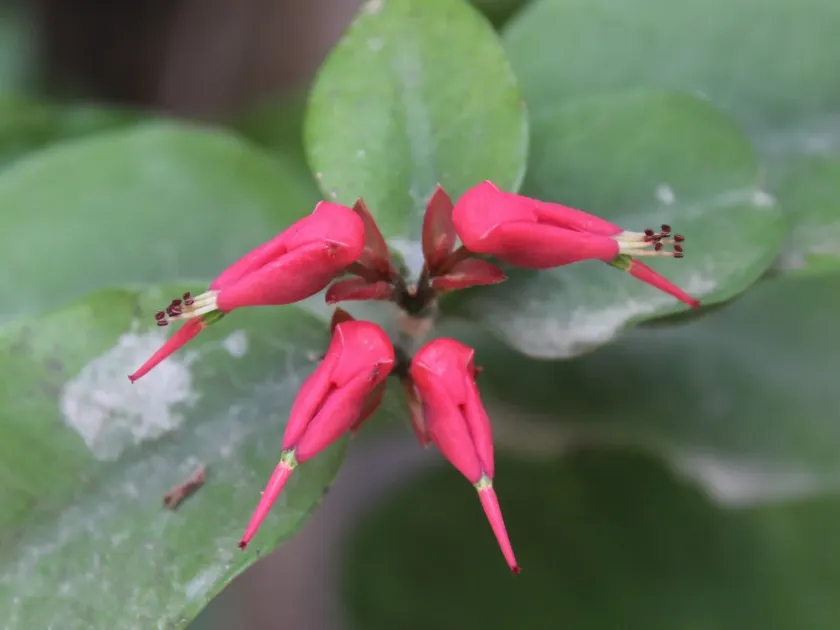
Description
Growing requirements
Pedilanthus (Euphorbia tithymaloides L.) is a member of the Euphorbiaceae family, recognized as a succulent shrub with a unique zigzag stem morphology. Originating from the tropical regions of the Americas, this species thrives in environments with distinct wet and dry seasons.
Botanically, it is a versatile plant that adapts well to controlled indoor environments. It exhibits a slow to moderate growth rate and can reach significant heights when provided with appropriate container size and regular nutritional support during the growing season.
Light requirements are critical: the plant requires bright, indirect sunlight to maintain its shape and foliage coloration. Insufficient light leads to etiolation, where the stems become thin, weak, and lose their natural zigzag structure, significantly impacting decorative value.
The soil must be highly porous to ensure efficient drainage, as the roots are sensitive to waterlogging. A mixture composed of peat, coarse sand, and perlite is generally recommended to prevent anaerobic conditions within the root zone.
Temperature management involves maintaining warmth during the active growth phase, ideally between +20 and +25 degrees Celsius. During the winter months, the plant benefits from a cooling period, which mimics its natural seasonal rhythm and encourages structural stability.
Main diseases and pests
Mealybugs are the primary pests encountered in Pedilanthus cultivation, typically clustering in leaf axils. These sap-sucking insects drain the plant's energy and leave behind sticky secretions that promote the growth of sooty mold, necessitating systemic insecticide treatment.
Spider mites represent a major threat under low humidity conditions, often causing stippling or bronzing of the leaves. Regular misting and proper air circulation are key preventative measures against these microscopic arachnids, especially during the indoor heating season.
Root rot, often caused by Pythium or Phytophthora fungi, is the most common pathology resulting from overwatering or poorly drained substrates. Symptoms include softening of the lower stems and an inability for the plant to uptake moisture despite moist soil conditions.
Fungal infections of the foliage can occur if water remains trapped on the surface of the leaves in poorly ventilated areas. This is usually manifested as localized necrotic spots or gray mold, which should be pruned immediately to prevent further systemic spread.
Effective pest management relies on early detection and integrated control practices. Using insecticidal soaps or specialized horticultural oils is recommended for minor infestations, whereas systemic treatments are necessary for severe outbreaks to ensure the plant's survival.