
Corn spurge
Euphorbia segetalis L.
Description
Growing requirements
Corn spurge (Euphorbia segetalis L.) belongs to the Euphorbiaceae family and is recognized as a significant annual weed in agricultural settings. It typically colonizes arable lands, grain fields, and orchards, where it competes effectively with crops for available resources.
The plant thrives in well-lit, open environments and exhibits a strong preference for light, sandy, or well-drained loamy soils. It has developed efficient physiological adaptations to withstand periods of drought, allowing it to maintain growth even under stressful environmental conditions.
In terms of climatic requirements, Corn spurge favors temperate regions. Seed germination usually commences in early spring as soil temperatures climb, although intermittent germination events may occur throughout the growing season if soil moisture remains adequate.
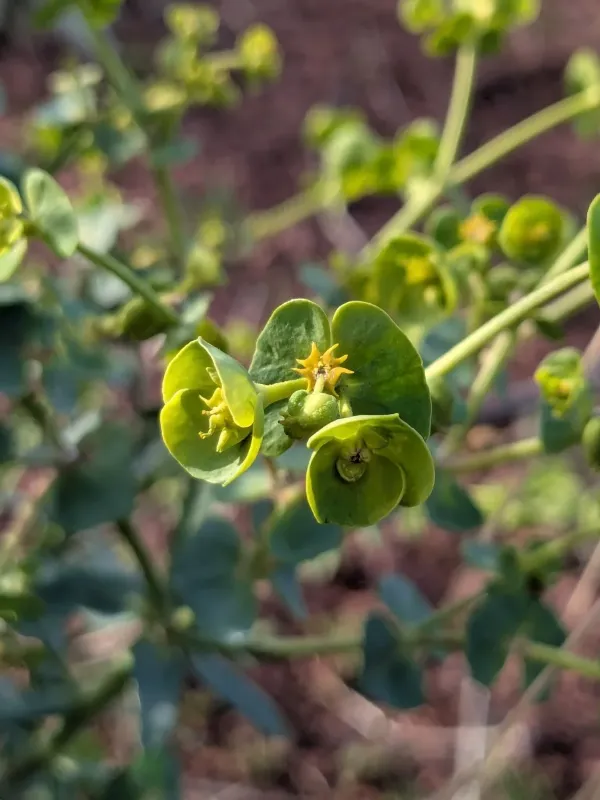
Botanically, the plant is characterized by slender, smooth stems reaching 15-40 cm, often branching from the base. Its leaves are narrow and linear, while the inflorescence consists of terminal cyathia with yellowish-green glands, typical for the Euphorbia genus.
A distinctive trait of this species is the presence of white, latex-like sap throughout its vascular system. This sap contains compounds that act as chemical defenses, rendering the plant unpalatable or toxic to livestock and providing immunity against various generalist herbivores.
Main diseases and pests
The primary agricultural threat posed by Corn spurge is its prolific seed production. A single mature plant can release thousands of seeds into the soil profile, creating a long-term seed bank that necessitates sustained multi-year management to reduce overall population density.
Corn spurge acts as an alternative host for various plant pathogens, including rust fungi, which may migrate to susceptible cash crops. By harboring these pests, the weed increases the potential for widespread disease outbreaks within the field, impacting final yields.
While some specialized insects are adapted to feed on the toxic foliage of the spurge, they are generally ineffective at suppressing the plant's spread to levels acceptable for modern industrial farming. Consequently, reliance on chemical and mechanical intervention is usually required.
Chemical control is most effective during the vegetative phase before the plant reaches flowering. Using systemic herbicides that translocate to the deep root system is recommended to ensure complete suppression of the plant, preventing re-growth and seed development.
Mechanical control strategies, such as deep plowing and timely cultivation, are essential components of an integrated weed management program. By disrupting the life cycle and exhausting the seed bank, farmers can effectively limit the encroachment of this hardy weed species.