
Crested Euphorbia
Euphorbia lophogona Lam.
Description
Growing requirements
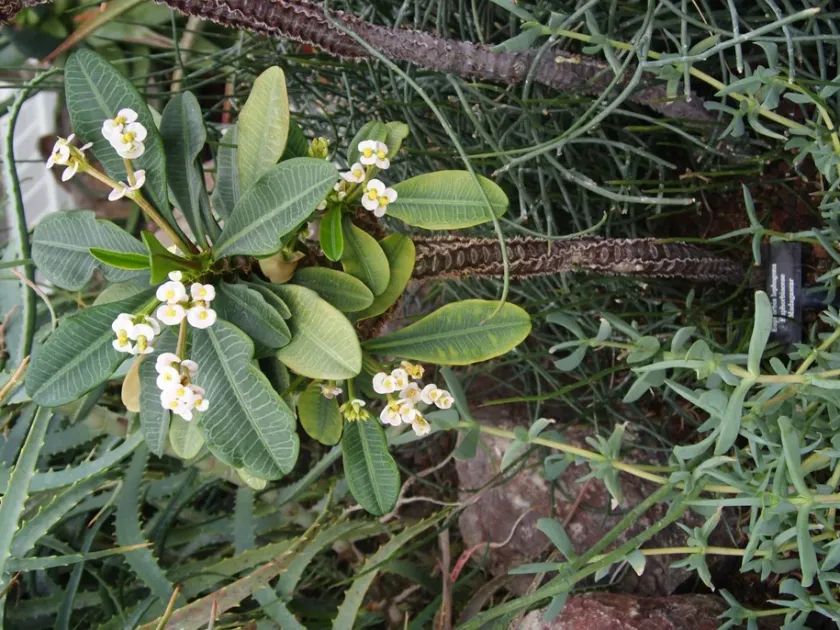
Crested Euphorbia (Euphorbia lophogona) is a succulent shrub belonging to the Euphorbiaceae family, native to the island of Madagascar. It is recognized for its thick, ribbed stems and rosettes of glossy, dark green leaves that grow at the top of the plant.
This species requires bright, indirect sunlight to maintain its structural integrity. While it can tolerate some morning sun, exposure to intense midday rays in high-heat environments may damage its succulent tissue and reduce its aesthetic appeal.
Soil requirements for this plant focus on excellent drainage. A mix designed for cacti and succulents, containing sand, pumice, or perlite, is ideal to ensure that water does not remain trapped around the roots for extended periods.
During the growing season, moderate watering is necessary once the top layer of soil has dried out completely. In winter, the plant enters a period of dormancy where water intake should be significantly reduced to prevent physiological stress.
In terms of agricultural and horticultural use, Crested Euphorbia is primarily valued as an ornamental specimen in greenhouses and residential interiors. Its unique architectural form makes it a staple for collectors of rare succulents and desert flora.
Main diseases and pests
The most common threat to this plant is root rot caused by overwatering or poor drainage systems. This fungal issue often presents as blackening at the base of the stem and requires immediate soil replacement and reduction of watering frequency.
Pest pressure from spider mites and mealybugs is frequent, especially in dry and poorly ventilated conditions. These pests typically cluster in the crevices between the stem ribs and the base of the leaves, weakening the plant's vitality.
Manual monitoring is the most effective way to combat infestations early. Gently wiping leaves with a diluted solution of insecticidal soap can remove initial outbreaks without causing chemical stress to the plant.
It is critical to remember that the plant produces a white, milky latex sap, which is classified as highly irritating to human skin and eyes. Always wear protective gloves and avoid touching your face while handling or pruning the plant.
Finally, maintaining an ambient environment that prevents extreme temperature fluctuations is vital. Rapid drops in temperature, coupled with high humidity, create the perfect conditions for opportunistic pathogens that can plague the stem tissues.