
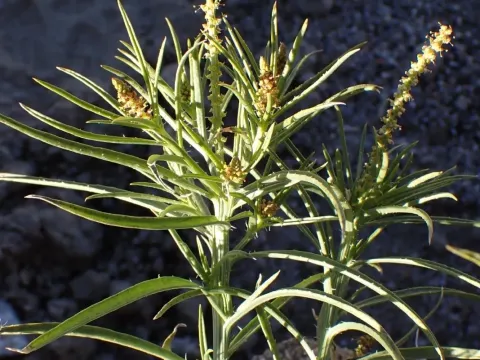
Stillingia
Stillingia
Sowing of Stillingia seeds is primarily conducted in the spring, once the soil temperature consistently reaches 15–18 degrees Celsius. Maintaining stable soil moisture is crucial during the initial weeks after germination, as young seedlings are highly sensitive to water stress.
What the section contains


Stillingia
In industrial settings, seeds are planted in rows with spacing of up to 50–70 cm. This provides the crop with sufficient space to develop a robust root system and form a healthy canopy, which is essential for maximizing biomass and overall crop yield.
The planting depth is usually 2–3 cm, depending on the soil texture. In lighter soils, slightly deeper planting helps protect the seeds from desiccation, though excessive depth can significantly hinder emergence and reduce the overall stand density.
To improve germination rates, seeds are often stratified or treated with growth stimulants before planting. This ensures uniform emergence, allowing the crop to compete effectively with weeds during the early stages of the growing season.
Sowing dates must be carefully chosen to avoid the risk of late frosts. As delicate Stillingia seedlings are vulnerable to freezing temperatures, any cold snaps post-germination can result in significant loss and require replanting efforts.
Stillingia belongs to the Euphorbiaceae family and encompasses a range of perennial herbs, shrubs, and small trees. From an agronomic perspective, the most relevant species are those native to tropical and subtropical regions of North and South America.
The crop thrives in well-drained, fertile sandy loam or loamy soils with a neutral to slightly acidic pH. Waterlogging is detrimental to the roots, so it is vital to select sites that prevent standing water, ensuring optimal drainage throughout the growing season.
Stillingia requires high solar radiation and a warm climate to thrive. Optimal temperatures for active growth range from 22 to 30 degrees Celsius. Prolonged periods of cloud cover or cold weather can suppress metabolism and significantly reduce total productivity.
Effective management includes regular inter-row cultivation to maintain soil aeration and suppress weed growth. In drought-prone areas, drip irrigation systems are recommended to maintain consistent turgor pressure in plant tissues, especially during critical growth phases.
Nutrient management involves applying balanced mineral fertilizers, prioritizing nitrogen during the active vegetative stage and phosphorus-potassium blends during budding and fruit set to support the development of nutrient-rich seeds.
The yield of Stillingia depends heavily on the specific species and the level of agricultural management. When optimal agronomic practices are followed, the crop can provide a significant harvest of seeds rich in fatty oils, which are valuable for technical industries.
Harvesting should be performed when the fruits reach technical maturity, indicated by the drying of the fruit capsules and the characteristic color change of the seeds. Timely harvest is critical to prevent spontaneous seed dispersal from mature capsules.
Post-harvest processing involves drying the seeds in well-ventilated facilities to reach a moisture content of 10–12%. Proper drying is essential to prevent mold and spoilage during storage, ensuring that the oil quality remains intact for future processing.
Processing consists of mechanical pressing to extract oils. The resulting press cake can be utilized as a soil amendment, provided that any natural toxins common to the Euphorbiaceae family are properly neutralized during the processing cycle.
Yield metrics fluctuate based on regional climate variations and soil health. In intensive farming systems within favorable environments, yields can range significantly, providing a stable economic output for industrial applications.
Stillingia is susceptible to various pests common among Euphorbiaceae, such as spider mites and aphids. These insects feed on leaf sap, leading to stunted shoot growth, deformed foliage, and a general decline in the plant's physiological health.
Fungal diseases like root rot and leaf spots often occur under conditions of excessive humidity or poor soil drainage. Managing these threats requires the application of systemic fungicides and the implementation of a strict, multi-year crop rotation schedule.
Insects often act as vectors for viral diseases, for which chemical treatments are largely ineffective. Therefore, the primary line of defense is preventative, focusing on high-quality planting materials and constant surveillance of the field to spot early symptoms.
Regular phytosanitary maintenance, including the removal of infected plant material, is essential to halt the spread of pathogens. This practice reduces the need for heavy chemical intervention, helping to maintain a more sustainable and environmentally friendly production.
Biological control, such as the introduction of natural predators or beneficial insects, is an increasingly popular approach to managing Stillingia health. This method reduces the reliance on harsh pesticides while promoting a healthier farm ecosystem.