

Alternaria leaf spot
Alternaria alternata
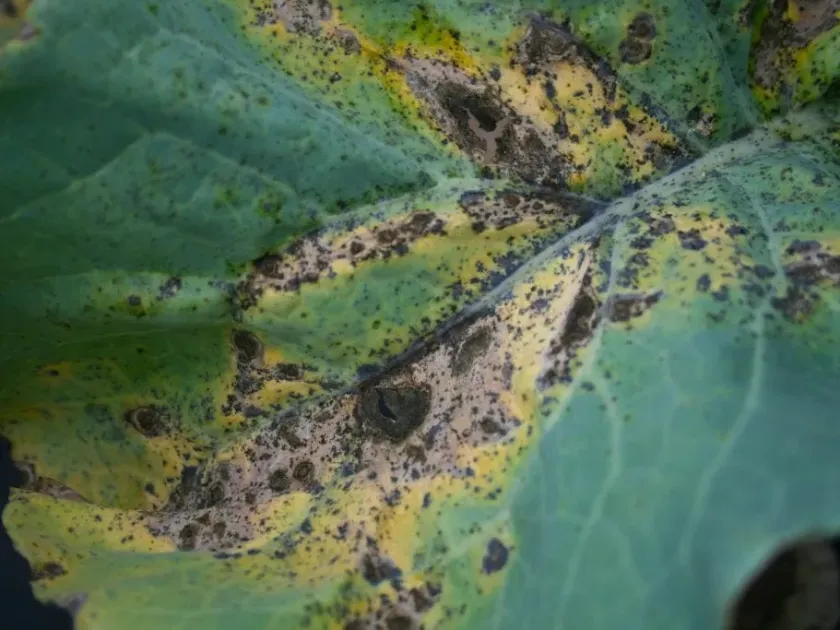
Description
Symptoms
Early symptoms appear as small, circular, dark brown or greyish spots that often develop concentric rings, giving them a target-like appearance.
Under humid conditions, these spots become covered with a dense, velvety, olive-black fungal growth, which is the primary source of secondary inoculum.
As the infection progresses, lesions enlarge and coalesce, resulting in widespread leaf chlorosis, necrosis, and premature senescence.
On storage organs like onions or root crops, the disease manifests as dry rot with sunken lesions that penetrate deep into the tissue.
In oilseed rape and other brassicas, the pathogen attacks pods, causing premature dehiscence (shattering) and significant yield losses before harvest.
Pathogen
The disease is caused by the fungus Alternaria alternata, a facultative parasite that survives in soil, plant debris, seeds, and perennial weed hosts.
This pathogen is highly adaptable and can thrive in a wide range of climatic conditions, making it a ubiquitous threat in global agriculture.
It affects a broad spectrum of host plants, including onions, garlic, celery, peanuts, fodder beets, Indian mustard, oilseed rape, and turnips.
The fungus spreads via conidia, which are easily disseminated by wind currents, rain splashes, and insect vectors over long distances.
The life cycle features an active vegetative stage during favorable moist periods and a resting stage as mycelium, allowing it to survive harsh winter conditions.
Conditions for development
Alternaria thrives in warm temperatures ranging from +20°C to +28°C combined with high relative humidity or frequent leaf wetness.
Persistent rains, heavy dews, and fog provide the optimal moisture levels required for spore germination and rapid tissue colonization.
Plants under physiological stress—due to nutrient deficiency, drought, or heavy pest infestation—are significantly more susceptible to successful infection.
Dense planting patterns that restrict airflow create a microclimate conducive to rapid disease outbreaks within the crop canopy.
Poor rotation practices, where susceptible crops are grown in close succession, lead to a massive buildup of fungal inoculum in the soil.
Why it matters
The disease causes substantial economic losses, often reducing crop yields by 30–50% in years with conducive weather conditions.
Market value is severely compromised as spots disfigure produce, and storage rots cause rapid decay of harvested bulbs and roots.
Quality parameters, including oil content in seeds and sugar levels in root crops, are significantly reduced due to impaired photosynthesis.
The fungus can produce mycotoxins that contaminate produce, potentially posing health risks to human and animal consumers.
Early defoliation reduces the photosynthetic area, which directly results in smaller tubers, underdeveloped bulbs, and reduced seed weight.
Protection
Crop rotation is the foundation of management, requiring a break of at least 3–4 years between susceptible crops to starve the soil-borne inoculum.
Sanitation is critical, involving the deep incorporation or removal of crop residues and the rigorous control of alternate weed hosts.
Selection of resistant varieties and the use of certified, disease-free seed are essential proactive steps in integrated disease management.
Fungicide applications, particularly using strobilurins and triazoles, are effective when applied preventatively or upon the detection of initial symptoms.
- Maintaining optimal plant spacing to promote canopy ventilation.
- Balanced fertilization, with special attention to sufficient potassium levels.
- Managing insect pests to minimize entry points for fungal infection.
- Proper post-harvest storage management with low humidity and ventilation.
- Utilizing biological antagonists to suppress fungal growth in the soil.
In brief
58
Affects crops
Biology
Pathogens and affected parts
Pathogens
Alternaria alternata· fungus
Alternaria mali· fungus
Alternaria· fungus
Alternaria tenuis· fungus
Alternaria brassicae· fungus
Alternaria tenuissima· fungus
Alternaria saponariae· fungus
Alternaria dianthi· fungus
Alternaria dianthicola· fungus
Alternaria radicina· fungus
Cercospora apii· fungus
Alternaria smyrnii· fungus
Affected plant parts
leafwhole plantfruitstemseedrootbulbear
Content graph
Affects crops · 58
AlmondAppleApricotCarnationCattleyaCeleryChickpeaCitrusCommon beanCommon hopCommon sunflowerCommon walnutCranberryDate palmDuracina cherryField peaFlaxFlaxFodder beetGarden verbenaGarlicGerbera jamesoniiGrapevineHempIndian mustardJerusalem artichokeJerusalem cherryLentilLettuceMaizeMangoOnionPapayaPeachPeanutPearPepperPistacia veraPotatoRadishRaspberryRiceRoseRyeSafflowerSchlumbergeraSchlumbergera truncataSour cherrySoybeanSpinachStrawberrySugarcaneSweet potatoTurnipWatermelonWinter barleyWinter rapeseedWinter wheat
Reference
Connections · Alternaria leaf spot
Most often together:
Marketplace
Products · 2137



















Community
Discussion
No discussions yet — be the first.