
Alternaria tenuissima
Alternaria tenuissima
Description
How to identify
Alternaria tenuissima is a mitosporic fungus belonging to the kingdom Fungi and the genus Alternaria. It is a widely recognized plant pathogen that exhibits both pathogenic and saprophytic lifestyles.
The fungus is characterized by septate, branched mycelia that often appear olive-brown or dark brown in color. It produces chains of conidia, which are identifiable under a microscope by their characteristic transverse and longitudinal septa.
Unlike some other members of the genus, A. tenuissima frequently acts as a secondary colonizer, taking advantage of plant tissues that have already been weakened by environmental stress or primary infections.
This species is known to produce various mycotoxins, which contribute to its pathogenicity by suppressing plant defenses and damaging host cell structures during the infection process.
Identification of the species is generally confirmed through laboratory isolation on culture media, followed by morphological observation of the conidial chains and septation patterns using standardized mycological techniques.
What it damages
This pathogen has a very broad host range, infecting a vast array of agricultural crops including cereals, vegetables (solanaceous crops), legumes, oilseeds, and various fruit-bearing trees.
Commonly affected plants include potatoes, tomatoes, wheat, sunflowers, and soybeans. The fungus can infect leaves, stems, fruits, and seeds, significantly reducing overall crop vigor and yield quantity.
In cereal crops, it is a primary agent of "black point" disease, which leads to seed discoloration, reduced germination rates, and poor stand establishment in subsequent seasons.
In vegetable crops, the fungus causes necrotic leaf spotting, leading to early senescence and defoliation, which directly impacts the plant's ability to produce high-quality, marketable fruits.
The pathogen also thrives on post-harvest crop debris, making it a persistent threat that can survive across seasons and pose a continued risk to future crop rotations in the same field.
When it appears
Primary infections typically occur in the spring and early summer when environmental conditions—specifically temperatures between +20°C and +28°C—coupled with high humidity are favorable.
Secondary spread is driven by the dispersal of conidia via wind, water splashes, and insect vectors, allowing the pathogen to move rapidly through a field under conducive conditions like frequent rain or heavy dew.
The fungus completes its life cycle within a single growing season by producing multiple generations of spores, which can lead to severe epiphytotic outbreaks if weather conditions remain warm and moist.
The pathogen survives the winter in the form of chlamydospores or mycelium embedded within dead plant material or on the surface of seeds, providing a reliable reservoir for initial spring inoculum.
Increased activity is often observed during late summer and harvest time, especially when crops are overripe or when prolonged rainfall creates moist conditions that favor fungal colonization.
Signs of infestation
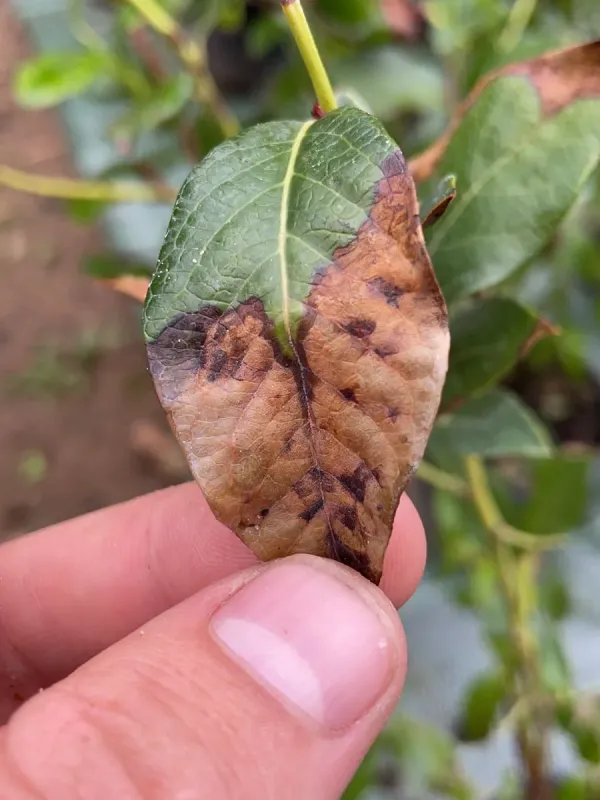
Early symptoms appear as small, circular or angular dark-brown to black spots. As the infection progresses, these spots expand and often develop concentric rings, giving them a target-like appearance.
Tissues surrounding the lesions often become necrotic and brittle, and chlorotic halos frequently form around the spots, reflecting the presence of fungal toxins impacting plant metabolism.
In humid conditions, a velvety, olive-to-black fungal growth becomes visible on the surface of the lesions, consisting of dense clusters of conidiophores and abundant conidia.
When fruits are infected, symptoms include the development of sunken, dry rot spots that can eventually cover large areas of the fruit surface, leading to mummification and complete tissue breakdown.
On seeds, the pathogen often appears as a dark, discolored spot, particularly around the germ area, which makes the seed look degraded and significantly impairs its potential to sprout.
Control measures
A successful management strategy must be comprehensive, starting with crop rotation that avoids planting susceptible crops in the same field for at least three to four consecutive years.
Deep plowing or soil incorporation of crop residues is an essential cultural practice to bury infected plant material, thereby accelerating decomposition and reducing the initial inoculum load in the field.
Farmers should prioritize the use of high-quality, certified seeds and ensure they are treated with appropriate fungicides to prevent early-season seedborne infections and improve seedling health.
- Maintain proper plant spacing to improve air circulation and reduce humidity.
- Promptly remove and destroy infected plant debris at the end of the season.
- Avoid excessive nitrogen fertilization, which can increase tissue susceptibility.
In-season chemical control involves the application of registered fungicides, such as strobilurins or triazoles, guided by field monitoring and integrated pest management (IPM) guidelines.
Causes diseases · 1
Discussion
No discussions yet — be the first.