
Alternaria saponariae
Alternaria saponariae
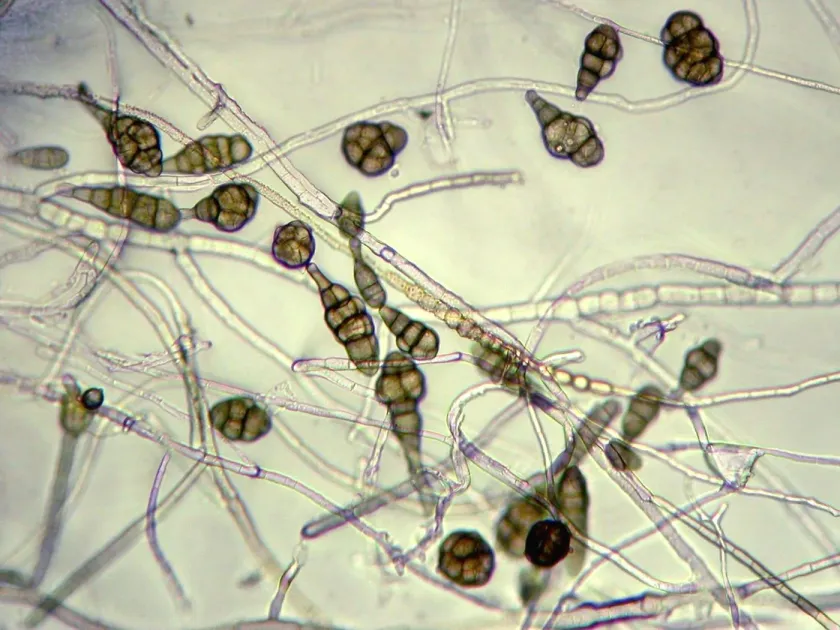
Description
How to identify
Alternaria saponariae is a microscopic phytopathogenic fungus belonging to the genus Alternaria, within the kingdom Fungi. It is a specialized pathogen primarily affecting plants in the Caryophyllaceae family.
The fungus is characterized by the production of dark, septate hyphae and multicelled conidia, which are typically obclavate or obpyriform in shape, often found in chains under the microscope.
It spreads via airborne conidia, which are easily transported by wind or water splashes, facilitating the rapid colonization of susceptible plant hosts during favorable weather conditions.
The life cycle of this pathogen involves survival on plant debris or infected seeds. During the growing season, conidia germinate on host tissues, penetrating through stomata or mechanical injuries.
In laboratory environments, the pathogen can be cultured on potato dextrose agar, where it typically develops olive-brown or black colonies with velvety surface textures.
What it damages
The pathogen specifically infects species of Saponaria (soapwort) and various ornamental carnations. Infection significantly reduces the aesthetic and commercial value of these plants.
Severe infestations lead to a reduction in photosynthetic capacity, which results in stunted growth and a general decline in plant vigor, often ending in premature death of the foliage.
Seedlings infected by Alternaria saponariae often fail to thrive, showing symptoms of damping-off, which decreases the percentage of successful crop establishment in nursery production.
The fungus produces toxins that weaken plant immunity, making infected areas prone to secondary colonization by bacteria and other opportunistic microorganisms, further accelerating tissue decay.
Economic damage is substantial in the floriculture industry, as diseased plants lose their marketability due to the visible necrotic lesions on leaves and stems.
Signs of infestation
Initial symptoms include the appearance of small, circular yellow or light brown spots on the leaves, which gradually expand and develop into larger, necrotic lesions.
A hallmark sign of the infection is the development of concentric zonations within the necrotic spots. Under high humidity, a dark, velvety layer of conidial growth covers the surface of these spots.
Stem infection manifests as elongated, sunken lesions that may cause girdling, leading to wilting or collapse of the affected branches or stems above the infected site.
Affected leaves gradually turn chlorotic, curl at the margins, and eventually undergo complete senescence, leaving the plant sparsely foliated and unproductive.
Flowers and buds can also be impacted, showing distorted growth, loss of color, or premature abscission, which renders the floral display unattractive and non-salable.
Control measures
Integrated pest management (IPM) is essential. Sanitation is the first line of defense: all infected plant debris must be removed and destroyed to reduce the primary inoculum load in the soil.
Cultural practices such as spacing plants appropriately to ensure good air circulation are crucial for reducing humidity levels around the foliage, which inhibits fungal spore germination.
Fungicide applications, specifically those containing mancozeb, chlorothalonil, or copper-based compounds, are effective for preventing and managing active outbreaks of the pathogen.
- Utilize disease-free, certified seeds for planting.
- Monitor greenhouse environments to keep relative humidity below 65%.
- Apply systemic fungicides early upon detection of the first symptoms.
In greenhouses, maintaining a dry, well-ventilated environment and practicing careful irrigation to avoid wetting the leaves are critical strategies for suppressing disease development.
Causes diseases · 1
Discussion
No discussions yet — be the first.