
Papaya
Carica papaya L.
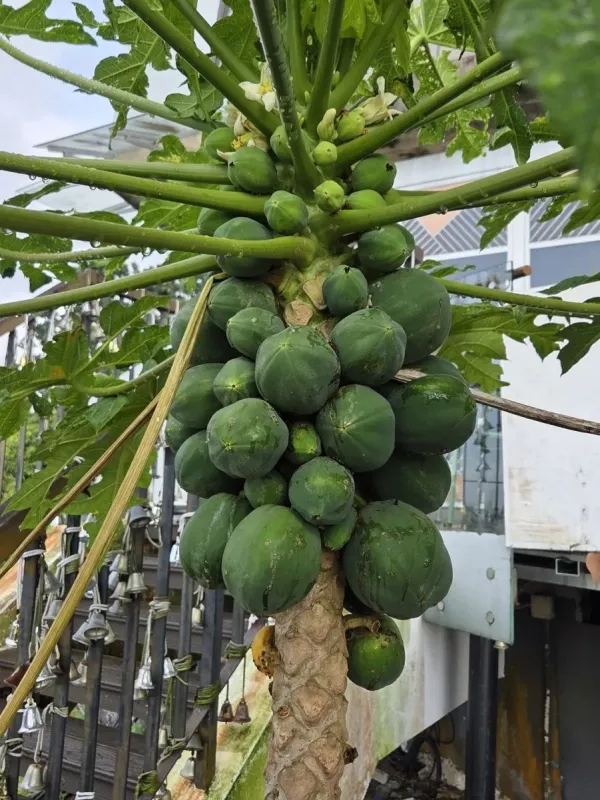
Description
Sowing dates
Papaya (Carica papaya L.) is a large herbaceous plant in the Caricaceae family. In commercial agriculture, it is typically propagated through seeds, as vegetative propagation is generally impractical for large-scale operations.
Seeds are extracted from ripe fruit and dried in the shade before sowing. For optimal germination, they should be planted in sterile soil media at temperatures between 25°C and 28°C.
The germination period usually lasts 2 to 4 weeks. Seedlings are kept in nurseries until they develop several true leaves, usually around 6 to 8 weeks after initial sowing.
Transplanting into the field must be done carefully to avoid root disturbance. The plants should be spaced at intervals of 2 to 3 meters, ensuring sufficient distance for cross-pollination in hermaphrodite varieties.
The choice of variety is critical for success, with breeders focusing on selecting types that are resistant to common local viruses and exhibit high yield potential.
Growing requirements
Papaya is a strictly tropical plant that thrives in high temperatures. It is highly sensitive to frost, which can kill mature plants, and prefers a stable temperature range between 20°C and 30°C.
Full sun exposure is vital for the plant's metabolic activity. Shade results in elongated, weak stems and significantly reduced fruit quality and sugar content.
Soil drainage is the most critical requirement for papaya. Waterlogged soils lead to rapid root rot, often caused by Pythium species, which is the primary cause of plantation failure.
The soil should be fertile, sandy loam or loamy soil with a neutral pH level. Proper site selection must include evaluating the water table levels to ensure no pooling during heavy rainfall.
Consistent moisture is required for high productivity, but it must be managed carefully through drip irrigation to prevent water from touching the main stem, which could cause stem rot.
Yield
Commercial papaya plantations can begin harvesting 9 to 12 months after transplanting. The productive lifespan of a tree varies but is typically economically viable for 2 to 3 years.
Average yields in well-managed orchards range from 30 to 60 tons per hectare. High-yielding varieties are essential for maintaining profitability in competitive tropical fruit markets.
The plant produces fruit continuously under optimal conditions. Pruning and selective thinning of fruits are often performed to improve the size and market quality of the remaining harvest.
Soil fertility management, specifically the application of potassium and nitrogen, directly influences the size and sweetness of the fruit as it develops on the stem.
Aside from fresh consumption, the agricultural importance of papaya extends to the extraction of papain, a powerful enzyme used in various industrial and medicinal applications.
Main diseases and pests
Papaya is highly susceptible to various biological stressors, with viruses being the most devastating. The Papaya Ringspot Virus (PRSV) is the most significant global threat to the crop.
- Anthracnose and Alternaria spot, which degrade fruit quality during storage.
- Verticillium wilt and Sclerotinia rot.
- Tomato mosaic virus and Tobacco mosaic virus.
- Pythium root rot, often triggered by poor drainage.
Pest management is focused on controlling aphids, which act as vectors for viruses, as well as spider mites and nematodes. Integrated Pest Management (IPM) is standard practice to reduce chemical reliance.
Regular field inspections and the immediate removal of infected plants are necessary to contain outbreaks and protect the overall health of the orchard.
Harvesting
Harvesting is a delicate process that starts when the fruit skin shows a distinct color break from dark green to light green or yellow, depending on the variety.
Workers must use gloves and padded containers to prevent bruising, as damaged fruit is highly prone to rapid decay during the post-harvest period.
For long-distance shipping, fruits are harvested at an earlier stage of maturity. Proper post-harvest handling includes cleaning and cooling the fruit to stabilize its shelf life.
Mechanical harvesting is not yet feasible due to the nature of the plant, making papaya production a labor-intensive agricultural activity that requires skilled personnel.
Timely harvest intervals ensure that the fruit reaches the market at its peak freshness, which is the key factor in determining the price per unit for the producer.