
Cercospora leaf spot of celery
Cercospora apii
Description
How to identify
Cercospora leaf spot is a fungal disease caused by Cercospora apii, which primarily infects celery and related crops in the Apiaceae family.
The pathogen is an ascomycete fungus that spreads via conidia, which are easily transported by water splashes, wind, and agricultural equipment.
The fungus survives between seasons in crop debris left on the field or through infected seeds, making sanitation a critical management factor.
Understanding the taxonomic position and the specific conditions required for the pathogen's growth is essential for accurate diagnosis and prevention.
It thrives in warm and humid climates, with optimal temperatures for infection ranging from 20°C to 25°C, making early identification vital.
What it damages
The disease causes significant damage by destroying leaf tissue, which reduces the plant's ability to perform photosynthesis.
This loss of leaf surface area results in smaller root sizes and poor overall plant development, directly impacting harvest quality.
Severely affected plants exhibit reduced vitality, and the necrotic lesions can facilitate the entry of opportunistic bacterial pathogens.
The economic impact includes both reduced yield volume and a decrease in marketability due to the poor appearance of the affected celery stalks.
If left uncontrolled, the disease can lead to total loss of the crop in favorable, high-humidity growing environments.
When it appears
The disease typically appears in mid-summer when temperatures and humidity levels rise, providing optimal conditions for fungal sporulation.
Spore production continues throughout the growing season, spreading from plant to plant and potentially covering the entire field.
In greenhouses or tunnel systems, the disease can occur year-round if proper ventilation and humidity control are not maintained.
The life cycle is accelerated by frequent overhead irrigation, which keeps foliage wet for extended periods, favoring infection.
Autumn conditions may slow down development, but the fungus remains viable in the soil, ready to restart the cycle the following spring.
Signs of infestation
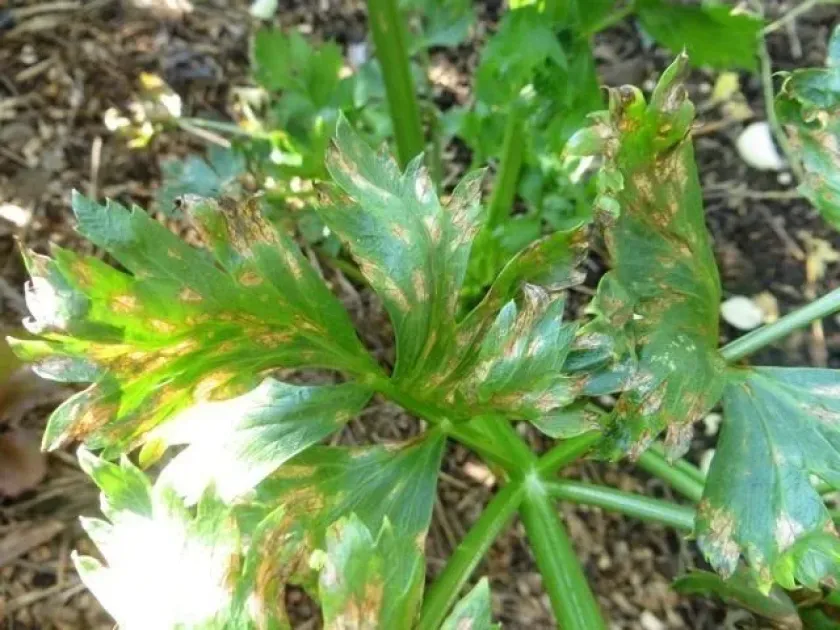
Symptoms initially manifest as small, chlorotic, circular spots that eventually expand and turn brown with a dark margin.
As the lesion matures, the center often becomes greyish-white, which is where the conidia (spores) are produced.
- Small, pale yellow or tan spots on leaves.
- Grey velvety appearance under high humidity.
- Necrosis and death of older leaves.
- Wilting of the plant under high stress.
- Leaf curling and stunted plant growth.
Control measures
Effective management begins with the use of certified, disease-free seeds and the treatment of seeds with appropriate fungicides.
A rigorous crop rotation plan of at least three years helps to break the survival cycle of Cercospora apii in the soil.
Fungicide applications, particularly those containing copper or systemic triazoles, are necessary when environmental conditions promote infection.
Sanitation practices, including the removal and destruction of crop residues after harvest, are crucial for long-term disease suppression.
Improving field ventilation through proper plant spacing and effective weed management reduces humidity and limits the spread of the fungus.
Causes diseases · 2
Discussion
No discussions yet — be the first.