
Alternaria alternata
Alternaria alternata
Description
How to identify
Alternaria alternata is an anamorphic fungus belonging to the phylum Ascomycota. It is one of the most ubiquitous fungal species in the environment, acting as both a saprophyte on decaying matter and a significant opportunistic pathogen for a wide variety of plants.
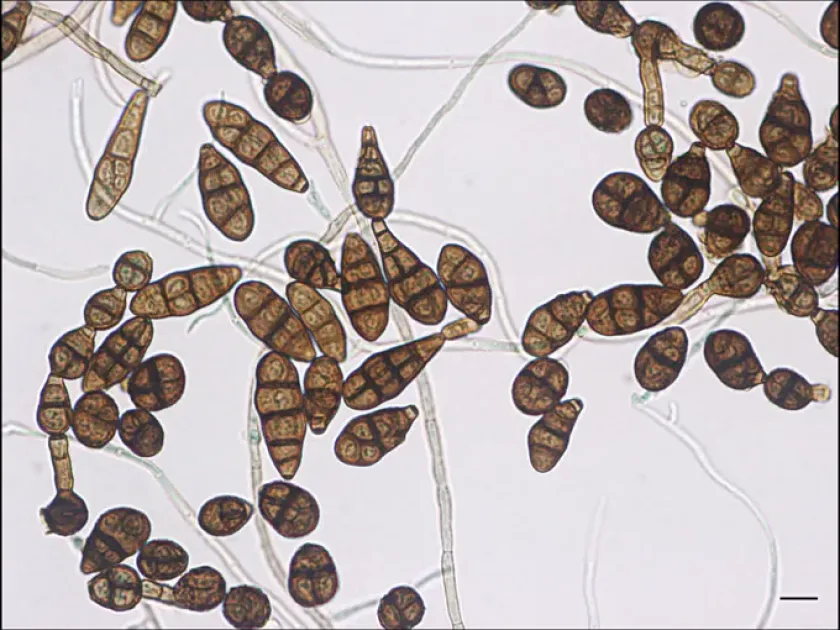
The fungus is characterized by the production of septate, dark-pigmented mycelium. Its primary method of reproduction is through the formation of catenulate (chain-forming) conidia, which typically exhibit a obpyriform or obclavate shape with both transverse and longitudinal septations.
Due to its high adaptability, Alternaria alternata can survive in diverse environmental conditions. It colonizes plant tissues by producing cell wall-degrading enzymes and host-specific toxins that facilitate the invasion of healthy plant cells.
The pathogen is primarily dispersed through conidia via wind, water splashes, and agricultural equipment. It survives the winter in infected plant debris, soil, or as mycelium inside seeds.
Identification often requires careful microscopic examination or molecular diagnostic methods, as it shares morphological similarities with several other species in the genus Alternaria.
What it damages
This fungus causes a range of diseases commonly referred to as "alternaria blight" or "leaf spot" on a broad range of crops, including potatoes, tomatoes, brassicas, sunflowers, and various fruit trees. It affects leaves, stems, fruits, and seeds.
The most severe impact is the reduction of photosynthetic efficiency due to extensive leaf necrosis, which leads to significant yield losses. In fruit crops, it causes fruit rots that render the harvest unmarketable and susceptible to post-harvest decay.
When seeds are infected, their germination vigor is significantly reduced, leading to poor crop establishment. Furthermore, the pathogen produces harmful mycotoxins, such as alternariol, which can contaminate agricultural commodities and pose health risks.
In greenhouses and humid climates, the pathogen spreads rapidly, potentially causing total destruction of specific crop varieties if left uncontrolled, due to the high density of plants and persistent favorable conditions.
Beyond direct losses, the cost of frequent fungicide applications to suppress the pathogen adds significant financial burden to modern agricultural production systems.
When it appears
The infection cycle typically initiates during periods of moderate to warm temperatures, generally ranging from 15°C to 25°C, accompanied by high relative humidity or prolonged leaf wetness caused by dew or rain.
Primary inoculum comes from overwintering sources. Once the disease is established, secondary infections can occur repeatedly throughout the growing season, provided that environmental conditions remain favorable for spore germination.
Disease development often accelerates as plants reach maturity or undergo physiological stress. Nutrient deficiencies, such as low nitrogen or potassium levels, and previous attacks by other pests make plants more susceptible to colonization.
Late summer and autumn, characterized by fluctuating temperatures and increased humidity, are peak times for the pathogen to colonize crop residues, ensuring a robust inoculum source for the following year.
Managing the seasonal progression is key to effective control, requiring timely scouting and the application of protective measures before weather conditions favor an epidemic.
Signs of infestation
The classic symptom of Alternaria alternata infection is the appearance of dark, necrotic spots with characteristic concentric rings, often resembling a target shape. These spots may be circular or irregular depending on the host plant.
Under humid conditions, a characteristic dark, velvet-like or sooty mold growth is visible on the surface of the lesions. This growth consists of the conidiophores and massed conidia of the fungus.
On stems and branches, the pathogen causes elongated, sunken lesions that can lead to girdling of the stems and eventual dieback. On fruits, symptoms range from small, dark, firm spots to extensive, blackened, sunken rot.
Infected seedlings often exhibit "damping-off" symptoms, where the base of the stem turns black and shrivels, leading to the collapse and death of the plantlet.
Leaf chlorosis is frequently associated with the infection, as the plant responds to the metabolic stress and the localized death of photosynthetic tissue caused by the fungal toxins.
Control measures
Managing Alternaria alternata requires an integrated pest management (IPM) strategy that combines cultural, biological, and chemical control methods.
- Implementing crop rotation to break the pathogen's infection cycle by avoiding susceptible host species.
- Sanitation, which involves the removal and destruction of crop residues where the fungus persists.
- Using pathogen-free, certified seeds or applying seed treatments to prevent early-stage infection.
- Maintaining optimal plant vigor through balanced fertilization to increase systemic resistance.
- Applying fungicides during high-risk growth stages, specifically those recommended for Alternaria control.
Biological control agents, particularly certain strains of Bacillus subtilis and Trichoderma species, have shown promise in reducing disease severity and can be used within organic or integrated frameworks.
Chemical control usually relies on protective and systemic fungicides, including strobilurins and triazoles. To prevent the development of resistant fungal populations, it is critical to rotate fungicides with different modes of action.
Effective water management in irrigated or greenhouse systems, such as drip irrigation instead of overhead watering, significantly reduces the leaf wetness required for the pathogen to thrive.
Causes diseases · 4
Discussion
No discussions yet — be the first.