
Black rot of carrot
Alternaria radicina
Description
How to identify
The causal agent of black rot is the imperfect fungus Alternaria radicina (syn. Stemphylium radicinum), belonging to the kingdom Fungi and the phylum Ascomycota. This pathogen is a specialized parasite mainly targeting the Apiaceae plant family.
The fungus develops mycelium within plant tissues, producing characteristic olive-black spores. It can persist in the soil and on crop residues for several years, making it a persistent threat in agricultural fields.
The pathogen is highly resistant to temperature fluctuations and can thrive in cool conditions. Spores are disseminated by wind, rain splashes, and insect vectors throughout the growing season.
Germination of the spores requires free moisture on the plant surface. The optimal environment for infection includes high humidity and moderate temperatures between 20°C and 25°C.
Seeds are a significant primary source of the disease. Using non-treated seeds often results in severe pre-emergence and post-emergence damping-off, leading to thin and uneven crop stands.
What it damages
Carrots are the primary host for Alternaria radicina, although it can also affect parsley, celery, parsnips, and other related species. The disease impacts crops at all developmental stages.
The fungus causes black rot on taproots during the growing period and also during post-harvest storage. In the early stages, it causes significant losses in seedling populations.
Once infected, the roots lose their commercial value. The tissue becomes soft, dark, and eventually necrotic, rendering the product completely unusable for human consumption or processing.
In seed crops, the pathogen infects flower stalks, causing browning and necrosis, which leads to a dramatic decrease in seed quality and overall yield quantity for the next planting season.
Economic damage includes seedling mortality, reduced root size, and large-scale waste in storage facilities due to the secondary spread of the infection between healthy and diseased roots.
When it appears
Symptoms typically appear in early spring when infected seeds germinate. The fungus attacks the hypocotyl, causing "black leg" symptoms, which often kill young seedlings before they establish.
During the summer, the disease spreads through conidia under humid conditions. Frequent rainfall and persistent dew are major drivers for the rapid expansion of the disease within the carrot field.
Late summer marks a peak period for infection, coinciding with root thickening. The pathogen typically enters the root through the crown area where leaf petioles attach to the taproot.
As the season ends and harvest approaches, the fungus transitions onto the mature roots. These infected roots serve as the primary reservoir for carryover into storage settings.
In storage, the disease progresses further if temperatures exceed 2°C. Even at lower temperatures, the fungus can grow slowly, eventually causing substantial decay in crates and bulk storage containers.
Signs of infestation
In seedlings, the base of the stem turns black and thin, eventually causing the plant to collapse and die. Affected leaves often display chlorosis and premature wilting.
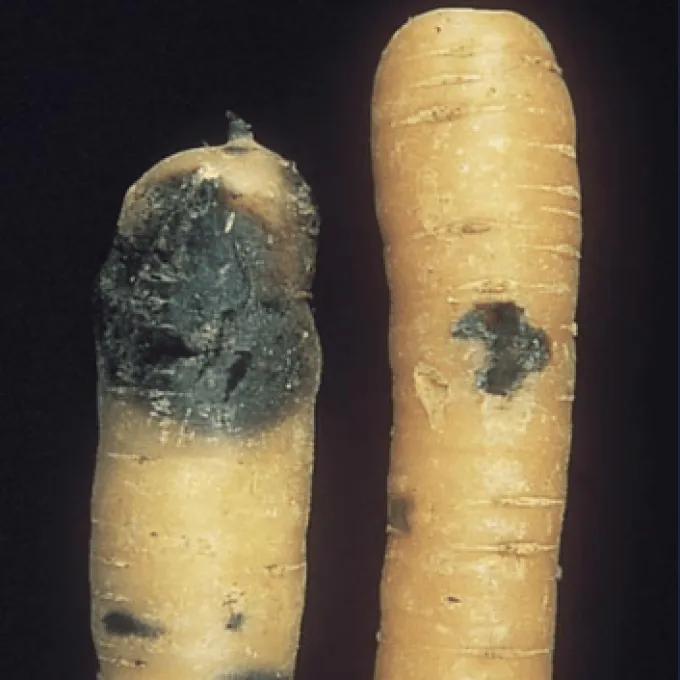
Taproots show dark, slightly sunken lesions that appear irregular in shape. As the disease advances, these spots expand, often becoming covered with a distinct, velvety black mass of spores.
Internally, the infected tissue exhibits a dry black rot that can penetrate deep into the root core. Unlike wet bacterial rot, the infected tissue remains relatively firm but dark.
Leaf petioles develop elongated dark-brown spots. Under high moisture conditions, these lesions quickly produce spores, leading to the rapid death of the foliage and significant yield loss.
During storage, sunken dry ulcers form on the surface of the roots. These lesions become more pronounced over time, eventually merging to affect the entire integrity of the vegetable.
Control measures
The first line of defense is using healthy, fungicide-treated seeds. Thermal disinfection or appropriate chemical seed treatments are crucial to prevent early-season outbreaks.
Strict crop rotation is essential for disease management. Carrots should not be grown on the same land for at least 3–4 years, with cereal crops serving as excellent rotational choices.
Deep plowing in autumn helps bury crop residues, effectively isolating the pathogen and allowing natural microbial competition to reduce the fungal inoculum levels in the soil.
During the growing season, timely fungicide applications are recommended if environmental conditions favor disease development. Preventive spraying is more effective than attempting to cure existing infections.
Post-harvest hygiene is critical. Roots should be stored at temperatures between 0°C and 1°C with controlled humidity. Regular inspection of stored produce helps identify and remove infected roots quickly.
Causes diseases · 1
Discussion
No discussions yet — be the first.