
Alternaria leaf spot
Alternaria brassicae
Description
How to identify
The causal agent of the disease is the imperfect fungus Alternaria brassicae, belonging to the kingdom Fungi, genus Alternaria. It is a significant phytopathogen specializing in plants of the Brassicaceae family.
The fungus develops mycelium within plant tissues, forming conidiophores with large, multicellular brown conidia. These spores are the primary source of infection spread during the growing season.
The pathogen persists in the soil on crop residues and can also be transmitted via contaminated seeds. During winter, it survives as mycelium in plant debris or conidia on seed surfaces.
Spread is facilitated by wind, rain splashes, and insects. High humidity and moderate temperatures are the most critical environmental factors for active spore germination.
Field identification is confirmed by microscopic analysis of infected tissue, revealing the characteristic olive-black conidia of the fungus.
What it damages
Key hosts include rapeseed, all types of cabbage, mustard, radish, and other cruciferous crops. The disease affects both agricultural fields and cruciferous weeds.
The most severe damage occurs during flowering and pod development, often leading to premature pod shattering and significant yield losses due to seed shedding.
Seedlings can die during the early growth stages due to hypocotyl infection, which may require crop replanting. Mature plants suffer damage to leaves, stems, and pods.
A reduction in photosynthetic leaf area leads to stunted growth, reduced biomass, and lower seed quality. Infected seeds typically show poor germination and low oil content.
Economic impact includes direct yield losses, reduced oil yields in rapeseed, and increased costs associated with supplemental fungicide applications.
When it appears
Disease development begins under warm and humid conditions, with temperatures ranging from 18 to 25 degrees Celsius and high relative humidity.
Frequent rainfall and heavy dew promote rapid infection spread, as water is essential for conidia germination and subsequent tissue penetration.
Initial symptoms are usually observed on lower leaves during the mid-vegetative stage, after which the pathogen moves to upper canopy levels and reproductive organs.
In late summer and autumn, the presence of abundant plant debris allows the pathogen to produce spores, preparing for overwintering or infecting emerging winter crops.
Pod maturation is a critical risk period; prolonged wet weather during this time can result in severe epiphytotics, affecting nearly the entire crop yield.
Signs of infestation
The first signs of infection appear as small dark spots on leaves, which gradually enlarge and exhibit characteristic concentric rings.
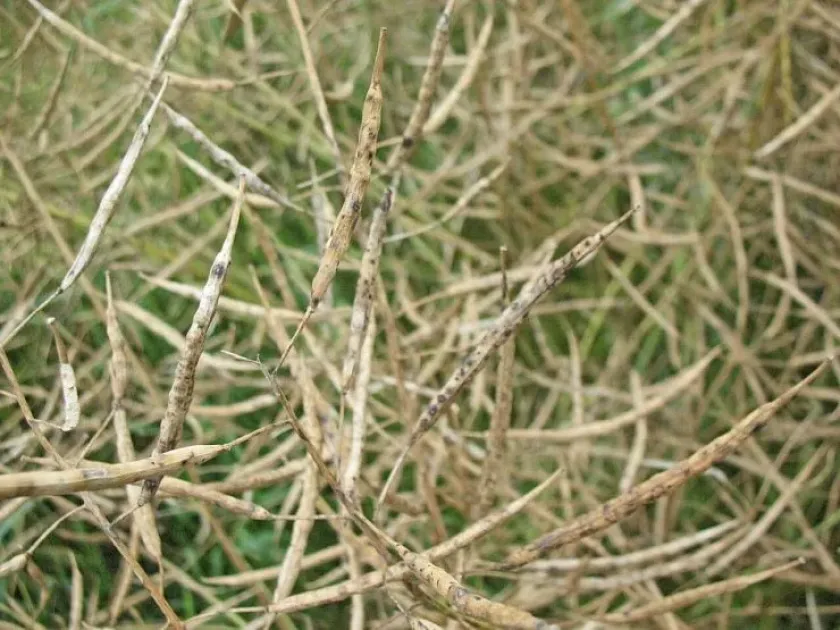
On stems and pods, spots are often elongated and dark brown to olive-black. In high humidity, the spots are covered with a dense, velvety fungal growth.
- Yellowing and premature senescence of infected leaves.
- Deformation and curling of pods in severe cases.
- Premature pod shattering leading to seed loss.
- Development of black leg symptoms on seedlings.
The concentric zonation of the spots is caused by the rhythmic growth of the fungal mycelium inside the plant tissue, influenced by daily humidity fluctuations.
When the root or crown area is affected, plants may show symptoms of wilting, which is sometimes misdiagnosed as drought stress or insect damage.
Control measures
The most important agronomic practice is strict crop rotation, which excludes cruciferous crops from the same field for at least 3 to 4 years.
The use of high-quality, fungicide-treated seeds significantly minimizes the risk of early seedling infection and initial pathogen spread.
Deep incorporation of crop residues and effective control of cruciferous weeds, such as shepherd's purse, reduce the overall infection pressure on the field.
During the growing season, if weather conditions favor disease, fungicide applications using triazoles, strobilurins, or their mixtures are highly recommended.
Breeding and planting disease-resistant cultivars and hybrids remain the most effective, sustainable, and economically sound methods for long-term disease management.
Causes diseases · 1
Discussion
No discussions yet — be the first.