
Date palm
Phoenix dactylifera L.
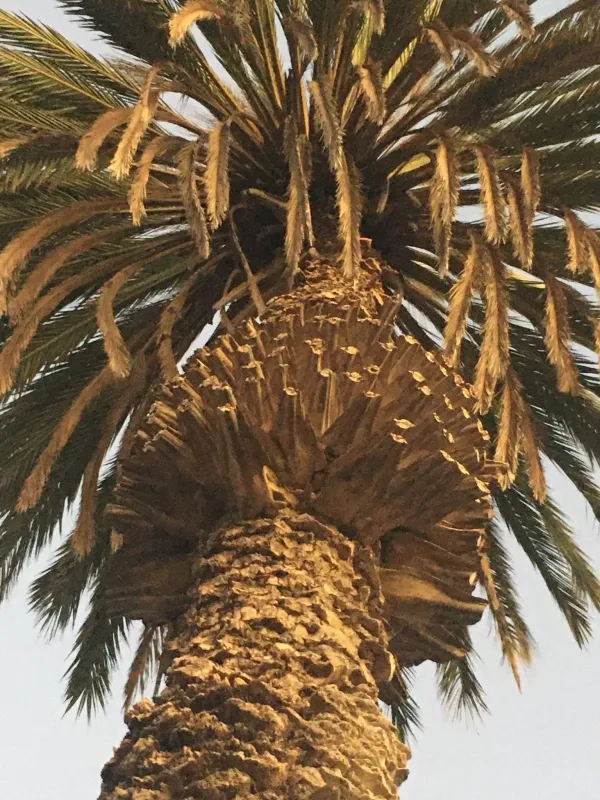
Description
Growing requirements
The date palm (Phoenix dactylifera L.) is a perennial tree belonging to the Arecaceae family. Originating from the fertile regions of the Middle East and North Africa, this crop has been cultivated for thousands of years as a staple in arid and semi-arid environments.
The species requires high solar radiation and extreme heat for fruit ripening, with an optimal growth temperature ranging between 30°C and 40°C. Although it is highly drought-tolerant, its yield significantly depends on the availability of groundwater or consistent irrigation practices.
Regarding soil requirements, the date palm thrives in deep, well-drained sandy or loamy soils. It displays a remarkable tolerance to salinity, which makes it a critical crop in regions where other plants cannot survive, provided that the root zone is sufficiently ventilated.
In commercial agriculture, date palms are primarily propagated through offshoots (suckers). This technique ensures genetic uniformity, maintaining the specific fruit characteristics and gender of the parent tree, which is essential for high-quality production across the entire plantation.
Beyond its economic value as a fruit producer, the date palm serves as a versatile resource. Leaves are used for roofing and basketry, trunks for timber, and fibers for rope production, making it a sustainable pillar of traditional agriculture in tropical and desert climates.
Yield
The tree typically reaches sexual maturity and begins to produce fruit between 5 to 8 years of age. A mature, well-maintained date palm can yield between 60 and 150 kilograms of fruit per harvest season, depending on the cultivar and the environmental conditions.
Main diseases and pests
The date palm is susceptible to various pathogens that can devastate production if not managed effectively. Farmers must be vigilant against several critical threats to the health and vitality of the trees, including:
- Alternaria and Phytophthora, causing tissue degradation.
- Penicillium rot, which specifically damages the ripening fruits.
- Fusarium and Cladosporium infections leading to decline.
- Black scorch, which manifests as necrotic lesions on leaves and buds.
- Root-knot nematodes (Gallow nematode) and internal browning of fruits.
Effective management involves preventive measures such as ensuring proper tree spacing, maintaining optimal water levels to avoid fruit physiological disorders, and applying integrated pest management strategies to mitigate the risk of pathogen spread within the plantation.
Harvesting
Harvesting dates is a meticulous process that often requires experienced workers to scale the trees or use mechanical lifts. The bunches are carefully cut to avoid fruit shedding, followed by immediate cleaning, sorting, and dehydration to prepare the crop for storage or export.