
Safflower
Carthamus tinctorius L.
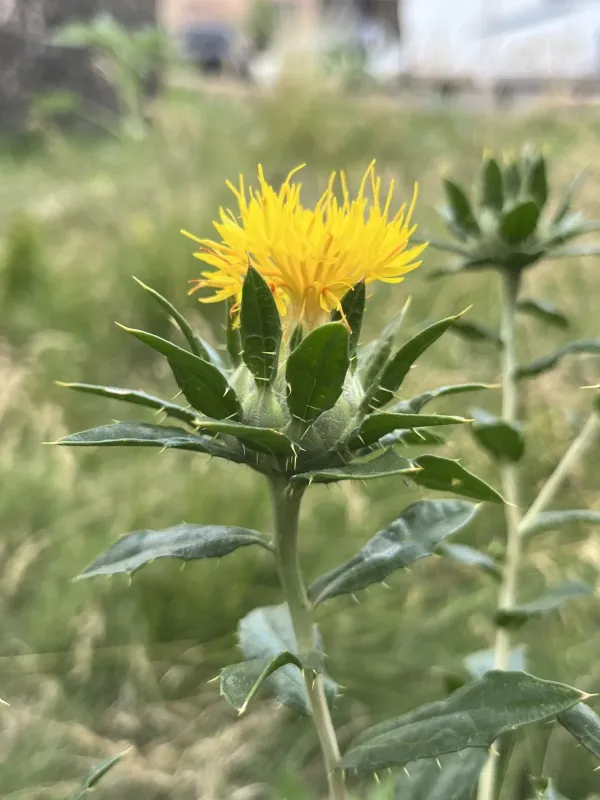
Description
Sowing dates
Safflower is an early-sowing crop, as its seeds can germinate at soil temperatures between +3 °C and +5 °C. The optimal sowing time is when the seedbed temperature reaches +8 °C to +10 °C.
Sowing too early in cold soil can delay emergence and lead to root rot development, while late sowing often results in yield losses due to moisture deficits later in the season. Recommended sowing depth is 3–5 cm, depending on soil moisture levels.
Seeding rates vary significantly based on region and planting method, typically ranging from 100,000 to 200,000 viable seeds per hectare. Ensuring good seed-to-soil contact is critical for uniform stand establishment.
Safflower is often planted in wide rows (45–70 cm apart) to allow for mechanical weed control. This practice is particularly beneficial in the early growth stages when the crop is still establishing its canopy.
In arid farming environments, safflower performs best when maintained at an optimal plant density. Over-crowding can lead to intense competition for limited water, which significantly impacts oil content and overall yield.
Growing requirements
Safflower (Carthamus tinctorius L.) is an annual herbaceous plant in the Asteraceae family, renowned for its exceptional drought tolerance. It is ideally suited for regions with hot, dry climates due to its deep taproot system, which can reach depths of up to 2 meters.
The crop is adaptable to various soil types, including chernozems, chestnut soils, and even slightly saline soils. However, it performs poorly in heavy, waterlogged, or acidic soils, where the risk of fungal pathogens is significantly higher.
Solar radiation is a primary requirement for success, as safflower is a long-day plant. Excessive rainfall between flowering and maturity is undesirable, as it can reduce seed quality and encourage disease development.
Safflower serves as an excellent rotation crop for cereals, improving soil structure and helping to reduce weed pressure. Its salt tolerance makes it a promising crop for reclaiming or utilizing degraded agricultural land.
The crop requires moderate moisture during the rosette and budding phases. Once established, it is highly efficient at utilizing residual soil moisture, making it resilient during periods of mid-season drought.
Yield
Average safflower yields under dryland farming conditions range from 0.8 to 1.5 tons per hectare. With proper irrigation, the crop's potential can reach 2.5 tons or more, depending on variety and management practices.
Yield is heavily dependent on the genetic potential of the chosen variety, plant population, and agronomic management. Beyond seeds, safflower florets are harvested for the food and textile industries, adding to the crop's economic value.
Safflower seeds contain 35–45% high-quality oil, which is rich in linoleic acid, making it highly valued for both dietary and industrial applications. This profile makes it a strategic crop for health-conscious food markets.
Balanced fertilization, particularly the application of phosphorus, is crucial for maximizing yield. Phosphorus supports root development and helps accelerate the transition toward maturity.
Effective weed control within the first 30–40 days after emergence is essential. By eliminating weed competition early, the crop can focus its resources on vegetative growth and subsequent seed development.
Main diseases and pests
Safflower is susceptible to various pathogens that can cause significant damage under unfavorable conditions. Primary diseases include:
- Alternaria leaf spot
- Verticillium wilt
- Rhizoctonia root rot
- Sclerotinia stem rot
- Ashy stem blight
- Pythium root rot
- Gray mold
Root-knot nematodes (Meloidogyne spp.) pose a substantial threat by damaging the root system, inhibiting water and nutrient uptake. Infected plants often show stunted growth and premature death.
Disease management relies on seed treatment with certified fungicides and strict crop rotation. Returning to the same field with safflower should be avoided for at least 3–4 years to interrupt the lifecycle of soil-borne pathogens.
Pests such as the safflower fly and wireworms can damage floral heads and seedlings. Preventive measures include proper soil tillage and the removal of host weeds that act as reservoirs for these pests.
Field monitoring during the flowering stage is vital for the early detection of fungal outbreaks. If high humidity occurs during maturation, fungicide application may be necessary to prevent gray mold in the seed heads.
Harvesting
Harvesting begins when the seeds are fully mature, typically when moisture content drops to 10–12%. Visually, this is marked by the browning of the floral heads and the hardening of the seeds, which should detach easily.
Direct combining is the most effective harvesting method, using specialized headers designed for safflower. Drum speed must be carefully calibrated to prevent mechanical damage to the seed coats.
Safflower is prone to seed shattering if left in the field too long, so timely harvest is critical. Modern cultivars with tighter floral heads have reduced this risk, allowing for more efficient mechanical operations.
Immediate cleaning of the harvested material is required to remove impurities and plant debris, as wet trash can cause heating and degradation of the oil content within the heap.
Drying should be performed at temperatures not exceeding 45 °C to preserve oil quality. Storage in dry, well-ventilated bins is essential for maintaining the integrity of the harvested product over the long term.