
Alternaria blotch of apple
Alternaria mali
Description
How to identify
Alternaria blotch is caused by the fungus Alternaria mali, a pathogenic organism belonging to the Hyphomycetes class. This fungus is a significant threat to apple production globally, known for its ability to produce potent toxins.
The pathogen overwinters as mycelium or conidia in fallen leaves, mummified fruits, and bark crevices. In the spring, spores are disseminated by wind and splashing rain, initiating primary infections on developing leaves and fruits.
The biological cycle of the fungus is characterized by the production of conidiophores bearing dark-colored conidia. The fungus thrives in warm, humid conditions, typically between 20°C and 25°C, where it reproduces rapidly.
Pathogenesis involves the secretion of host-specific toxins that trigger rapid cell death and necrotic spotting. The ability of Alternaria mali to undergo multiple infection cycles within a season makes it particularly difficult to manage.
Under favorable environmental conditions, the secondary spread of the disease can reach epidemic proportions, causing severe foliage loss and fruit damage throughout the summer months.
What it damages
This disease primarily impacts apple trees, with susceptibility varying greatly between cultivars. Varieties like 'Delicious' or 'Indo' are known to be highly vulnerable, suffering heavy losses if left untreated.
Severe defoliation caused by the fungus weakens the trees, reducing their ability to photosynthesize and store carbohydrates for the winter. This often leads to poor fruit set and reduced vigor in subsequent seasons.
Fruit infection results in necrotic lesions that make apples unmarketable. Furthermore, these lesions serve as entry points for various storage rots, significantly shortening the shelf life of the harvest.
Repeated annual infections can lead to tree decline, reduced growth of new shoots, and overall lower orchard productivity. The economic impact includes both the loss of yield and the increased cost of intensive fungicide programs.
In cases of heavy infection, trees may lose their entire canopy by late summer, which severely impacts the development of fruit buds for the following year's crop.
When it appears
Initial infection generally occurs in late spring or early summer when ambient temperatures rise and provide adequate moisture for spore germination on young, expanding leaves.
The peak period of disease development typically coincides with the wet and warm months of July and August. Frequent rain showers and high humidity accelerate the spread of conidia across the canopy.
Multiple secondary infection cycles can occur throughout the growing season if environmental conditions remain favorable. Orchard managers must be vigilant during these periods to minimize disease buildup.
By autumn, the activity of the fungus begins to wane, and the pathogen focuses on surviving the winter period. It persists in plant debris, ready to initiate the cycle again in the following spring.
Monitoring the orchard's microclimate and weather forecasts is essential for predicting infection risk and timing control measures effectively.
Signs of infestation
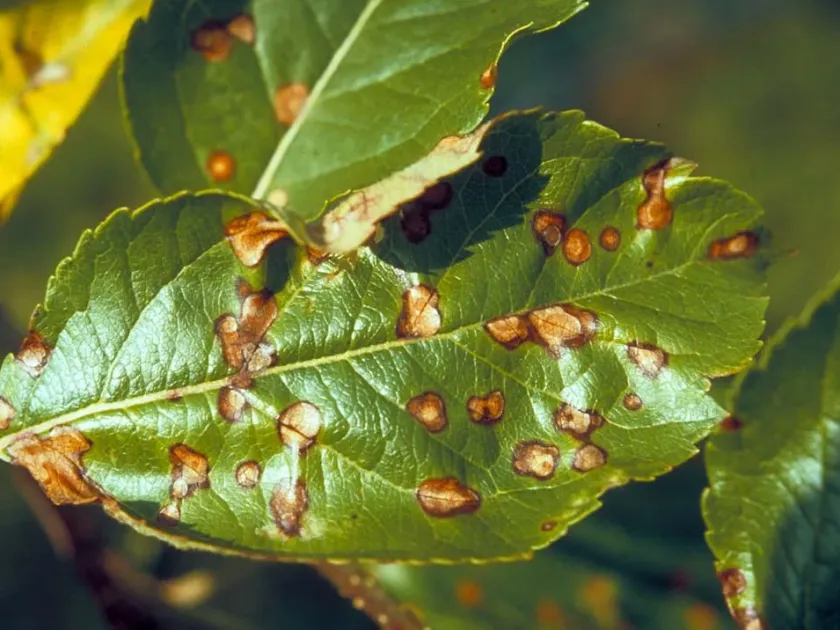
The primary symptom on leaves consists of small, brown to blackish spots that gradually expand, often forming a concentric ring pattern. Eventually, these spots merge, leading to premature leaf drop.
Fruit symptoms appear as sunken, dark-colored lesions, often accompanied by a red halo. In high humidity, the lesions may develop a distinct blackish, velvety appearance due to the formation of fungal conidia.
Affected fruits often drop prematurely or become infected with secondary pathogens while in storage. The taste and texture of infected apples are severely compromised, rendering them unfit for consumption.
Lesions on young twigs can develop into shallow cankers that may crack, potentially girdling the shoot and causing dieback. This contributes to the overall loss of productive wood in the tree canopy.
A severely infected tree will appear sparse due to heavy defoliation, with yellowing leaves and reduced fruit quality being the most visible indicators of the disease's progress.
Control measures
Sanitation is the cornerstone of control; growers must rake and destroy fallen leaves and remove mummified fruits to reduce the primary inoculum load in the orchard.
Pruning techniques that improve canopy light penetration and airflow are essential. Reducing humidity within the tree canopy significantly slows down the infection rate and fungal development.
Implementing a balanced fertilization program helps maintain tree health and vigor, which can increase the tree's natural resistance to Alternaria mali infections.
Chemical control involving fungicides from groups such as strobilurins or triazoles is often necessary. Programs should follow strict application schedules based on growth stages and disease pressure.
- Thorough sanitation to remove overwintering sources;
- Proper pruning to enhance airflow;
- Integrated fungicide application schedules;
- Selection of resistant apple cultivars for new orchards.
Causes diseases · 2
Discussion
No discussions yet — be the first.