

Description
Symptoms
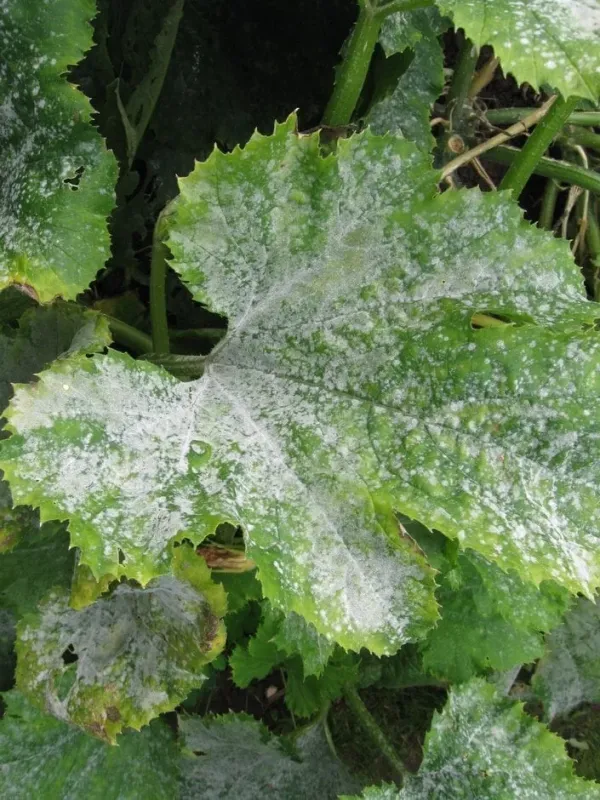
The primary symptom is the appearance of white, powdery patches of fungal mycelium and spores on the upper and sometimes lower surfaces of leaves.
As the infection progresses, the powdery spots expand and merge, eventually covering petioles, stems, and blossoms with a dense white mat.
Infected leaves often become chlorotic, curl upwards, and lose their vitality, which leads to premature senescence and leaf abscission in severe cases.
Stunted growth, deformation of young shoots, and inhibited floral development are common manifestations in highly susceptible plant species.
At the later stages of colonization, the mycelium becomes embedded with small, dark, round cleistothecia, indicating the pathogen's preparation for dormancy.
Pathogen
The disease known as powdery mildew is caused by the fungus Erysiphe cichoracearum, an obligate biotroph that relies entirely on living host tissues for nutrition.
This pathogen has a wide host range, commonly infecting crops such as onions, garlic, anemone, celery, peanuts, oats, fodder beet, and Indian mustard.
The fungus develops primarily on the surface of leaves and stems, using specialized structures called haustoria to penetrate the plant epidermis and absorb nutrients.
The life cycle involves the rapid production of asexual conidia, which facilitate quick dispersal across fields, and sexual fruiting bodies for overwintering.
As the colony matures, it transitions from a white superficial growth into visible black or brown dots, marking the transition to the sexual stage of the fungus.
Conditions for development
Powdery mildew thrives in moderate temperature conditions ranging from 18 to 25 degrees Celsius, often favored by high levels of relative humidity.
Fluctuations in temperature and high dew accumulation on foliage provide an optimal environment for conidial germination and host tissue colonization.
Dense plantings, inadequate plant spacing, and poor air circulation within the canopy allow for rapid transmission of spores between neighboring plants.
Water-stressed or nitrogen-overfertilized plants tend to exhibit softer tissues, which are significantly easier for the fungus to penetrate and exploit.
The spread is heavily influenced by wind currents that carry spores over long distances, potentially infecting entire fields in a matter of days.
Why it matters
The disease severely impacts the host's photosynthetic capacity, resulting in reduced biomass accumulation and significantly diminished crop yields.
Quality and marketability are compromised in vegetable crops, as bulbs or tubers may fail to size up properly and suffer from reduced storage longevity.
Forage crops experience a drop in nutrient density, making the harvest less suitable for livestock feed and impacting overall agricultural productivity.
Repeated stress from fungal infection weakens the plant's overall physiology, making it highly susceptible to opportunistic pathogens and environmental stressors.
Economic losses can be substantial, necessitating intensive management strategies to maintain the health and vigor of commercially grown susceptible crops.
Protection
Implementing a strict crop rotation schedule is vital to break the life cycle of the pathogen and reduce the inoculum present in the field soil.
Sanitation practices, including the removal and destruction of crop residues, help eliminate the primary sources of infection for the next planting season.
Maintaining balanced soil fertility, with an emphasis on adequate potassium levels, helps strengthen plant cell walls against fungal penetration.
- Application of systemic fungicides like triazoles or strobilurins.
- Selection of resistant or tolerant cultivars as a primary defense.
- Thinning of plants to improve ventilation and reduce humidity.
- Regular scouting of the field to detect outbreaks in early stages.
Chemical intervention should be strategically timed and rotated to prevent the development of resistance within the Erysiphe cichoracearum population.
In brief
60
Affects crops
Biology
Pathogens and affected parts
Pathogens
Erysiphe cichoracearum· fungus
Sphaerotheca· fungus
Oidium· fungus
Erysiphe pisi· fungus
Leveillula taurica· fungus
Podosphaera tridactyla· fungus
Oidium passerinii· fungus
Sphaerotheca pannosa· fungus
Erysiphe polygoni· fungus
Sphaeropsis malorum· fungus
Podosphaera leucotricha· fungus
Podosphaera clandestina· fungus
Affected plant parts
whole plantleafstemfruitear
Content graph
Affects crops · 60
AlfalfaAnemone coronariaAppleAvocadoBleeding heart vineCarpathian bellflowerCeleryChickpeaCitrusCoconut palmCommon beanCommon hazelCommon hopCommon oatCommon sunflowerCottonDahliaDuracina cherryField mintField peaFodder beetGarlicGerbera jamesoniiHempImpatiensIndian mustardIvy-leaved pelargoniumJerusalem artichokeLentilLettuceLiquidambarMangoMonkeyflowerOnionPapayaPassion fruitPeanutPelargoniumPepperPeppermintPersian cyclamenPistacia veraPlatanusPoinsettiaPoison primrosePrimrosePrimulaPrimula malacoidesRiceSafflowerScented geraniumSoybeanSpearmintStrawberrySweet potatoTobaccoTurnipWatermelonWinter barleyWinter rapeseed
Content graph
Connections · Powdery mildew
Most often together:
Nutrient elements
1 contact
Marketplace
Products · 10063

































Community
Discussion
No discussions yet — be the first.