
Persian cyclamen
Cyclamen persicum Mill.
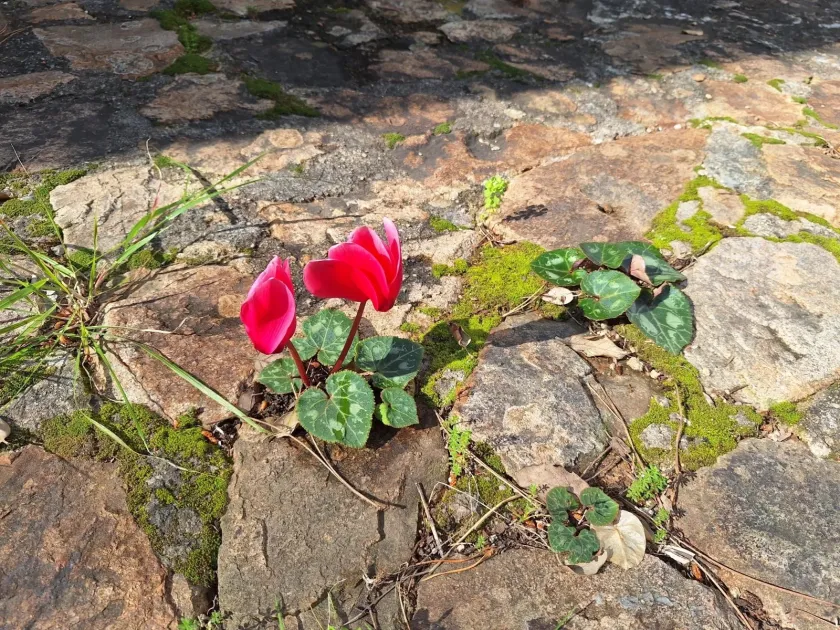
Description
Sowing dates
Persian cyclamen (Cyclamen persicum Mill.) is a perennial herbaceous plant belonging to the Primulaceae family. In agricultural practice, seeds are typically sown between late summer and early autumn to ensure flowering by the following winter season.
Seeds should be sown in a sterile substrate at a depth of approximately 0.5–1 cm. Maintaining a soil temperature of 18–20°C and complete darkness for the initial weeks is crucial for uniform germination.
Once seedlings emerge, they must be exposed to bright, diffused light. Gradual temperature reduction is necessary to help the plants adapt and build strong, compact foliage structures.
Pricking out into individual containers occurs after the formation of 2–3 true leaves. It is vital to keep the top of the tuber above the soil surface to prevent fungal infections and rot.
Commercial growers use high-quality seed trays and specific soil mixes to optimize early growth phases, ensuring high uniformity across the entire crop cycle.
Growing requirements
Cyclamen persicum demands cool growing conditions. The ideal temperature range is 15–18°C; temperatures consistently above 20°C can cause weak stems and inhibit the plant's natural flowering cycle.
A well-draining, slightly acidic soil mix is required for healthy root development. High organic content is beneficial, provided the substrate remains aerated and does not become waterlogged.
Proper irrigation is the cornerstone of cyclamen care. Water should be applied to the edges of the pot or via sub-irrigation to avoid getting water into the crown, which can cause significant damage.
Humidity levels should be kept around 60–70%. Good air circulation is essential, especially in greenhouses, to prevent the buildup of stagnant air and associated pathogens.
Fertilization should be balanced, with a focus on phosphorus and potassium during the bud-set stage to promote vibrant and numerous blooms.
Main diseases and pests
Common plant diseases include Anthracnose, Rhizoctonia, and Botrytis (Grey mold), which thrive in humid and poorly ventilated environments. Prompt isolation of infected plants is necessary.
Viral infections such as Tomato mosaic virus and Tobacco mosaic virus pose significant risks. These are often transmitted via pests or contaminated tools, making strict hygiene protocols mandatory.
Root-knot nematodes (Gall nematode) are critical threats that attack the roots and hinder the plant's ability to take up nutrients. Regular inspection of the root zone is recommended.
Phyllosticta leaf spot can cause unsightly necrosis on foliage, reducing the commercial value of the crop. Fungicide treatments should be part of a proactive disease management plan.
While less common, Potato wart disease requires vigilance. Maintaining a clean growing environment and using certified disease-free media are the best methods of prevention.
Harvesting
Harvesting for the market involves selecting plants that exhibit a high number of buds and several fully opened flowers. Each plant must be free of damage and show vigorous, healthy growth.
Before transport, plants undergo a cleaning process to remove any yellowed or mechanically damaged leaves. Careful handling is required to protect the delicate pedicels and leaves.
Packaging must ensure adequate space and protection. Using specialized inserts for pots prevents the plants from shifting and reduces the risk of structural damage during distribution.
The post-harvest environment should be kept cool and well-lit. Proper temperature control during shipping is essential to extend the vase life and decorative quality of the cyclamen.
Successful marketing relies on presenting plants with uniform development, clear branding, and clear care instructions for the end-user.