

Description
How to identify
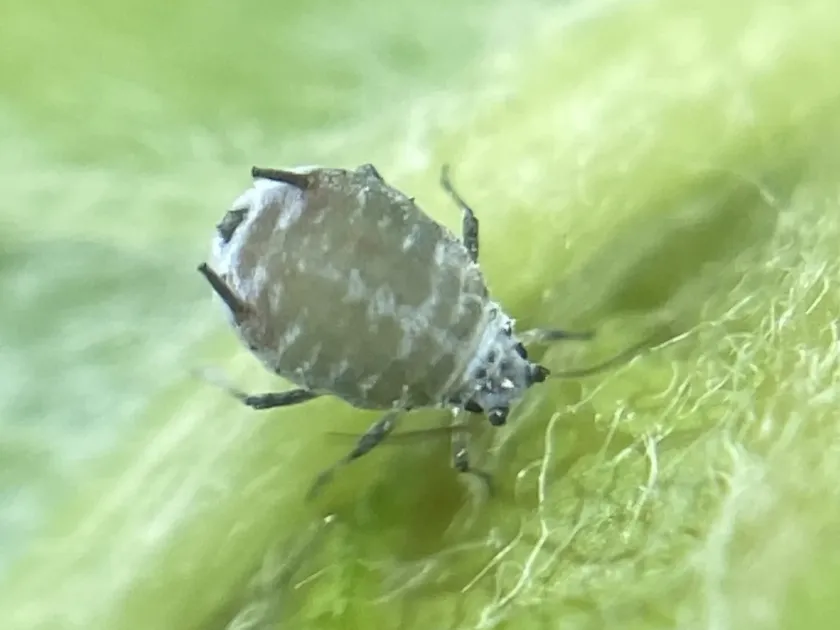
The leaf-curling aphid (genus Dysaphis) belongs to the order Hemiptera, family Aphididae. These are tiny insects typically measuring between 1.5 and 2.5 mm in length.
Adult aphids appear in both wingless and winged forms, allowing them to spread effectively across orchards and gardens.
Their body color varies significantly, ranging from pale yellow and light green to dark brown, depending on the specific species and season.
They are often covered in a fine waxy powder, which acts as a defense mechanism against environmental stressors and pesticides.
They overwinter as eggs, which are carefully laid by females in bark crevices or near the buds of host trees.
What it damages
Leaf-curling aphids primarily target pome and stone fruit trees, with apple and pear trees being the most frequent and severely affected hosts.
Damage is concentrated on the leaves, where the aphids feed, causing the development of characteristic galls or distorted, bulbous swellings.
Beyond cultivated trees, some species use various wild Rosaceae plants as intermediate hosts to complete their complex life cycle.
Infested trees experience significant physiological stress, reduced photosynthesis, and weakened winter hardiness due to nutrient loss.
Excrement from the aphids, known as honeydew, covers the foliage and promotes the growth of sooty mold, further damaging the tree's health.
When it appears
The life cycle begins in early spring as temperatures rise, triggering the hatching of stem mothers from overwintering eggs.
Late spring and early summer represent the period of peak infestation, characterized by the rapid formation of colonies and visible leaf galls.
Summer generations include winged individuals that migrate to secondary hosts or spread to healthy trees within the same orchard.
As autumn approaches, the aphids return to their primary fruit tree hosts to lay the winter generation of eggs.
Climate factors such as mild spring temperatures and humidity levels significantly accelerate the reproduction rate of these aphids.
Signs of infestation
The most distinctive symptom is the presence of deformed, puckered leaves with yellow, red, or purple discolorations (the galls).
Upon inspecting the underside of an affected leaf, large clusters of small aphids can usually be seen feeding on the plant tissue.
Affected foliage tends to curl tightly, wither, and drop prematurely, severely hindering the tree's overall growth potential.
A sticky substance known as honeydew is often present on the leaves and bark, which frequently attracts ants and fosters sooty mold.
The shoots of young trees may become severely twisted and stunted, preventing proper structural development of the branches.
Control measures
Cultural control practices include the removal of root suckers and pruning of heavily infested shoots to reduce the initial aphid population.
Biological control is highly effective; encouraging natural predators like ladybugs, lacewings, and hoverflies can help suppress aphid numbers.
Dormant oil applications during the pre-bud burst stage are an essential strategy to target and eliminate the overwintering eggs.
Chemical intervention with systemic insecticides may be necessary during the peak growing season if the infestation threatens the crop yield.
- Monitor orchards regularly starting from the early spring.
- Rotate chemical treatments to prevent resistance development.
- Implement ant control to stop them from protecting the aphids.
Content graph
Connections · Leaf-curling aphid
Most often together:
Marketplace
Products · 18






Biology
Taxonomy
- Latin name
- Dysaphis
- Order
- Hemiptera (bugs, aphids, leafhoppers)
- Family
- Aphididae
- EPPO code
- DYSASP
Community
Discussion
No discussions yet — be the first.