
Bleeding heart vine
Clerodendrum thomsoniae Balf.
Description
Growing requirements
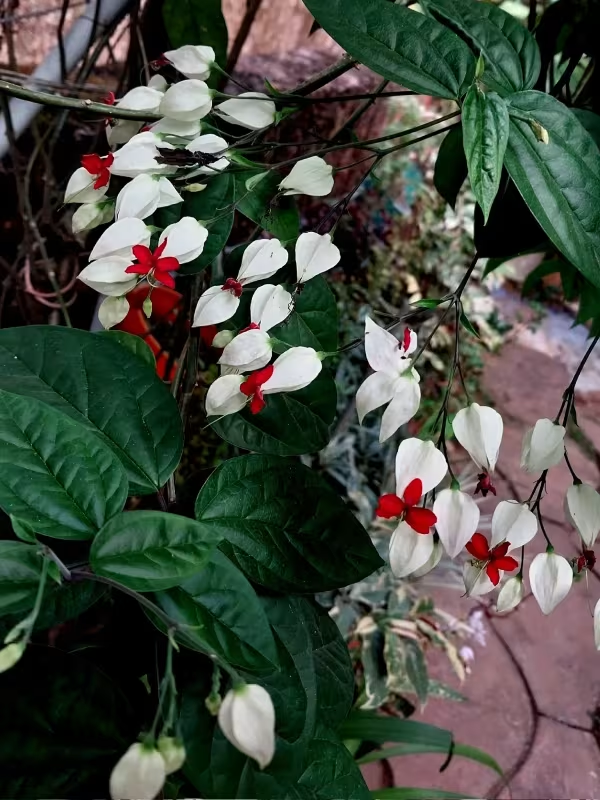
The Bleeding heart vine (Clerodendrum thomsoniae) is a member of the Lamiaceae family. It is a vigorous, woody evergreen climbing vine native to the tropical regions of West Africa. The plant is prized in horticulture for its distinct inflorescences featuring white calyxes and crimson corollas, creating a striking contrast.
The culture requires a stable tropical climate with temperatures ranging from +20°C to +25°C. High ambient humidity is essential for optimal development, as the plant naturally inhabits humid forest environments. It thrives in bright, filtered light; however, direct exposure to intense afternoon sun should be avoided to prevent foliar damage.
A well-draining, nutrient-rich, and slightly acidic substrate (pH 5.5–6.5) is critical. A suitable mixture includes peat-based potting soil combined with perlite or coarse sand to ensure aeration. Proper irrigation management is vital, as the root system is sensitive to waterlogged conditions; thus, a drainage layer in the pot is non-negotiable.
Agronomic practices focus on vigorous pruning to maintain the plant's shape and size. Pruning should be performed in early spring, cutting back shoots to stimulate secondary branching and promote a prolific blooming season. Frequent fertilization with a balanced, bloom-boosting liquid fertilizer is recommended throughout the peak growing season.
Commercially, Clerodendrum thomsoniae is cultivated as an ornamental plant for indoor landscapes, greenhouses, and conservatory displays. It is frequently employed in vertical gardening to cover screens or trellises due to its rapid growth habit and significant aesthetic appeal during the flowering period.
Main diseases and pests
The plant is susceptible to various fungal diseases if environmental conditions are not properly managed. Key issues include powdery mildew, cercospora leaf spot, and phyllosticta leaf spot. Gray mold (botrytis) frequently occurs in conditions of poor ventilation combined with excessive humidity.
Root health can be compromised by pythium root rot, which is often a result of overwatering. Soil-borne pests such as root-knot nematodes (gall nematodes) are a significant threat to root system functionality. Furthermore, infection by the tobacco mosaic virus can lead to severe stunting and systemic foliar symptoms, for which there is no chemical cure.