

Reference · Pests
Gelechiid moths
Gelechiid moths belong to the large and diverse family Gelechiidae within the order Lepidoptera. These moths are characterized by a distinct notch on the outer edge of their hindwings, which serves as a primary diagnostic feature for identification.
222
items
What the section contains
 Potato tuber moth
Symmetrischema tangolias
11 products
Potato tuber moth
Symmetrischema tangolias
11 products
 Potato tuber moth
Phthorimaea operculella
4 products
Potato tuber moth
Phthorimaea operculella
4 products
 Sea buckthorn moth
Gelechia hippophaella
3 products
Sea buckthorn moth
Gelechia hippophaella
3 products
 Tomato pinworm
Keiferia lycopersicella
3 products
Tomato pinworm
Keiferia lycopersicella
3 products
 Acompsia
Aerotypia
Aerotypia
Aerotypia pleurotella
Aerotypia pleurotella
Acompsia
Acompsia
Aerotypia
Aerotypia
Aerotypia pleurotella
Aerotypia pleurotella
 Alfalfa moth
Stomopteryx detersella
Alfalfa moth
Stomopteryx detersella
 Alfalfa moth
Xystophora pulveratella
Alfalfa moth
Xystophora pulveratella
 Altenia
Altenia
Altenia
 Anacampsis
Anacampsis
Anacampsis
 Anacampsis niveopulvella
Anacampsis niveopulvella
Anacampsis niveopulvella
 Anacampsis scintillella
Anacampsis scintillella
Anacampsis scintillella
 Anarsia
Anarsia ephippias
Anarsia ephippias
Anarsia
Anarsia
Anarsia ephippias
Anarsia ephippias
 Anarsia spartiella
Anarsia spartiella
Anarsia spartiella
 Angoumois grain moth
Sitotroga cerealella
Angoumois grain moth
Sitotroga cerealella
 Anisoplaca
Anisoplaca
Anisoplaca
 Anisoplaca ptyoptera
Anisoplaca ptyoptera
Anisoplaca ptyoptera
 Apodia
Apodia
Apodia
 Apodia bifractella
Apodia bifractella
Apodia bifractella
 Apple rhombus moth
Gelechia rhombella
Aristotelia
Aristotelia
Apple rhombus moth
Gelechia rhombella
Aristotelia
Aristotelia
 Aristotelia subericinella
Aristotelia subericinella
Aristotelia subericinella
 Aroga
Aroga
Aroga
Aroga
 Athrips
Australian pink bollworm
Pectinophora scutigera
Athrips
Athrips
Australian pink bollworm
Pectinophora scutigera
 Beet moth
Scrobipalpa ocellatella
Beet moth
Scrobipalpa ocellatella
 Bindweed moth
Brachmia macroscopa
Bindweed moth
Brachmia macroscopa
 Black gelechiid moth
Gelechia nigra
Black gelechiid moth
Gelechia nigra
 Brachmia
Brachmia
Brachmia
 Bryotropha
Bryotropha
Bryotropha
 Burdock moth
Metzneria lappella
Burke's pine needle miner
Exoteleia burkei
Burdock moth
Metzneria lappella
Burke's pine needle miner
Exoteleia burkei
 Carnation leaf-miner moth
Caryocolum vicinella
Carnation leaf-miner moth
Caryocolum vicinella
 Carnation moth
Caryocolum
Carnation moth
Caryocolum
 Carpatolechia
Carpatolechia
Carpatolechia
 Carpatolechia alburnella
Carpatolechia decorella
Carpatolechia decorella
Carpatolechia alburnella
Carpatolechia alburnella
Carpatolechia decorella
Carpatolechia decorella
 Carpatolechia fugacella
Caryocolum tischeriella
Caryocolum tischeriella
Carpatolechia fugacella
Carpatolechia fugacella
Caryocolum tischeriella
Caryocolum tischeriella
 Cerceris moth
Fascista cercerisella
Cerceris moth
Fascista cercerisella
 Cereal grey moth
Acompsia cinerella
Cereal grey moth
Acompsia cinerella
 Cherry fruit moth
Athrips rancidella
Chionodes
Chionodes
Cherry fruit moth
Athrips rancidella
Chionodes
Chionodes
 Chionodes mariona
Chionodes mariona
Chionodes mariona
 Chionodes periculella
Chionodes periculella
Chionodes periculella
 Chionodes viduella
Chionodes viduella
Chionodes viduella
 Chrysoesthia
Chrysoesthia
Chrysoesthia
 Clover moth
Aproaerema anthyllidella
Clover moth
Aproaerema anthyllidella
 Coleotechnites
Coleotechnites
Coleotechnites
 Convolvulus moth
Helcystogramma convolvuli
Convolvulus moth
Helcystogramma convolvuli
 Cotton leaf miner
Platyedra subcinerea
Cotton leaf miner
Platyedra subcinerea
 Currant bud moth
Argolamprotes
Currant bud moth
Argolamprotes
 Dichomeris
Dichomeris
Dichomeris
 Dichomeris acuminatus
Dichomeris acuminatus
Dichomeris acuminatus
 Dichomeris alacella
Dichomeris eridantis
Dichomeris eridantis
Dichomeris alacella
Dichomeris alacella
Dichomeris eridantis
Dichomeris eridantis
 Dichomeris ferruginosa
Dichomeris ferruginosa
Dichomeris ferruginosa
 Dichomeris ianthes
Dichomeris ianthes
Dichomeris ianthes
Marketplace
Products in this section · 12


Coragen 20
«Дюпон Інтернешнл Оперейшнз Сарл», Швейцарія
Insecticides
0
0
·
76
16 offers
40.2 €per 1 l
Buy
MOSCOW TRANSPARENCY
BOTANIChESKIJ SAD MGU IM.M.V.LOMONOSOVA
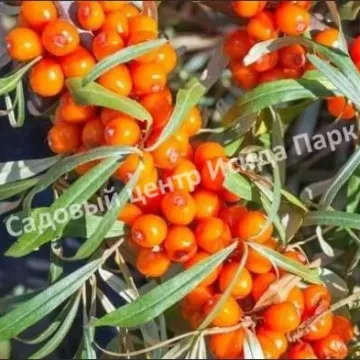
Sea Buckthorn
0
0
·
75
1 offer
245.42 €per pack
Buy


Gelechiid moths
Adult moths are typically small, with narrow wings fringed with hairs, often displaying dull, cryptic coloration that aids in camouflage against plant stems, soil, or tree bark.
The larvae, or caterpillars, are known for their concealed lifestyle, often creating mines within leaves, rolling foliage, or boring into stems, buds, and fruits.
Taxonomically, this group is vast and complex, containing numerous species that are major pests of agricultural crops, trees, and stored products worldwide.
Proper identification usually requires expert examination of genital structures or the use of specific pheromone lures designed for monitoring field populations.
Gelechiid moths are highly destructive, affecting a wide variety of plants, including potatoes, tomatoes, beans, cereals, and various ornamental species.
Larval feeding causes direct damage by consuming plant tissues, which disrupts vascular systems, hampers photosynthesis, and causes structural weakening of the host plant.
The damage often facilitates secondary infections by pathogens like bacteria and fungi, which can lead to the rapid decay of harvested produce in storage.
Economic losses are severe, as affected crops suffer from reduced yield, diminished market quality, and increased vulnerability to environmental stressors.
Because larvae feed internally, they are protected from many environmental factors and standard insecticide sprays, making them difficult to control once established.
The life cycle of these moths is highly dependent on climate, with many species capable of completing several generations in a single growing season.
Overwintering typically occurs in the pupal or larval stage, tucked away in plant debris, soil crevices, or within the walls of storage facilities.
Adult activity begins in spring as temperatures rise, with peak infestation cycles often occurring during the warmest months of the summer.
The moths are primarily nocturnal or crepuscular, meaning they are most active during dusk and dawn, which is the best time for visual monitoring.
In temperature-controlled greenhouses or storage warehouses, these insects may reproduce year-round, posing a constant threat to agricultural products.
Early symptoms of infestation include the appearance of serpentine or blotch mines on leaves, which gradually turn necrotic and brown as the tissue dies.
Frass (larval excrement) is often visible on the surface of infested fruits, stems, or leaves, appearing as small, dark pellets near entry holes.
Plants may show signs of wilting, premature leaf drop, or stunted growth, which often indicates that larvae are feeding inside the stems or crown.
Infested tubers or fruits often have visible tunnels just beneath the skin, frequently accompanied by localized rotting that spreads rapidly through the tissue.
Monitoring the fields with pheromone traps can reveal the presence of adult moths long before the damage to the plant becomes visible to the naked eye.
An effective management strategy for Gelechiid moths relies on an integrated pest management (IPM) approach to minimize crop loss while maintaining environmental safety.
Cultural practices, such as deep plowing to bury pupae and strict crop rotation, are essential for reducing the baseline population of the pest.
Biological controls, including the use of parasitic wasps, predatory insects, and biopesticides, can significantly suppress moth populations when used correctly.
Chemical intervention should be timed based on population monitoring to ensure application coincides with the most susceptible larval stages.
- Utilizing pheromone traps for precise population monitoring and timing.
- Removing and destroying infested plant material to prevent spread.
- Maintaining clean storage conditions to limit re-infestation risks.
- Rotating chemical classes to prevent the development of insecticide resistance.