
Aroga
Aroga
Description
How to identify
The genus Aroga belongs to the family Gelechiidae (twirler moths). These are small insects, characterized by the specific structure of their wings, with a distinct notch along the outer edge of the hind wings.
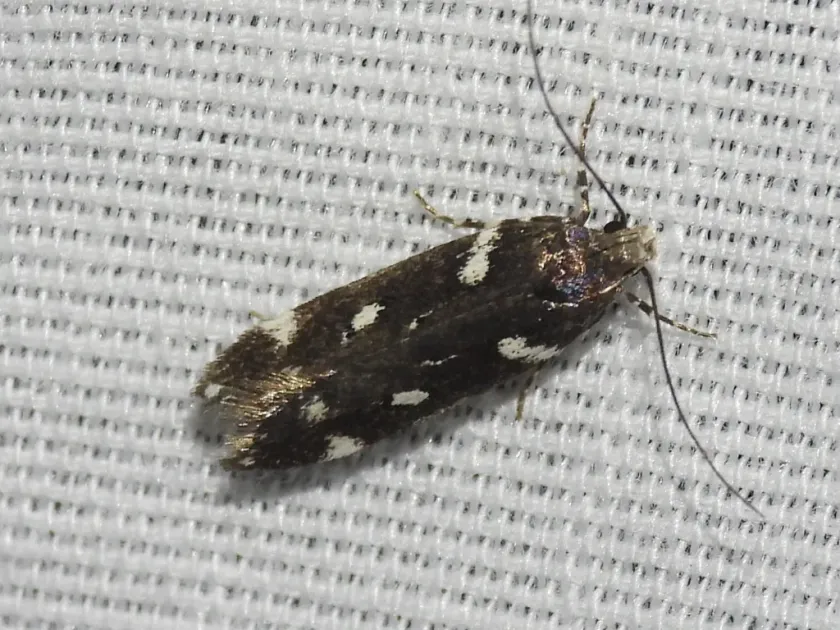
Adults possess a modest coloration, typically ranging from grayish-brown to ochre, allowing them to effectively camouflage against plant debris or tree bark.
The larvae (caterpillars) are spindle-shaped and small in size. Their color varies by species and age, but they most commonly present as greenish or yellowish-brown with a darkened head capsule.
Identifying species within this genus requires a detailed analysis of genital structures, as external morphological traits are often consistent across closely related taxa.
The pupal stage occurs within a dense cocoon, which the larva constructs inside folded leaves or the top layer of soil, providing protection against environmental stress and predators.
What it damages
Species within this genus infest a wide range of herbaceous and woody plants, including various agricultural crops and wild weed species.
The primary damage is caused by the larval stage, which feeds on plant tissues, frequently skeletonizing leaves or consuming the parenchyma between the epidermis layers.
Some species exhibit narrow host specificity, affecting primarily legumes or asteraceous plants, which is a critical factor when designing effective crop rotation schedules.
Under intensive farming conditions, Aroga can cause significant losses during mass outbreaks, reducing the total vegetative biomass of infested crops.
Beyond direct tissue consumption, the damage acts as an entry point for secondary infections, including fungal and bacterial pathogens that further weaken the plant.
When it appears
The life cycle of these insects is closely synchronized with the phenology of their host plants, with the most active feeding phase occurring during the crop's peak vegetation period.
The overwintering stage typically consists of eggs or late-instar larvae hiding in plant debris or bark crevices to survive unfavorable winter conditions.
Emergence from diapause coincides with the stabilization of positive temperatures in spring, which serves as a signal for the onset of mass adult flight.
Multiple generations may develop throughout the season, creating a high risk of population buildup if control measures are not implemented during the summer months.
As the season approaches its end, feeding intensity decreases, and the insects transition into diapause, making late summer and autumn critical times for field monitoring.
Signs of infestation
One of the earliest signs of infestation is the appearance of characteristic "windows" on leaves, where larvae have consumed internal tissue, leaving only a transparent film behind.
Caterpillars often roll leaves along the central vein using silk webbing, creating a protective shelter that is easily identifiable during field inspections.
The presence of excrement in the form of tiny black granules inside rolled leaves serves as a reliable indicator of active larval presence on the crop.
Severe infestations lead to stunted growth, premature yellowing, and leaf drop, which can be devastating during the early developmental stages of the crop.
Monitoring with pheromone traps allows farmers to precisely track the onset of adult flights and forecast the emergence of subsequent generations.
Control measures
The primary protection strategy involves agronomic methods: deep autumn plowing helps destroy pupae overwintering in the soil or crop residues.
Biological control agents, such as microbial products based on Bacillus thuringiensis, have demonstrated high efficacy against early-instar larvae.
Chemical treatments with systemic or contact-stomach insecticides should be applied strictly based on the economic injury level and field scouting results.
Weed management in field margins and row middles is essential, as these areas often serve as reservoirs for pests at the beginning of the growing season.
- Strict adherence to crop rotation.
- Encouraging the presence of natural entomophages.
- Regular phytosanitary field monitoring.
Taxonomy
- Latin name
- Aroga
- Order
- Lepidoptera (butterflies)
- Family
- Gelechiidae
- EPPO code
- AROGSP
Discussion
No discussions yet — be the first.