
Dichomeris alacella
Dichomeris alacella
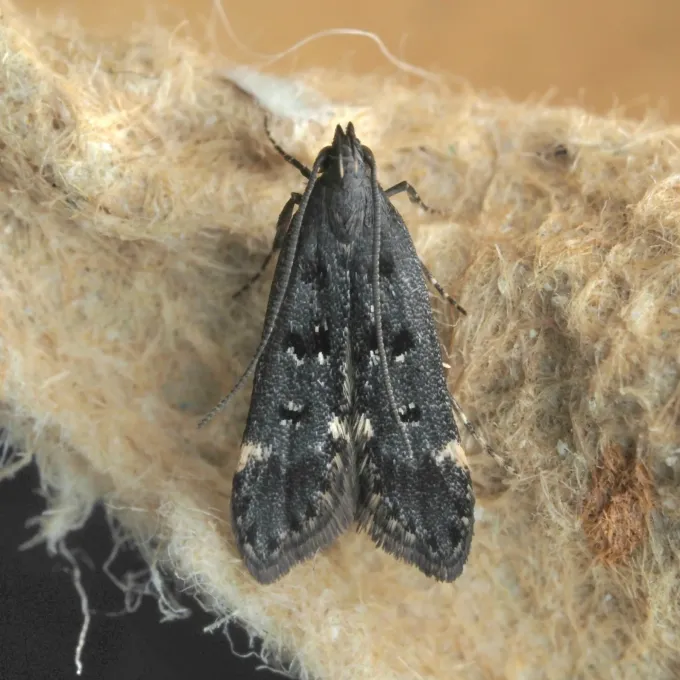
Description
How to identify
Dichomeris alacella is a species of moth belonging to the family Gelechiidae. These moths are relatively small, with a wingspan typically ranging from 12 to 15 mm, and possess narrow, pointed wings characteristic of the gelechiid family.
The adult moths exhibit a cryptic coloration, often shades of brown or grey, which serves as excellent camouflage when they rest on tree bark. In a resting position, they fold their wings along their bodies.
The larvae, or caterpillars, are the active feeding stage and undergo several instars. Their coloration changes during development, often starting pale and darkening as they mature, usually showing a distinct head capsule.
Identification is best confirmed by an expert through microscopic examination of morphological features, as many gelechiid moths share a similar external appearance in the field.
Their life cycle consists of four distinct stages: egg, larva, pupa, and adult, with the duration of these stages highly dependent on the local climate and temperature trends.
What it damages
The primary damage is caused by the larval stage, which feeds on the foliage, flower buds, and terminal shoots of various host plants. This feeding activity can affect both wild and cultivated plant species.
Larvae consume the parenchymal tissue of leaves, often leaving behind skeletonized remains or distinct irregular holes, which directly reduces the plant's capacity for photosynthesis.
Spring feeding on developing buds is particularly destructive, as it can cause bud failure, stunted shoot growth, and loss of future reproductive capacity in fruit-bearing plants.
Feeding sites frequently become entry points for secondary infections by fungi or bacteria, which can cause further tissue necrosis and systemic plant weakness.
Heavy infestations can lead to premature leaf drop, which puts significant physiological stress on the plant and reduces its ability to store energy for the following season.
When it appears
The species typically overwinters in the pupal stage or as late-instar larvae, tucked safely into bark crevices or within protected leaf litter near the base of the plant.
Adult emergence commences in the spring, triggered by rising temperatures. This timing generally aligns with the phenological stage of bud break in many host plants.
The flight period of the adults is often extended, meaning that different generations may overlap depending on environmental conditions throughout the summer months.
Summer generations are typically more numerous if conditions are warm and humid, leading to increased pressure on vegetation during the peak growing season.
As temperatures decline in autumn, the larvae seek out overwintering sites, often moving towards the lower portions of trees or into the soil layer to prepare for winter dormancy.
Signs of infestation
The most visible sign of infestation is the presence of silk webbing or nests constructed by the larvae between leaves or on terminal shoots to provide protection.
Dark granular frass (excrement) is usually found within these webbed nests or on the leaf surfaces below the feeding sites, serving as a clear indicator of larval activity.
Leaf curling, where the larvae spin silk to pull leaf edges together, is a characteristic symptom of Dichomeris alacella presence.
Damaged, necrotic buds that fail to open properly in the spring indicate earlier larval feeding activity during the onset of the growing season.
- Silk-webbed leaf clusters.
- Skeletonized leaf patches.
- Rolled or folded leaf edges.
- Presence of granular larval frass.
- Stunted or damaged terminal shoots.
Control measures
Effective management includes the application of targeted insecticides during the early spring period, specifically when larvae become active and begin feeding on developing buds.
Biological control using Bacillus thuringiensis sprays has proven effective, offering a more environmentally friendly alternative that targets the caterpillars while sparing beneficial insects.
Cultural practices such as clearing debris from around the base of the tree and removing loose, dead bark can eliminate crucial overwintering sites for the pupae.
Using pheromone traps for monitoring allows growers to track adult population spikes, ensuring that chemical interventions are timed precisely for maximum impact.
Encouraging the presence of natural predators like lacewings, predatory mites, and parasitic wasps can help keep the moth population below the economic threshold without heavy pesticide use.
Taxonomy
- Latin name
- Dichomeris alacella
- Order
- Lepidoptera (butterflies)
- Family
- Gelechiidae
- EPPO code
- DICMAL
Discussion
No discussions yet — be the first.