
Cotton leaf miner
Platyedra subcinerea
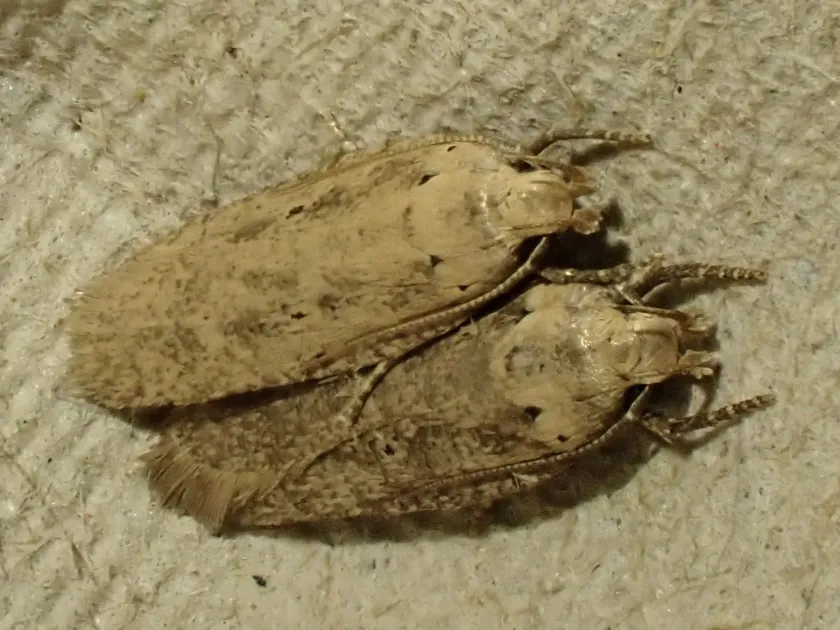
Description
How to identify
The cotton leaf miner (Platyedra subcinerea) belongs to the order Lepidoptera and the family Gelechiidae. This small moth is characterized by its grayish or brownish coloration, which provides excellent camouflage against host plants.
The life cycle encompasses four developmental stages: egg, larva, pupa, and adult. The moths are primarily nocturnal, making them difficult to spot during daytime field surveys.
Larvae are highly mobile with well-developed chewing mouthparts. Their color can shift based on their developmental stage and the specific tissue they consume, serving as an important diagnostic feature for agronomists.
Development rates are strongly influenced by ambient temperature and humidity. Hot, dry weather conditions significantly accelerate the life cycle, leading to rapid population growth during the peak growing season.
The species overwinters mainly in the larval stage, residing within the soil or inside plant debris, which allows it to survive harsh winter conditions and emerge in the spring.
What it damages
Cotton is the primary host for this pest. The damage impacts various plant organs, ranging from leaves to reproductive structures such as flower buds and bolls.
Larvae tunnel into leaf tissue, creating serpentine mines that disrupt photosynthesis and eventually cause the leaves to dry out and shed prematurely.
When flower buds and squares are infested, the larvae cause them to drop, which directly translates into reduced yields and lower-quality cotton fiber.
Damage to the bolls is particularly critical as larvae feed on the developing fiber and seeds. This activity weakens the plant and invites secondary fungal or bacterial infections.
In cases of high infestation levels, the economic impact is significant, leading to both quantitative and qualitative losses in the harvest of cotton lint.
Signs of infestation
The most prominent sign is the presence of pale, winding tracks or "mines" visible on leaf surfaces, which are easily seen when leaves are inspected against sunlight.
Accumulation of larval excrement near entry points on leaves or buds is a clear indicator of active infestation. Deformed buds that fall prematurely are another common warning sign.
The presence of fine webbing or silk spun by larvae on the foliage or inside curled leaves often signifies an active population of the leaf miner.
Bolls showing small entry holes or signs of internal damage indicate that larvae have successfully penetrated the reproductive organs, which is a major concern for crop protection.
Secondary yellowing or tissue necrosis around damaged areas often accompanies the primary mining activity, helping to identify the pest's presence in the field.
Control measures
Deep autumn plowing is a fundamental cultural control measure, as it buries overwintering larvae and disrupts the pest's ability to survive in the soil.
Rigorous removal and destruction of crop residues post-harvest are essential to eliminate refuge areas and reduce the carry-over population for the next season.
Chemical control using systemic or contact insecticides should be timed based on pheromone trap monitoring to coincide with the most vulnerable phases of the pest's life cycle.
Maintaining crop rotation and spatial separation from other Malvaceae or Solanaceae crops helps to minimize the pressure from migrating moth populations.
Biological control methods, including the release of natural enemies or the application of microbial-based biopesticides, can be effective if integrated properly into the overall farm management plan.
Taxonomy
- Latin name
- Platyedra subcinerea
- Order
- Lepidoptera (butterflies)
- Family
- Gelechiidae
- EPPO code
- PLAYSU
Discussion
No discussions yet — be the first.