
Carpatolechia decorella
Carpatolechia decorella
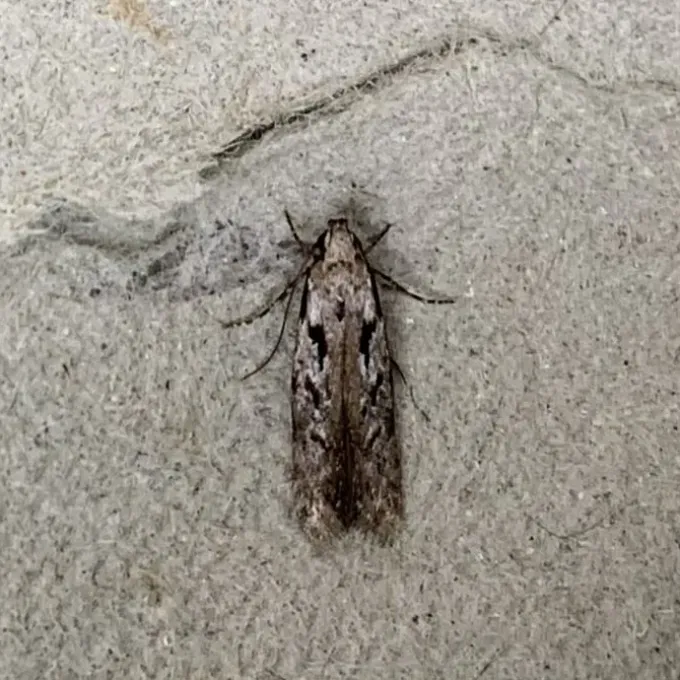
Description
How to identify
Carpatolechia decorella is a small insect belonging to the order Lepidoptera and the family Gelechiidae (twirler moths). As a moth species, it is characterized by its nocturnal behavior and specific wing morphology.
The adult moth has brownish-grey forewings with distinct patterns, providing excellent camouflage against tree bark. Its body structure is adapted for hiding in narrow crevices during the daytime.
The larval stage consists of caterpillars that exhibit color changes as they mature, typically shifting from a pale appearance to a darker, greenish-brown shade with a visible head capsule.
The species biology is closely tied to the host tree's phenology. Adults emerge at dusk to mate and lay eggs, making them difficult to detect during standard daytime horticultural inspections.
The lifecycle is influenced by ambient temperature and humidity. The species has adapted to synchronize its development with the spring flush of host plants, ensuring food availability for the emerging larvae.
What it damages
This pest primarily affects pome fruit trees, such as apple and pear, though it may also be found on various stone fruit species. It causes damage to the vegetative parts of the tree.
Larvae consume young leaves, rolling them into characteristic tubes or cigars held together by silk threads. Within these shelters, they feed on leaf tissue, leaving only the veins.
Beyond foliage, the larvae can damage flower buds and young fruitlets. This feeding behavior often leads to fruit deformity, premature drop, and a significant reduction in marketable produce.
Feeding sites serve as entry points for opportunistic pathogens, including fungi and bacteria, which can lead to secondary infections like leaf spot or fruit rot.
Persistent infestations weaken the tree's physiological state, reducing its overall vitality, annual growth, and the successful formation of flower buds for the subsequent season.
When it appears
Activity begins in early spring, triggered by rising temperatures that signal the transition from diapause to the adult emergence phase for the overwintering generation.
The first adult flight occurs in late spring, coinciding with the development of tender plant tissues. Females lay eggs on new buds or leaves, which soon hatch into larvae.
Development proceeds throughout the summer. Depending on local climate and latitude, the pest can complete one or two generations, with peak larval activity typically occurring in mid-summer.
As autumn approaches, the insect prepares for dormancy. It seeks secure environments such as bark crevices, leaf litter, or the upper soil layer beneath the host tree canopy.
Winter survival is achieved in the pupal or mature larval stage, allowing the population to endure freezing temperatures and emerge effectively when spring conditions return.
Signs of infestation
The most prominent sign of infestation is the presence of deformed, silk-bound leaves bunched together in the canopy, which are clearly visible upon inspection.
- Webbed nests found on the tips of young shoots.
- Presence of larval frass within the rolled leaf structures.
- Small, irregular holes in buds and developing fruit.
- Premature yellowing and leaf abscission during the growing season.
- Presence of the caterpillars themselves when webbed leaves are opened.
Control measures
Management of Carpatolechia decorella requires an integrated approach that combines cultural practices with targeted chemical or biological interventions.
Cultural methods include the thorough removal of leaf litter in autumn and scraping old, loose bark from trunks to eliminate overwintering sites for the larvae and pupae.
Chemical control should focus on the use of selective insecticides applied during the early larval stage. Timing is critical, as later instars are protected within their silk-bound shelters.
Biological control agents, such as Bacillus thuringiensis, offer a viable alternative, particularly in organic orchards, providing effective suppression without harming beneficial insects.
Monitoring using pheromone traps is highly recommended to pinpoint the precise timing of adult flight, allowing growers to optimize the application of control measures and minimize chemical input.
Taxonomy
- Latin name
- Carpatolechia decorella
- Order
- Lepidoptera (butterflies)
- Family
- Gelechiidae
- EPPO code
- KARPDE
Discussion
No discussions yet — be the first.