
Anacampsis scintillella
Anacampsis scintillella
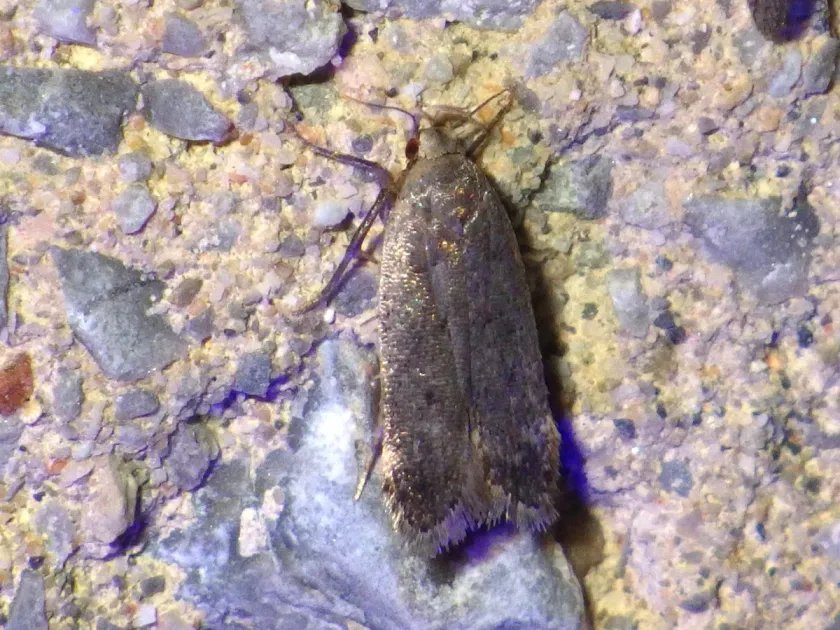
Description
How to identify
Anacampsis scintillella is a species of moth belonging to the family Gelechiidae, often referred to as twirler moths. The adult moth is relatively small, featuring cryptic coloration that allows it to blend seamlessly into tree bark and foliage.
The defining characteristic of this family is the notch located on the hind edge of the forewings. This anatomical feature, along with the shimmering appearance of their scales, serves as a primary identifying trait for entomologists in the field.
The larval stage, or caterpillar, possesses well-developed mandibles specialized for chewing. These larvae are highly adaptive, often using silk to construct protective shelters within rolled or tied leaves where they feed safely.
The insect undergoes complete metamorphosis: egg, larva, pupa, and adult. Pupation typically occurs in silken cocoons spun in concealed locations, such as crevices in the bark or amongst leaf litter at the base of the host plant.
The life cycle is strictly regulated by seasonal changes. The timing of emergence and the rate of development for each generation are heavily influenced by temperature and the availability of suitable host plant tissues during the growth phase.
What it damages
This pest primarily targets trees and shrubs within the Rosaceae family. Hawthorn (Crataegus) and various other ornamental woody species are frequently cited as preferred hosts for larval feeding.
Caterpillars feed on the leaf tissue, often tying multiple leaves together with silk webbing. This behavior creates localized damage, reducing the plant's photosynthetic surface area and potentially causing leaves to dry out and fall prematurely.
Heavy infestations can lead to significant defoliation, which hampers the plant's ability to store energy for the following season. This stress can weaken the shrub, making it more susceptible to opportunistic pathogens and environmental stressors.
The period of maximum damage typically aligns with the spring flush of new growth. As larvae grow and consume more material, the aesthetic and biological integrity of the plant can be severely compromised in a relatively short timeframe.
Without intervention, repeated annual damage can lead to stunted growth and, in some cases, the death of young or particularly vulnerable specimens in nurseries or managed garden landscapes.
Signs of infestation
The most prominent sign of an infestation is the presence of webbed, curled, or distorted leaves. These shelters are often visible to the naked eye upon close inspection of the branch tips.
Feeding marks manifest as irregular holes or skeletonized patches on the foliage. As the damaged areas oxidize, they often turn brown or necrotic, providing a clear visual indicator of current or recent pest activity.
During the pupal phase, tiny, white, silky cocoons may be found tucked away in bark fissures or protected spots on the leaves. These structures confirm that the larvae have completed their feeding cycle and are preparing to emerge as adults.
Evening monitoring with light traps can reveal the presence of adult moths. While adults do not cause direct damage to the foliage, their presence signifies an active generation capable of laying eggs and initiating the next cycle.
Accumulation of frass (larval droppings) trapped within the webbed leaves is another definitive indicator. Finding these deposits confirms the active presence of larvae despite their otherwise secretive lifestyle.
Control measures
Effective pest management begins with cultural practices, including the removal and destruction of infested foliage or debris to physically reduce the overwintering population of the moth.
Biological control methods, such as the application of Bacillus thuringiensis (Bt) sprays, provide an effective and environmentally friendly way to manage younger larval stages before they cause extensive damage.
Chemical control involving systemic insecticides is recommended only when the infestation exceeds the economic threshold. Timing is crucial; applications should ideally coincide with the early larval emergence phase.
Monitoring using pheromone traps allows for precise timing of interventions, ensuring that control measures are implemented only when necessary, thus preserving beneficial insects in the environment.
- Sanitary pruning of infested branches to reduce population density.
- Use of pheromone lures for effective population monitoring.
- Application of bio-rational pesticides like B. thuringiensis.
- Encouraging natural predators and parasitoids in the garden ecosystem.
Taxonomy
- Latin name
- Anacampsis scintillella
- Order
- Lepidoptera (butterflies)
- Family
- Gelechiidae
- EPPO code
- ANKSSC
Discussion
No discussions yet — be the first.