
Clover moth
Aproaerema anthyllidella
Description
How to identify
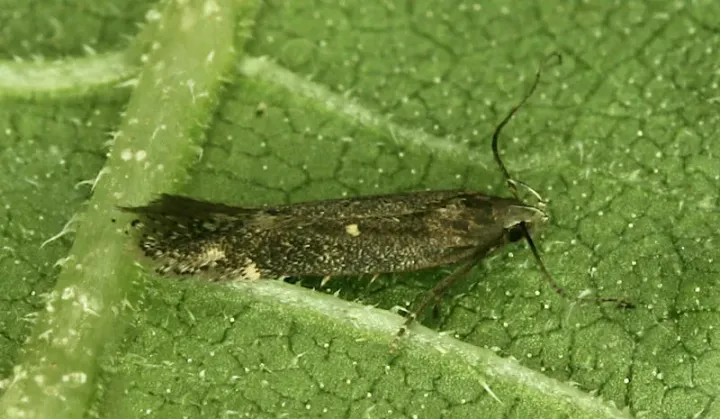
The clover moth (Aproaerema anthyllidella) is a species of moth belonging to the family Gelechiidae. It is a small insect characterized by a distinct notch on the posterior edge of its forewings, which is a key identification feature for this species.
Adult moths typically have a wingspan of 10 to 12 mm. Their coloration ranges from dark brown to grayish, often displaying a subtle metallic sheen. This camouflage helps them blend into their surroundings, making them difficult to detect without specialized equipment.
The species undergoes complete metamorphosis: egg, larva, pupa, and adult. The duration of each developmental stage is strongly influenced by ambient temperatures, with warmer conditions facilitating a faster life cycle and more generations per season.
The larvae, or caterpillars, are small and agile, possessing a well-developed head and mouthparts adapted for chewing. They are the stage responsible for the primary damage to agricultural crops.
These moths are primarily nocturnal, often remaining inactive during the day. Monitoring for their presence usually requires the use of pheromone lures or light traps deployed in the field during the active flight season.
What it damages
Aproaerema anthyllidella specializes in feeding on plants within the Fabaceae family. Its primary host plants include alfalfa, clover, lupine, and various types of vetch, occasionally impacting soybean crops as well.
Damage is caused by the larvae, which mine the leaves by feeding on the internal parenchyma tissue. This activity results in the formation of tunnels that eventually broaden into visible discolored patches on the leaf surface.
Heavy infestations lead to leaf wilting, yellowing, and premature senescence. In severe cases, the foliage can be completely destroyed, significantly reducing the photosynthetic capacity of the plants.
Beyond the vegetative parts, larvae may feed on flower buds and reproductive structures, which directly impacts seed yield and the quality of the harvested crop.
For forage crops, such as alfalfa and clover, the damage caused by the moth significantly lowers the nutritive value of the green mass, rendering the crop less suitable for high-quality livestock feeding.
Signs of infestation
The earliest signs of infestation are thin, light-colored lines on the leaves, known as mines. Over time, these mines expand into irregular blotches that look like scorched tissue on the leaf blade.
A characteristic sign of larval activity is the webbing of leaflets together. The caterpillars use this silk to create shelters, making it easier for them to feed while staying protected from predators.
Upon closer inspection, one might notice small dark granules of frass inside the mined areas or within the webbed leaf clusters. This is a clear indicator that larvae are actively present.
Extensive damage manifests as patches of silvered or brown foliage across the field. In many cases, the entire plant may look stunted or stressed due to the cumulative effects of the larval feeding.
If you observe a decline in the overall vigor of the clover or alfalfa crop during the summer months, it is advisable to inspect the lower canopy for webbed leaves and signs of internal tissue damage.
Control measures
Cultural control practices, such as crop rotation and the destruction of crop residues after harvest, are essential to break the lifecycle and reduce the number of overwintering pupae.
Early harvesting of forage crops can be an effective strategy to remove larvae before they reach the pupal stage or migrate to other host plants, thereby limiting the population for the next season.
Biological control, including the use of entomopathogenic bacteria like Bacillus thuringiensis, is highly recommended for managing larval populations while preserving beneficial insect populations in the field.
Chemical control should be implemented only when infestation levels exceed the economic injury threshold. Targeted insecticides applied at the time of larval hatch are the most effective way to prevent widespread leaf mining.
Integrated Pest Management (IPM) strategies, which include the use of pheromone monitoring, help farmers determine the precise timing for interventions, ensuring the most effective and sustainable results.
Taxonomy
- Latin name
- Aproaerema anthyllidella
- Order
- Lepidoptera (butterflies)
- Family
- Gelechiidae
- EPPO code
- AROAAN
Discussion
No discussions yet — be the first.