
Coleotechnites
Coleotechnites
Description
How to identify
The genus Coleotechnites belongs to the order Lepidoptera and the family Gelechiidae (twirler moths). These are small, inconspicuous moths with narrow wings.
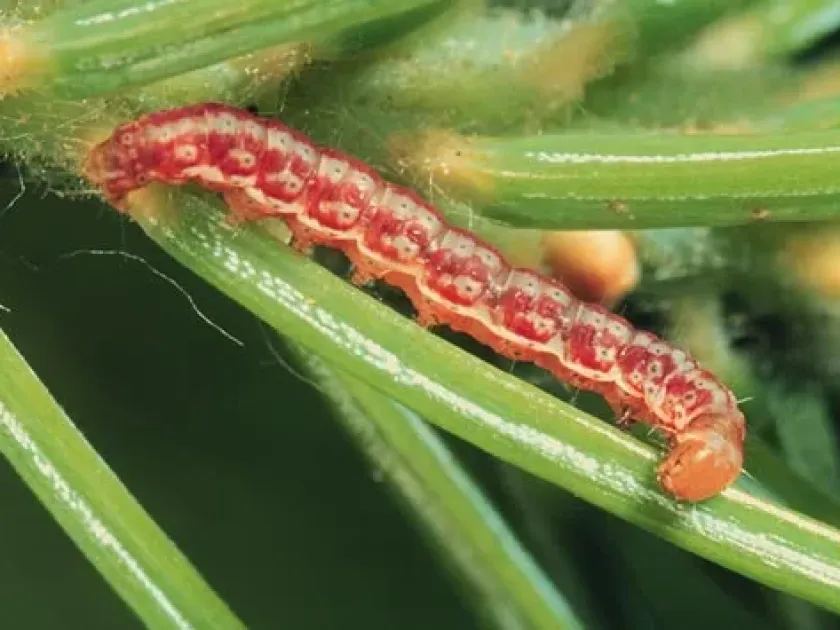
The larval stage, commonly known as a needle miner, is responsible for the damage as the larvae live and feed inside the needles of coniferous trees.
Their life cycle consists of complete metamorphosis: egg, larva (caterpillar), pupa, and adult, with development timing varying by species and climate.
Identifying the exact species within the Coleotechnites genus is complex and usually requires professional taxonomic analysis of adult moth genitalia.
For field assessment, agronomists rely on observing damage patterns on host plants rather than trying to capture and identify adult moths.
What it damages
Coleotechnites species primarily target coniferous trees, including various species of pine, spruce, and fir.
The larvae bore into individual needles, hollowing out the interior tissues while leaving the outer epidermis largely intact.
Infested needles eventually turn yellow, then brown, and may drop prematurely, causing visible thinning of the tree's canopy.
Severe infestations reduce the photosynthetic capacity of the trees, resulting in stunted growth and increased susceptibility to secondary pests and diseases.
The economic impact is significant in commercial forestry, tree nurseries, and ornamental landscape management where tree health is critical.
When it appears
The activity of Coleotechnites is synchronized with the growing season of the host conifers and prevailing regional temperatures.
Most species overwinter as larvae, either inside mined needles or within the needle litter on the forest floor, entering dormancy during winter.
As spring temperatures rise, larvae resume feeding activity, often targeting fresh new growth on the trees.
Adult moth emergence typically occurs during the summer months, marking the period for mating and egg-laying on needles.
Young larvae hatch later in the season, immediately beginning to bore into needles to prepare for their own winter survival.
Signs of infestation
The most common sign of infestation is the presence of hollowed-out, discolored needles that appear translucent when held up to the light.
Small entry holes at the base of the needles indicate where the young larvae first penetrated the tissue to begin feeding.
Frass (larval waste) particles are often found inside the hollowed needles or accumulated at the base of the foliage.
Some species use silk webbing to bind multiple needles together, which can be easily observed during a thorough inspection of the canopy.
A sudden, unexplained drop of brown needles during the summer or autumn is a classic diagnostic sign of a needle miner population outbreak.
Control measures
Chemical control usually involves the application of systemic insecticides that are absorbed by the tree and effectively target larvae feeding inside needles.
Sanitation practices, such as removing and destroying infested needle litter, are effective in reducing the overwintering population.
Promoting overall tree vigor through proper irrigation and fertilization helps the plants withstand and recover from light infestations.
Biological control involves conserving and utilizing natural enemies, including various species of parasitic wasps that prey on the larvae.
Pheromone monitoring traps are highly effective tools for timing chemical applications correctly, ensuring maximum efficiency while minimizing environmental impact.
Taxonomy
- Latin name
- Coleotechnites
- Order
- Lepidoptera (butterflies)
- Family
- Gelechiidae
- EPPO code
- KOLTSP
Discussion
No discussions yet — be the first.