
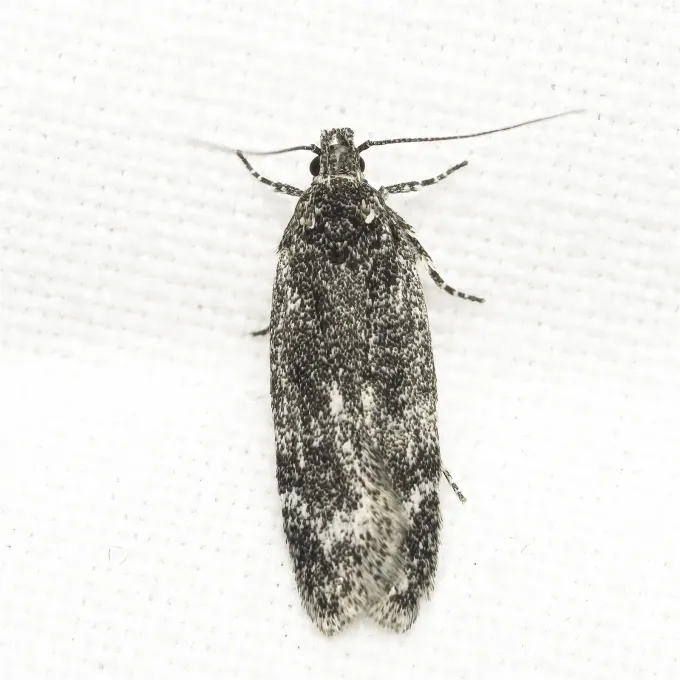
Black gelechiid moth
Gelechia nigra
Description
How to identify
The black gelechiid moth (Gelechia nigra) is a small insect species belonging to the family Gelechiidae, within the order Lepidoptera. This family is named for the distinctive notch on the margin of their hindwings, which is a key identifying trait.
Adult moths are characterized by their dark, almost entirely black coloration. This dark pigment serves as excellent camouflage against tree bark and foliage, helping them remain undetected by predators during the day.
The larval stage, or caterpillar, undergoes several instars before reaching maturity. These larvae are equipped with strong mandibles that allow them to feed efficiently on plant tissues, which is their primary activity during the life cycle.
Eggs of this species are minute and typically laid singly or in small clusters. They are often placed in sheltered locations, such as leaf undersides or bark crevices, which provides initial protection for the hatching larvae.
Pupation usually occurs within a protective silken cocoon. These cocoons can be hidden within folded leaves, underneath bark scales, or sometimes in the upper soil layer, ensuring the species survives environmental stressors.
What it damages
The primary damage caused by Gelechia nigra larvae involves the consumption of vegetative parts of trees and shrubs. They are known to infest various fruit-bearing species, affecting both woody growth and foliage.
Initially, young larvae act as leaf miners, creating delicate, winding tunnels within the leaf blade. This feeding behavior disrupts the internal structure of the leaf, leading to the yellowing or browning of affected tissue.
As the larvae grow larger, they abandon the mining behavior to skeletonize leaves or consume entire leaf sections. Such intensive feeding drastically reduces the photosynthetic capacity of the plant, potentially weakening the entire tree.
Infestations are not limited to leaves; the larvae may also attack emerging buds and young shoots. This can cause deformation of new growth, stunting the plant’s development and potentially reducing the total fruit yield.
Extensive defoliation significantly limits the tree's ability to store energy reserves. This makes the plants more susceptible to winter frost damage and secondary infections by fungi or bacteria during the following season.
When it appears
The activity cycle of the black gelechiid moth is closely aligned with the phenological development of its host plants. Adult emergence typically coincides with the beginning of the spring growing season.
The flight period for the moths is often extended, making it difficult to pinpoint exactly when the next generation will emerge. Adults are primarily nocturnal, meaning they are active during the twilight and nighttime hours.
Multiple generations can occur throughout the growing season. This creates a persistent risk for orchards and gardens, as the presence of eggs, larvae, and adults may overlap from late spring until early autumn.
Overwintering usually takes place in the pupal or late larval stage. The moths utilize sheltered locations such as leaf litter, bark cracks, or the surface of the soil around the base of the trees to survive the winter.
With the return of warm spring temperatures, the larvae resume activity. Monitoring efforts should focus on this early period to identify the first signs of the infestation and intervene before the population expands.
Signs of infestation
Early signs of an infestation include the appearance of tiny, light-colored mines or trails on the surface of the leaves. These patterns become increasingly apparent as the young larvae progress through their early stages.
Silken webs that bind leaf edges together are a hallmark of this moth. By folding or rolling leaves into small tubes, the larvae create secure shelters that protect them from exposure to predators and insecticides.
The presence of fine, dark granular frass (excrement) deposited on leaves or within webbed nests is a clear indicator that larvae are actively feeding nearby. This sign is a critical cue for orchard managers.
Buds that fail to open or appear stunted can signal larval activity at the earliest stages of spring growth. Such damage can sometimes be mistaken for frost injury if the larvae are not identified.
In cases of severe infestation, the foliage may look prematurely scorched or withered. This indicates significant loss of chlorophyll-rich tissue, necessitating immediate attention to preserve the health of the host plants.
Control measures
Effective control of the black gelechiid moth requires an integrated pest management (IPM) approach. This strategy balances mechanical, biological, and chemical methods to keep population numbers below harmful levels.
Cultural practices are essential for prevention. Removing and destroying fallen leaves and clearing organic debris from around the base of trees helps eliminate vital overwintering sites for the pupae.
Biological control methods include the use of pheromone traps to disrupt mating cycles and monitor population spikes. Promoting a healthy ecosystem by encouraging beneficial predatory insects and insectivorous birds is also highly effective.
Chemical applications should be timed carefully to coincide with the period when larvae are most vulnerable, usually shortly after hatching and before they form protective webbed nests.
- Regular monitoring of canopy health throughout the growing season
- Application of microbial insecticides during the early larval stage
- Strategic pruning to remove nests and heavily infested branches
- Maintaining plant vigor through balanced fertilization and irrigation
- Avoiding broad-spectrum insecticides that kill natural predators
Taxonomy
- Latin name
- Gelechia nigra
- Order
- Lepidoptera (butterflies)
- Family
- Gelechiidae
- EPPO code
- GELENI
Discussion
No discussions yet — be the first.