
Chionodes periculella
Chionodes periculella
Description
How to identify
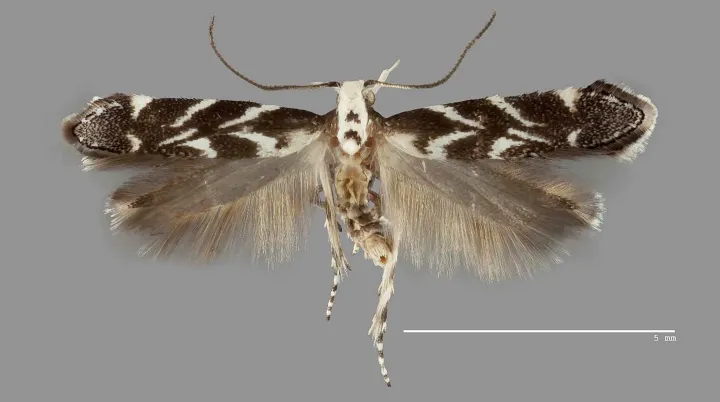
Chionodes periculella is a moth species belonging to the family Gelechiidae, known for its intricate wing patterns that serve as camouflage on tree bark.
The larvae are typically specialized feeders, adapted to navigate and survive within the needles or terminal buds of their host trees.
The life cycle involves complete metamorphosis, where the pupal stage often occurs in concealed environments like bark crevices or debris.
Adult moths are nocturnal, which makes them difficult to observe during the day, requiring light traps for accurate population surveys.
Entomological identification relies on examining wing venation and genital structures, as many species in the genus Chionodes share similar external appearances.
What it damages
This pest primarily infests coniferous species, with a particular affinity for trees within the Pinus genus.
Larvae cause significant damage by boring into buds and shoots, which stunts growth and leads to the loss of terminal leaders.
Infested needles are often webbed together, creating protective shelters for the larvae as they feed on the surrounding plant tissue.
Widespread damage can lead to branch dieback, severely affecting the health and vitality of the tree over consecutive growing seasons.
Young trees are especially vulnerable to this damage, which can result in long-term structural deformation and reduced commercial value.
When it appears
The activity of Chionodes periculella is closely tied to the seasonal growth patterns of its host conifers, beginning in the spring.
Generation turnover varies depending on regional climatic conditions, with most populations completing one or two cycles annually.
The adult flight period generally peaks in mid-summer, providing the necessary window for mating and egg-laying on suitable hosts.
Larval development progresses through several instars, with the most aggressive feeding occurring prior to the onset of dormancy.
Overwintering usually takes place in a larval or pupal stage, hidden deep within the protective layers of the host tree or the forest litter.
Signs of infestation
Signs of infestation include the presence of silk webbing around the buds and young shoots of the host tree.
Entry holes in the buds, often surrounded by a small amount of larval frass and wood dust, are definitive markers of active boring.
Browning and drooping of new growth are characteristic symptoms caused by larval feeding disrupting nutrient flow to the tips.
Accumulation of debris and resin bleeding near the infested areas can indicate the intensity of the pest colonization.
An overall thinning of the canopy and lack of vigorous spring growth are visual indicators of chronic pest pressure.
Control measures
Integrated pest management strategies focusing on early detection are the most effective way to prevent significant damage in forest stands.
Biological control agents, including parasitic wasps and entomopathogenic fungi, play a crucial role in suppressing natural population outbreaks.
Application of systemic insecticides may be necessary in nursery settings or for high-value ornamental trees to ensure thorough protection.
Pruning and removing infested branches helps reduce the local population density and limits the risk of further spread.
Maintaining tree vigor through proper silvicultural practices makes the stands less susceptible to successful colonization by the pest.
Taxonomy
- Latin name
- Chionodes periculella
- Order
- Lepidoptera (butterflies)
- Family
- Gelechiidae
- EPPO code
- GELEPE
Discussion
No discussions yet — be the first.