
MOSCOW TRANSPARENCY
BOTANIChESKIJ SAD MGU IM.M.V.LOMONOSOVA
Sea Buckthorn
0
0
2 offers
0.29 €per pack
Buy

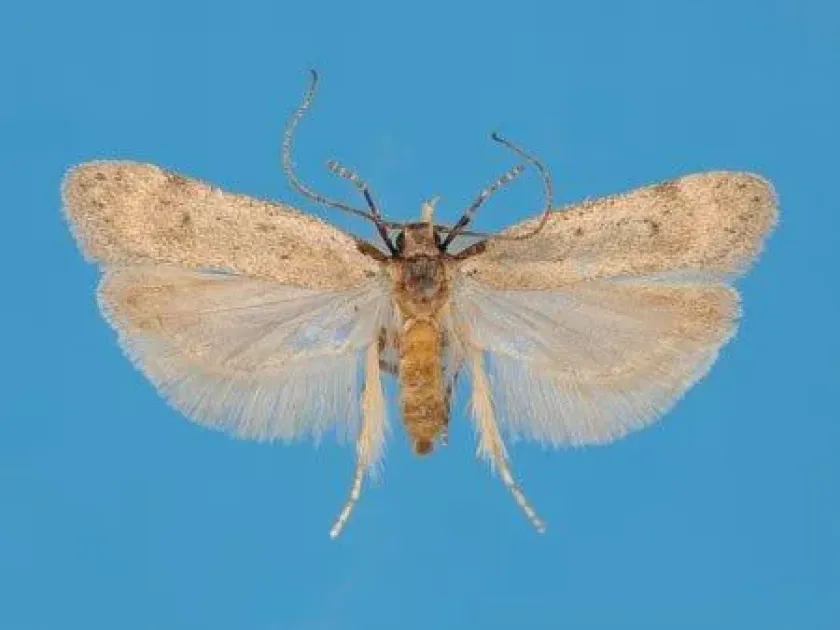
The sea buckthorn moth, scientifically known as Gelechia hippophaella, belongs to the Gelechiidae family. It is a small moth with a wingspan of approximately 15–18 mm, featuring greyish-brown camouflage markings.
The larvae progress through several instars, transitioning from a pale yellowish color to a deep green with distinctive dark spots along the body as they mature.
These moths are primarily nocturnal, which makes observing adult activity challenging for orchard managers during the daylight hours.
The species is highly host-specific, having evolved to thrive exclusively on Hippophae rhamnoides, making it a major concern for commercial growers.
Population surges are heavily influenced by local climate patterns, with warmer springs often leading to more rapid development and increased infestation rates.
The primary host for this pest is the sea buckthorn shrub. Both commercial plantations and domestic gardens are vulnerable to significant damage from larvae feeding.
First-generation larvae primarily target developing buds, hollow-out the tissues, and prevent the formation of new shoots, which stunts tree growth early in the season.
As the larvae grow, they web leaves together, creating protective nests. Inside these nests, they feed aggressively, leading to leaf skeletonization and stunted foliage development.
Heavy infestations can cause severe shoot distortion and tip dieback, which drastically reduces the yield and quality of the berry harvest.
In cases of unchecked outbreaks, the cumulative damage can lead to substantial defoliation, significantly weakening the tree before the dormant season.
The biological cycle of the sea buckthorn moth is synchronized with the phenological stages of the sea buckthorn plant, ensuring survival through the dormant season.
Overwintering occurs in the larval stage, with young caterpillars sheltering within silk cocoons tucked into bark crevices or the upper layers of the soil.
Emergence coincides with the onset of spring sap flow and bud break, as temperatures rise sufficiently to trigger metabolic activity in the larvae.
Pupation typically occurs in early summer within the silken nests constructed earlier in the season, followed by the emergence of adult moths.
Depending on the latitude and local climate, there may be one or two generations per season, necessitating regular scouting from spring through mid-summer.
The first indicator of an infestation is the presence of withered, brown, or hollowed-out buds during the early spring inspection.
Webbed nests on the terminal ends of branches are a definitive sign of moth activity; these structures are often filled with larval frass and debris.
Stunted and twisted shoots are common symptoms that result from the larvae feeding on the delicate terminal growth tips during the peak growing phase.
Inspection of the main trunk and primary branches may reveal old larval casings or silk cocoons hidden within the deep fissures of the bark.
Massive foliage browning and premature leaf drop in mid-summer are reliable indicators that the larval population has reached a critical threshold.
Effective management begins with rigorous horticultural practices, including the pruning and destruction of infested branches to remove overwintering sites.
Targeted insecticide applications during the pre-bloom phase are highly effective at reducing the population density before significant feeding damage occurs.
For sustainable orchards, biological controls such as sprays containing Bacillus thuringiensis provide an effective alternative that targets larvae while sparing beneficial insects.
Cultivating the soil around the base of the shrubs in late autumn disrupts the overwintering pupae and exposes them to natural predators and freezing temperatures.
It is essential to maintain a strict spray schedule to respect pre-harvest intervals, ensuring that the final berry product remains free of chemical residues.


No discussions yet — be the first.