
Alfalfa moth
Xystophora pulveratella
Description
How to identify
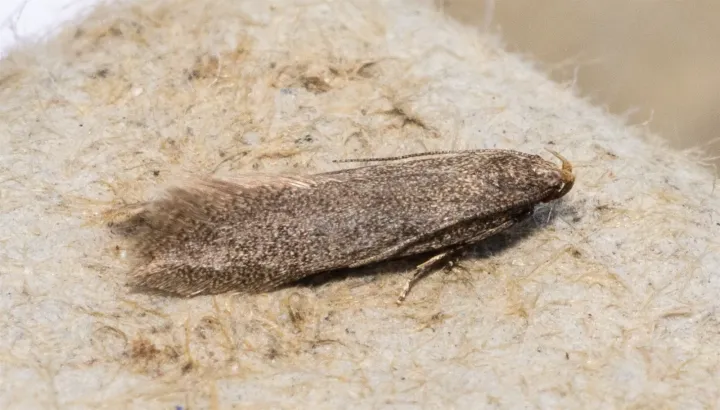
The alfalfa moth (Xystophora pulveratella) belongs to the order Lepidoptera and the family Gelechiidae. It is a small moth characterized by a secretive behavior pattern throughout its development.
Adult moths are small, usually possessing greyish-brown or yellowish-brown wings, which provide excellent camouflage against the foliage of host plants.
The larvae develop inside plant tissues or within leaves rolled and tied with silk. They possess a well-developed biting mouthpart, allowing them to feed efficiently on plant tissues.
The life cycle undergoes complete metamorphosis, including egg, larva, pupa, and adult stages. The insect overwinters as a pupa or larva in the soil or within plant debris.
Identification in the field is often achieved through the use of pheromone traps or by visual inspection of the terminal parts of the plants where activity is concentrated.
What it damages
The primary host of this pest is alfalfa (Medicago sativa). The damage is mainly caused by the larvae feeding on leaf tissue and reproductive structures.
Larvae consume the leaf parenchyma, leaving only the epidermis, or bind leaves together with silk, creating protective shelters where they feed extensively.
In cases of high infestation, the pest damages growth points, leading to stunted development, stem distortion, and a significant reduction in total forage biomass.
The greatest damage occurs during the budding and flowering stages, as the destruction of flower buds leads to reduced seed yield and lower quality of the harvest.
The economic threshold for intervention varies by region; however, the presence of several individuals per square meter is typically sufficient to justify protective measures.
When it appears
The first generation of adult moths typically begins to emerge in late spring when average daily temperatures remain consistently above 15 degrees Celsius.
The activity period is closely linked to the phenological stages of alfalfa. The pest can produce two or more generations during a single growing season.
Peak larval feeding activity is observed in the first half of summer, coinciding with the most rapid growth phase of the forage crop.
Population numbers may fluctuate in the second half of the summer due to environmental stressors or the presence of natural predators, though drought often promotes survival.
At the end of the season, the larvae prepare for diapause, moving to the lower sections of the plant canopy or into the upper soil layer to survive the winter.
Signs of infestation
The most common visual indicator of an alfalfa moth infestation is the presence of silken nests on the tips of stems, within which the larvae hide.
Leaves damaged by the larvae often develop a distinct appearance, with "windowing" patterns or curling into tubes, which is easily visible during field surveys.
Heavy infestations result in premature yellowing and wilting of foliage, as well as significant flower drop, which can ruin the potential for seed production.
Dark granular frass from the larvae is often found on the soil surface beneath the infested plants, alongside silk residue left from their feeding activities.
Detecting early or hidden infestations requires close inspection of apical shoots and unfolding of curled leaves, particularly in the morning when larvae are most active.
Control measures
Agrotechnical methods include early harvesting of the alfalfa, which physically removes a large portion of the larval population before they reach the pupal stage.
Crop rotation and maintaining spatial isolation between new alfalfa fields and older ones are crucial to preventing the buildup of pest populations.
Biological control options include the use of natural enemies, such as Trichogramma wasps, which parasitize moth eggs and help suppress the population naturally.
Chemical control should be implemented only when the economic injury level is reached, utilizing systemic or contact insecticides approved for forage crops.
- Apply insecticides in the evening to minimize harm to beneficial pollinator insects.
- Use surfactants with spray mixtures to ensure thorough coverage of the foliage.
- Control weed populations in and around the field to eliminate alternative hosts.
Taxonomy
- Latin name
- Xystophora pulveratella
- Order
- Lepidoptera (butterflies)
- Family
- Gelechiidae
- EPPO code
- XYSPPU
Discussion
No discussions yet — be the first.